Social Media Security Best Practices for Brands

Summary:
Your social accounts hold more revenue and trust than most business channels, yet they're often guarded by a single password. See 8 social media security best practices, from team-based 2FA to 24/7 monitoring, that close the gaps attackers count on before they cost you your audience.
Your social media accounts have quietly become some of your most valuable business assets. They hold more customer trust, more revenue, and more reach than most of your other channels.
Yet these accounts sit outside almost every security tool that protects the rest of your company. Your email has filters, your servers have firewalls, and your laptops have endpoint protection. But your Instagram, TikTok, LinkedIn, and Facebook accounts are often guarded by nothing more than a single password.
That gap in awareness is exactly what attackers count on. It's what lets them run account takeovers that lock you out of your own brand, and impersonation scams that fool your followers using your name and face. In this post, we'll explain what social media security really means for a business, why it matters, and the eight best practices you can start using today.
What Is Social Media Security?
Social media security is the set of habits, tools, and controls you use to protect your accounts from being stolen, misused, or impersonated. It covers how you log in, who has access, and how you spot a fake version of your brand.
Why Social Media Security Is Crucial for Businesses and Creators
Social media security is really about protecting three things: your revenue, your reputation, and your ability to keep operating.
If you lose your main account, you effectively lose your online store, ad campaigns, customer messages, and/or years of content overnight. For a creator, that can mean losing their livelihood; and for a brand, it can trigger a public crisis.
Here’s how big this problem has become:
- Account takeovers are becoming more and more common. Around 429 million social media accounts were hacked in 2025, and that figure is projected to reach 580 million by year-end, a 34% jump year over year.
- Phishing is still a major entry point. More than 60% of hacking incidents involve phishing scams that target login credentials.
Note: Most breaches don't come from someone breaking your encryption. They come from someone tricking someone on your team into handing over a password or privileged information. The good news is that these attacks are preventable. All you have to do is follow a few consistent habits.
8 Social Media Security Best Practices
The following eight best practices give businesses and creators a clear, repeatable way to lock down their accounts.
1) Use Strong, Unique Passwords and a Password Manager
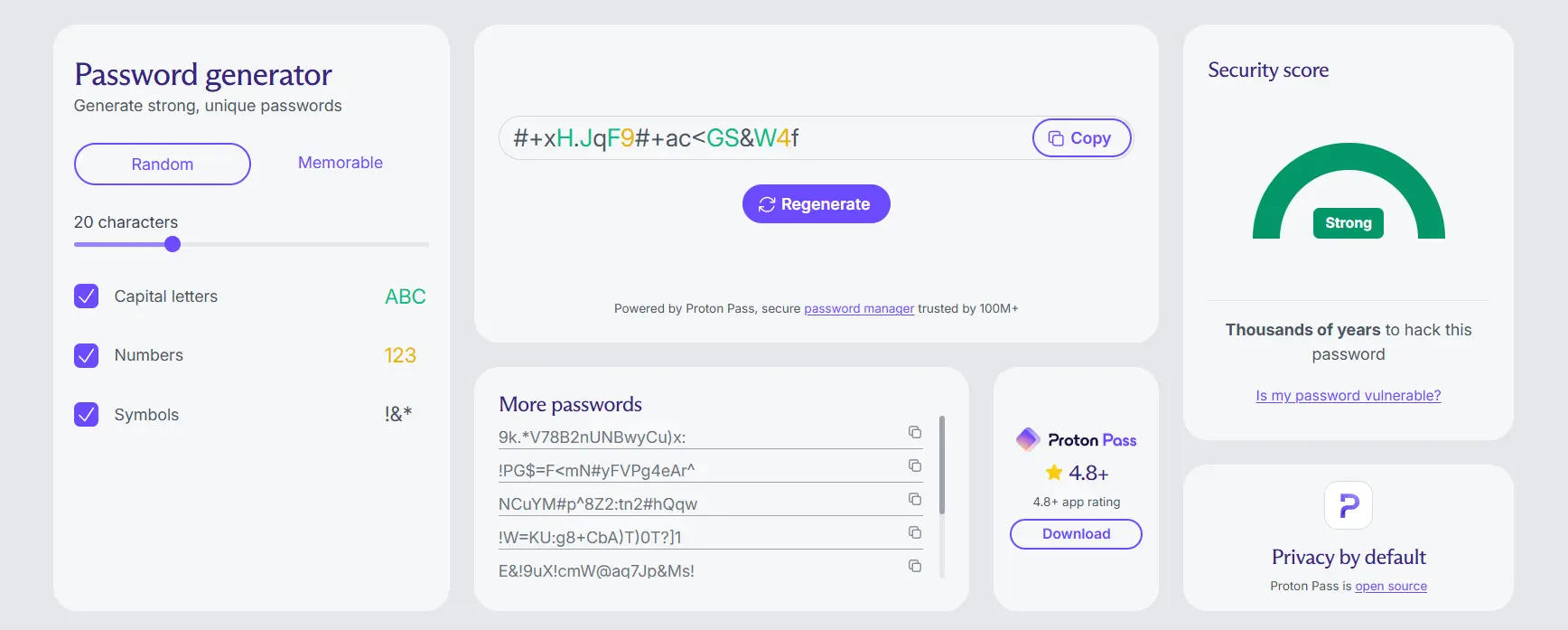
Every account needs its own long, unique password. When you reuse one password across platforms, you effectively turn a single breach into a full takeover. If that password leaks from one site, attackers may try it everywhere else, and suddenly they're inside your email and other social media too.
But there’s a problem. Nobody can remember dozens of random passwords, which is why a password manager matters so much. It creates and stores strong passwords for you, and it makes good security practical for your whole team, so no one falls back on a weak or shared password.
2) Turn On Two-Factor Authentication (Built for Teams)
Two-factor authentication, or 2FA, adds a second layer of security to your login. Even if someone steals your password, they won’t be able to login. They still need a second code to bypass your security. And the best thing is that it can block most automated takeover attempts on its own.
But we also need to be honest about its limits. Standard 2FA is built for one person. It ties a business account to a single employee's phone, and login codes often end up shared over Slack or WhatsApp, which quietly cancels out the protection you just turned on.
The fix for this is 2FA built specifically for teams, where the tokens are hosted and managed centrally (instead of living on a personal device). That way, your team gets secure access without passing codes around.
3) Control Who Has Access to Your Accounts
Access control follows a simple rule that security pros call the principle of least privilege: only the people who truly need admin access should have it. The fewer people with full control, the fewer ways an attacker gets in.
First, review who has account access on a regular basis instead of assuming the list is still correct. Second, revoke access the moment someone leaves or a vendor's contract ends. That’s it. It’s very simple but it works.
Note: Stale access from a former employee or an old agency is one of the most common ways brands lose control of an account. In fact, we see this happen all the time on Meta accounts (Facebook, Instagram, Threads, and WhatsApp).
4) Train Your Team to Spot Phishing and Social Engineering
Phishing and social engineering are attacks that target people instead of software. On social media, they can show up as fake "policy violation" emails, as angler phishing (where a scammer poses as a brand's support team), or spear phishing aimed at a specific employee with account access (often an executive – called whaling).
For example, let’s say an attacker sends your community manager an email that looks exactly like it's from Instagram. It warns that your account broke a content rule and will be deleted in 24 hours unless you "verify" your identity. The link then leads to a fake login page that looks exactly like the real thing, and the moment your team member enters your login details, the attacker is in.
We see these kinds of attacks happen all the time. Which is why you must continuously train your team on the latest tactics hackers use. Regular training effectively turns your team into a first line of defense instead of your weakest link. When people know what these tricks look like, they slow down and report the attempt instead of clicking.
5) Monitor Your Accounts Around the Clock
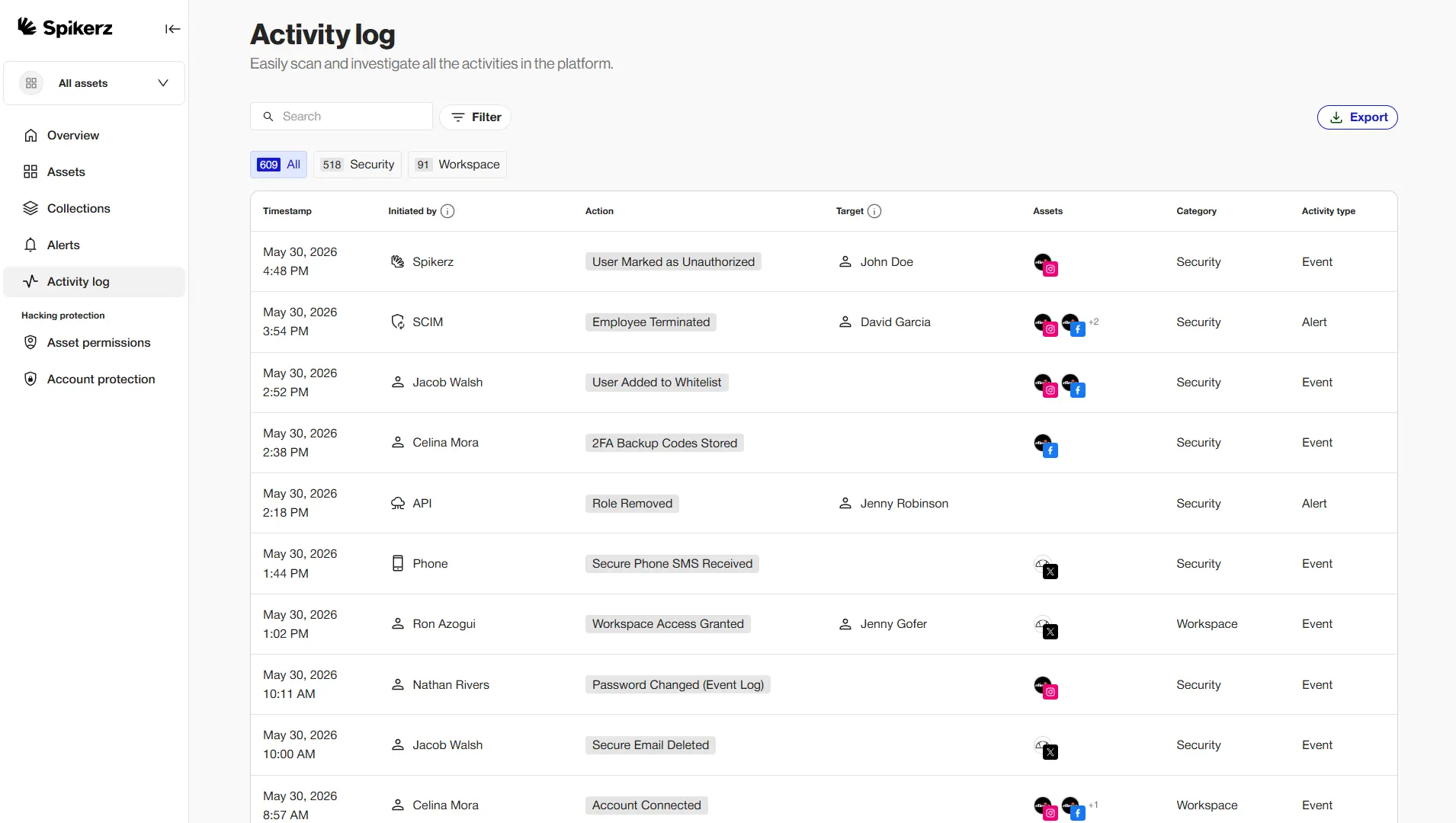
Attacks rarely happen during business hours. They can happen at 2 a.m. on a Sunday, and every minute of delay gives an attacker more room to change your recovery email, post scams, or lock you out for good. That's why real-time monitoring is essential.
Watch for warning signs of compromise:
- Logins from unusual places or devices
- Requests to change your password that you didn’t start
- Changes to permissions and connected apps
- Posts you didn't publish
The goal is to get alerted the moment something looks off, so you can act in minutes.
6) Watch for Impersonators and Fake Accounts
Not every attack tries to steal your account, some target your reputation by copying it. Brand and executive impersonation happens when someone creates a fake profile using your name, logo, photos, and content, and then uses it to run scams or phishing on your own followers.
For example, let’s say that a scammer copies your brand's page and messages your followers to say they've won a giveaway. To claim it, all they need to do is pay a small "shipping fee" or confirm their login details. Then, some pay and some hand over personal information. Next, they realize they’ve been scammed. Lastly, each one walks away trusting your brand a little less, even though you did nothing wrong.
Note: Followers can often spot impersonators and alert you quickly, but the longer a fake account stays active, the more people it can reach. That’s why finding and reporting impersonators quickly helps protect both your audience and your reputation.
7) Moderate Comments and DMs to Block Scams
Your comment sections and DMs are now part of your attack surface. Bots and impersonators flood them with phishing links, fake giveaways, and hate that erodes trust. Worst of all, if left unchecked, a scam link in your comments can reach thousands of customers before you ever see it.
The good news is that you can use automated moderation to filter out scams and spam the moment it appears, keeping harmful content off your posts and away from your audience.
8) Back Up Your Content and Plan for Recovery
A backup of your posts, images, and messages will protect you when the worst happens, whether your account is hacked, suspended by mistake, or accidentally wiped. Just as important, you should know your recovery path before you need it. So do everything you can to understand how each platform's recovery process works and decide who does what if an account goes down.
Note: Having a clear recovery plan helps your team restore access faster and reduces the risk of losing important content, customer conversations, or control of the account.
How Spikerz Helps You Follow Every Best Practice
Following all eight of these best practices by hand, across every platform and team member, is exactly where many brands run into problems. Manual security is difficult to maintain consistently, and one missed step can leave an account exposed.
But don’t worry, a social media security tool can make these protections easier to manage across your accounts.
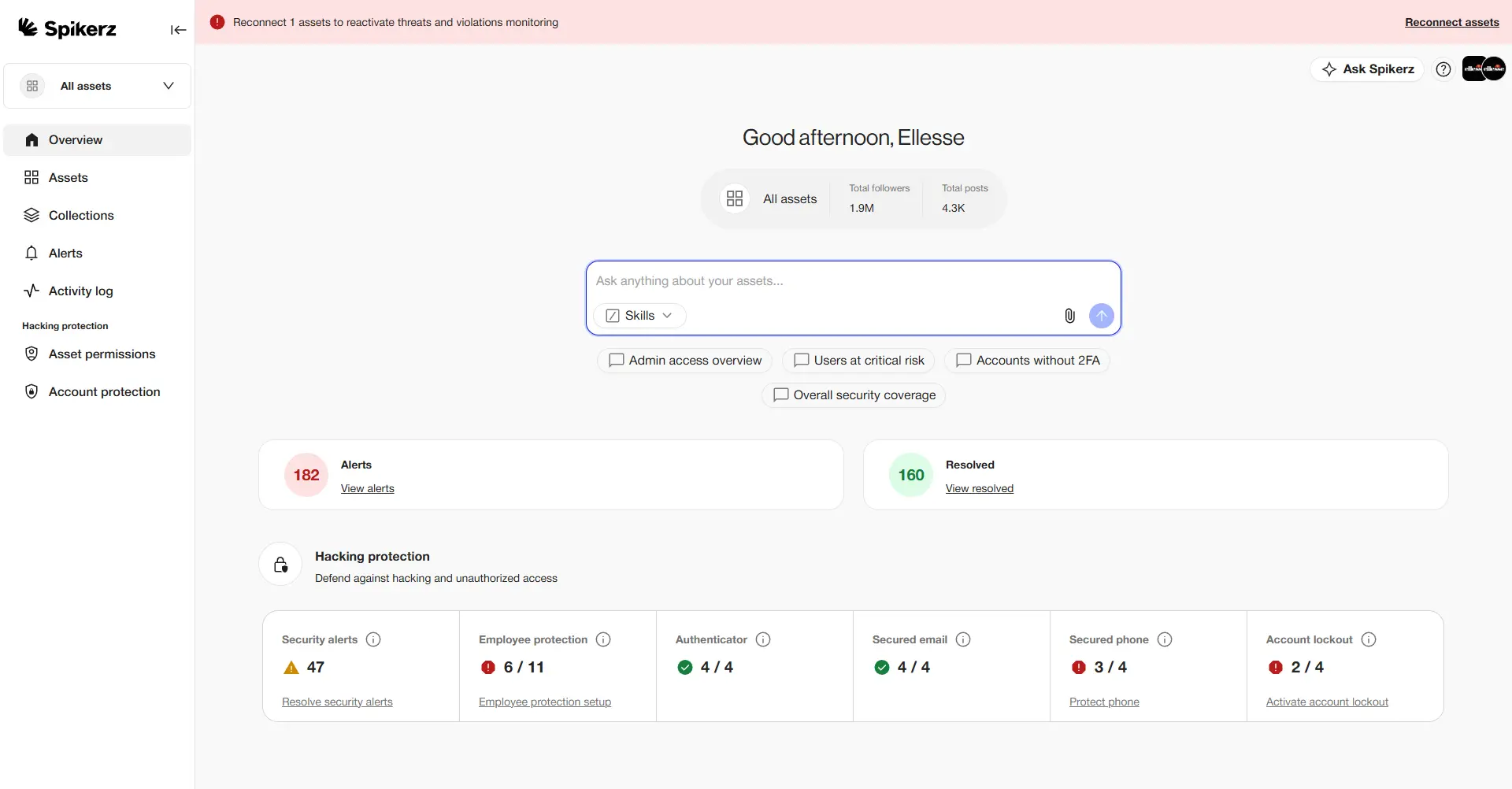
That's what we built Spikerz to do. Spikerz is an all-in-one social media security platform that connects to your accounts through official APIs without requiring you to share passwords or credentials. It brings these security controls together in one place:
- Account takeover protection: Locks down 2FA, centralizes secure access, and blocks hacking attempts 24/7, so no one has to ask "who has the password?"
- Impersonator takedown: Scans daily for fake profiles copying your brand or executives, then verifies and removes them, with a 95%+ removal success rate on Meta.
- Phishing protection: Detects and filters phishing emails, comments, DMs, and links before they reach you, your team, or your followers.
- Permissions management: Shows every user across every platform in one place, so you can grant, review, and instantly revoke access.
- Comment moderation: Automatically hides scams, spam, hate, and phishing links across your channels in more than 25 languages.
What would it be worth to know your accounts are protected even while you sleep?
That's the benefit you get with automation. Security that never clocks out, watching over your accounts all the time so you don't have to. If you're ready to protect your social media accounts, book a demo right now.
Conclusion
Strong social media security isn't complicated, and it isn't only for big companies with security teams. It comes down to a few consistent habits:
- Having unique passwords in a password manager
- Using team-based 2FA
- Having tight control over who has access
- Having a team trained to spot phishing
- Enabling round-the-clock monitoring
- Requesting fast impersonator takedowns
- Having active comment moderation
- Having a recovery plan you set up before you need it
The brands that do these things well avoid headaches, protect their revenue, their reputation, and the audience they worked so hard to earn.
You can do everything by hand, one login at a time, or you can let a tool built for the job handle it consistently, on every account, every day. Either way, the choice is the same one every brand eventually faces: secure your accounts on your own terms today, or scramble to recover them on an attacker's terms tomorrow.
