Account Takeover Protection: A Guide for Brands

Summary:
Hackers can seize a verified brand account in under 20 minutes, through phishing, shared passwords, or a hijacked session that skips the login screen entirely. See the five ways attackers get in and the 5-step protection playbook that closes each door before your audience pays the price.
Most account takeover protection advice was built for banks, inboxes, and payment systems. The problem is that the accounts holding your brand's audience, ad spend, and customer conversations sit outside that protection entirely. When a hacker takes over a social account, the brand doesn't just lose a password, it loses the audience it spent years building.
In this blog post, we'll cover what account takeover protection means for social media, how attackers get inside, why the stakes keep climbing, and what real protection looks like for your brand.
What Is Account Takeover Protection?
Account takeover protection is the set of tools and policies that stop unauthorized users from gaining control of an account. It covers detection of suspicious logins, secure authentication, access management, and fast response when something goes wrong.
That's the standard definition. The problem is that most vendors only apply it to email inboxes and payment accounts, which leaves your Instagram, TikTok, YouTube, and Facebook accounts completely exposed. And given how common these hacks are, that’s a huge security issue.
What Does an Account Takeover Look Like on Social Media?
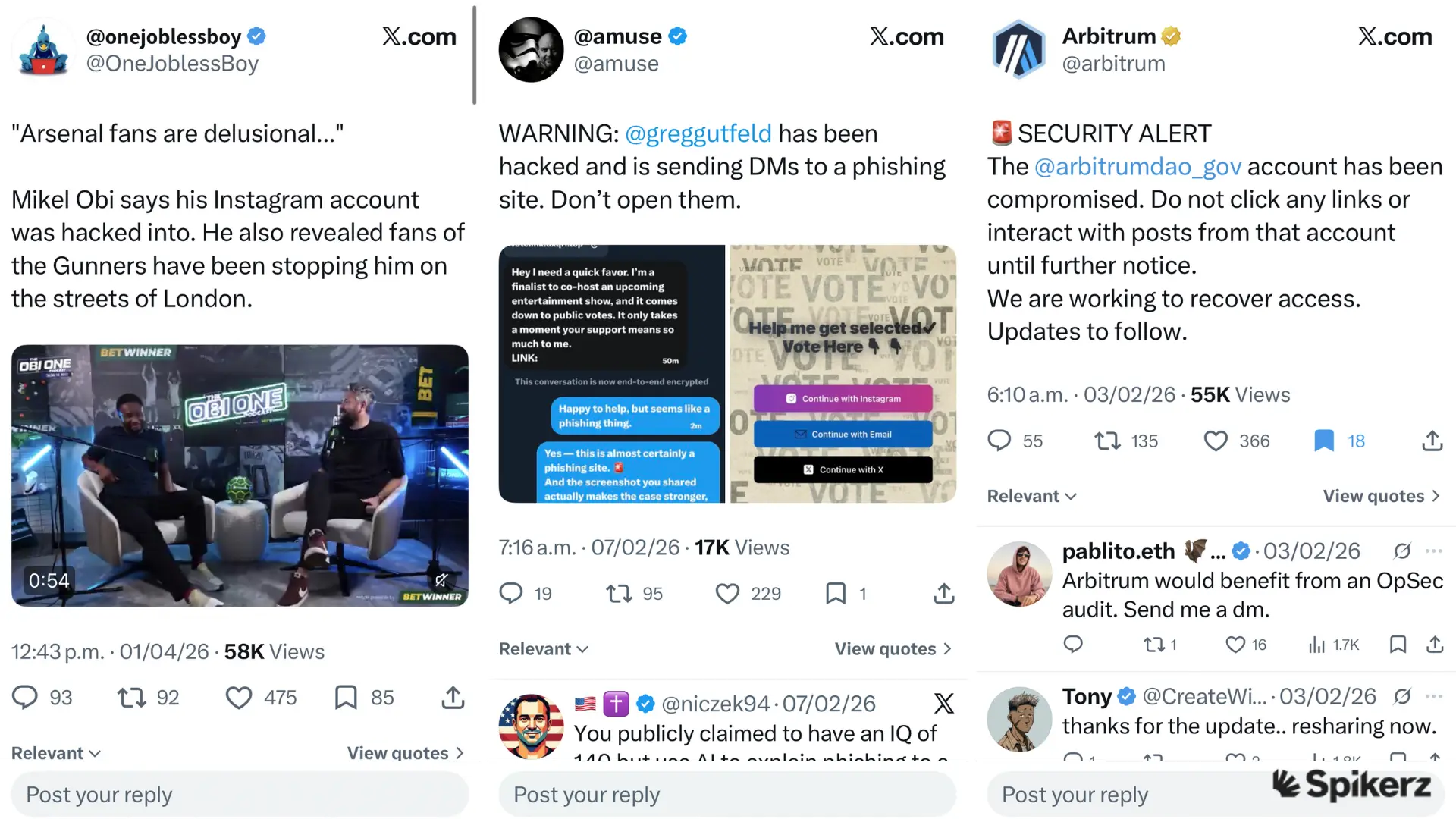
An account takeover happens when an attacker gains control of your brand's profile, locks your team out, and uses the account for scams, extortion, or public destruction. And unlike a hacked email, a stolen social account exposes every follower, customer, and partner in real time.
For example, a beauty brand with 400,000 Instagram followers receives a message that looks like a copyright warning from Meta. Then, a junior team member clicks the link, enters the login, and approves the 2FA prompt on their phone. Within 20 minutes, the attacker changes the email and password, posts a fake crypto giveaway, and starts DMing followers with phishing links using the brand's verified badge.
That’s the kind of situation we see happen all the time and it happens to brands of all sizes. Here are some examples of takeovers we’ve reported on:
- Milwaukee Airport’s X Account Hack
- LIV Golf's Graeme McDowell X Account Hack
- VALORANT's Instagram Hack
- Riot's LoL Instagram and X Account Hacks
How Do Hackers Take Over Social Media Accounts?
There are five methods we see behind almost every takeover we investigate>
1) Phishing Messages That Copy The Platform
Attackers impersonate the platform itself to steal login details from your team. They send emails, DMs, and texts that look identical to real Instagram, Meta, or TikTok notifications, complete with matching logos and spoofed domains.
For example, we see fake Instagram emails claiming a community guidelines violation and urging the recipient to "verify" their account within 24 hours or face permanent removal. The link leads to a cloned login page that captures the password and the 2FA code in the same session.
2) Shared Credentials And Password Reuse
Marketing teams share one login across in-house staff, agencies, and freelancers because it's the fastest way to get work done. And what’s worse is that that single password gets pasted into Slack, saved in shared docs, and reused across other tools. The moment one of those tools leaks, every social platform tied to that password falls with it.
3) 2FA Tied To One Person's Phone
2FA links tied to one employee's device sounds secure until that employee travels, quits, or gets targeted. Teams work around this by sharing codes over Slack or WhatsApp, which defeats the purpose of having 2FA at all. A shared code in a group chat is just another password waiting to leak.
That said, here’s what you must know: 2FA isn’t hack proof.
Attackers can bypass phone-based 2FA through infostealers and SIM swapping, tricking carriers into transferring the number to a device they control. That’s why 2FA is a single layer of defense and should not be your entire protection strategy.
4) Access That Was Never Removed
Former employees, agencies, and vendors often keep admin access to brand accounts long after they stop working with you. This is inevitable because nobody remembers to check the Business Manager or Meta Business Suite after someone leaves. As a result, we see it cause takeovers all the time.
5) Malicious Third-Party Apps And Hijacked Sessions
Attackers sometimes use connected apps and stolen session cookies to get access to your account without ever needing your password. A scheduling tool, an analytics dashboard, or a "growth" app can sometimes carry malware (infostealers) that harvests your active session. Other times, they have security flaws that allow for attackers to exploit a vulnerability.
Once they have the session cookie, they skip the login screen entirely. 2FA doesn't help here because the attacker steals an already-authenticated session.
Why Does Account Takeover Protection Matter So Much?
The simple truth is, account takeover protection is the difference between a normal day and a full brand crisis. And unfortunately, the threat is growing fast:
- 429 million social media accounts were hacked in 2025, and it’s projected to reach 580 million by year-end for a 34% year-over-year jump.
- Over 60% of hacking incidents involve phishing scams that target login credentials.
- Organizations lose an estimated $4.61 for every $1 of fraud once you count operational costs, chargebacks, and recovery efforts.
And this comes with specific losses that hit businesses fast:
- Ad budgets get drained overnight by attackers running scam campaigns from your ad account.
- Paid traffic gets redirected to phishing pages that steal customer data in your brand's name. Followers also get defrauded by fake giveaways posted under your handle.
- Your publishing calendar sits frozen for weeks while you fight to recover the account.
Just ask yourself: What would a week of silence on your main channel cost your business?
The good news is that you can get ahead of this before it happens.
What Strong Account Takeover Protection Looks Like
There are five things you must have for effective protection:
1) Centralized Access Control
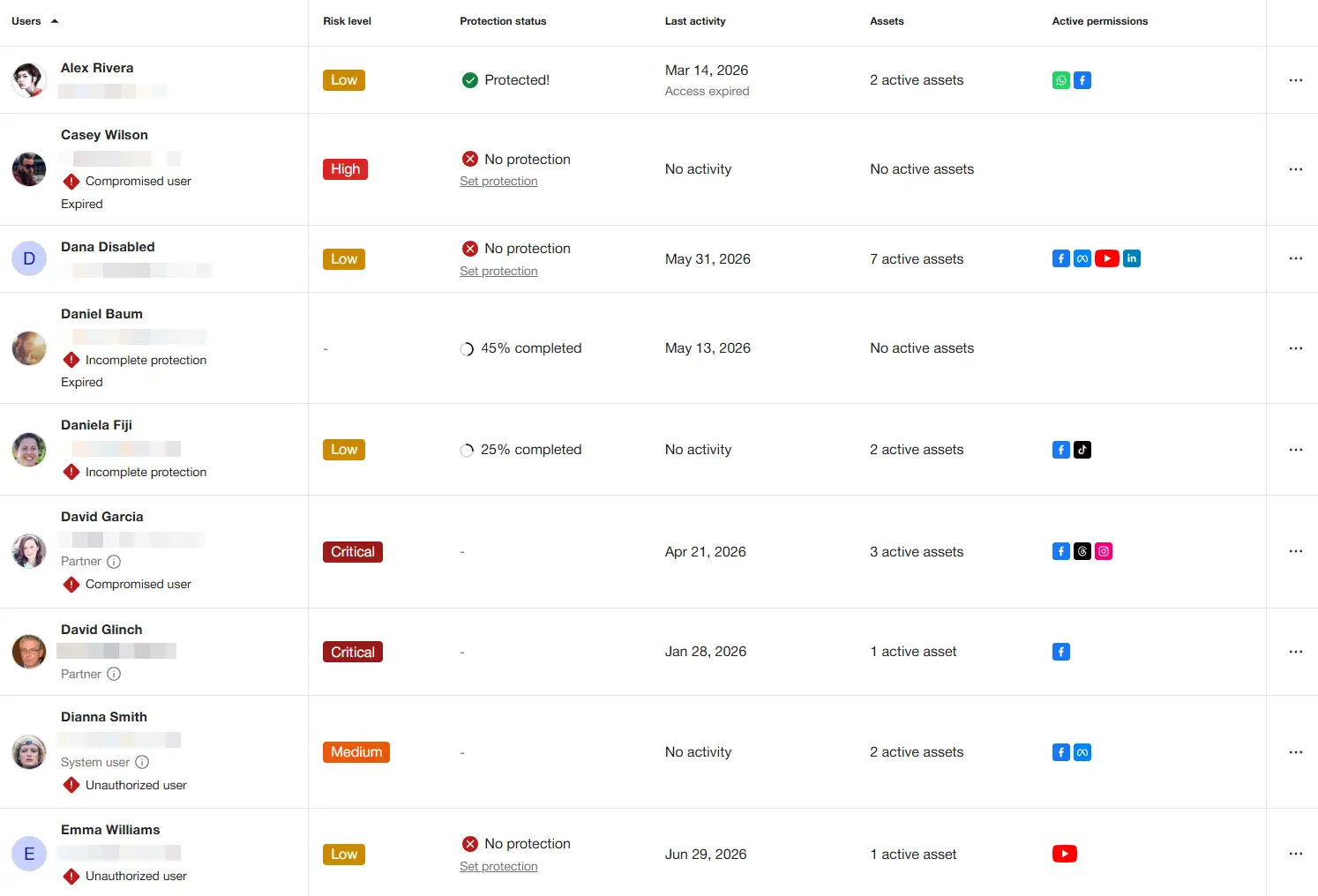
You need one place to see and manage who can access every social account across every platform. Without that view, nobody knows who has admin permissions, who is an editor, and who quietly kept access from three jobs ago.
Visibility is what makes least privilege possible so make it a priority. You can't enforce what you can't see.
2) 2FA That Isn't Tied To One Device
Team-based 2FA lets multiple pre-approved users generate codes through a shared, secure system. It beats platform-native 2FA because it removes the single point of failure sitting in one employee's pocket.
When someone leaves the company, they don't walk out with the authenticator app that unlocks your brand. Access stays with the team, fully secure.
3) Phishing Filtering On Your Inbox
Your email account is often the target because it receives your recovery codes. If a hacker controls that inbox, they can reset every social account tied to it in minutes.
That’s why filtering phishing is so crucial. Humans often miss phishing attempts, especially ones that copy platform notifications with high accuracy. And we’ve seen many accounts fall victim, even those from trained high-profile users.
4) Login Monitoring And Instant Alerts
Real-time monitoring flags logins from new devices, unfamiliar countries, or strange hours before an attacker has time to change your recovery details.
The window between takeover and full lockout is often under 20 minutes. Alerts that arrive an hour later are useless.
5) Fast Offboarding And Emergency Lockout
Revoking access has to take seconds, not days. When a hacker gets in or an employee leaves under bad terms, waiting on support tickets and manual resets across five platforms is how brands lose accounts permanently.
How Spikerz Protects Your Accounts From Takeovers
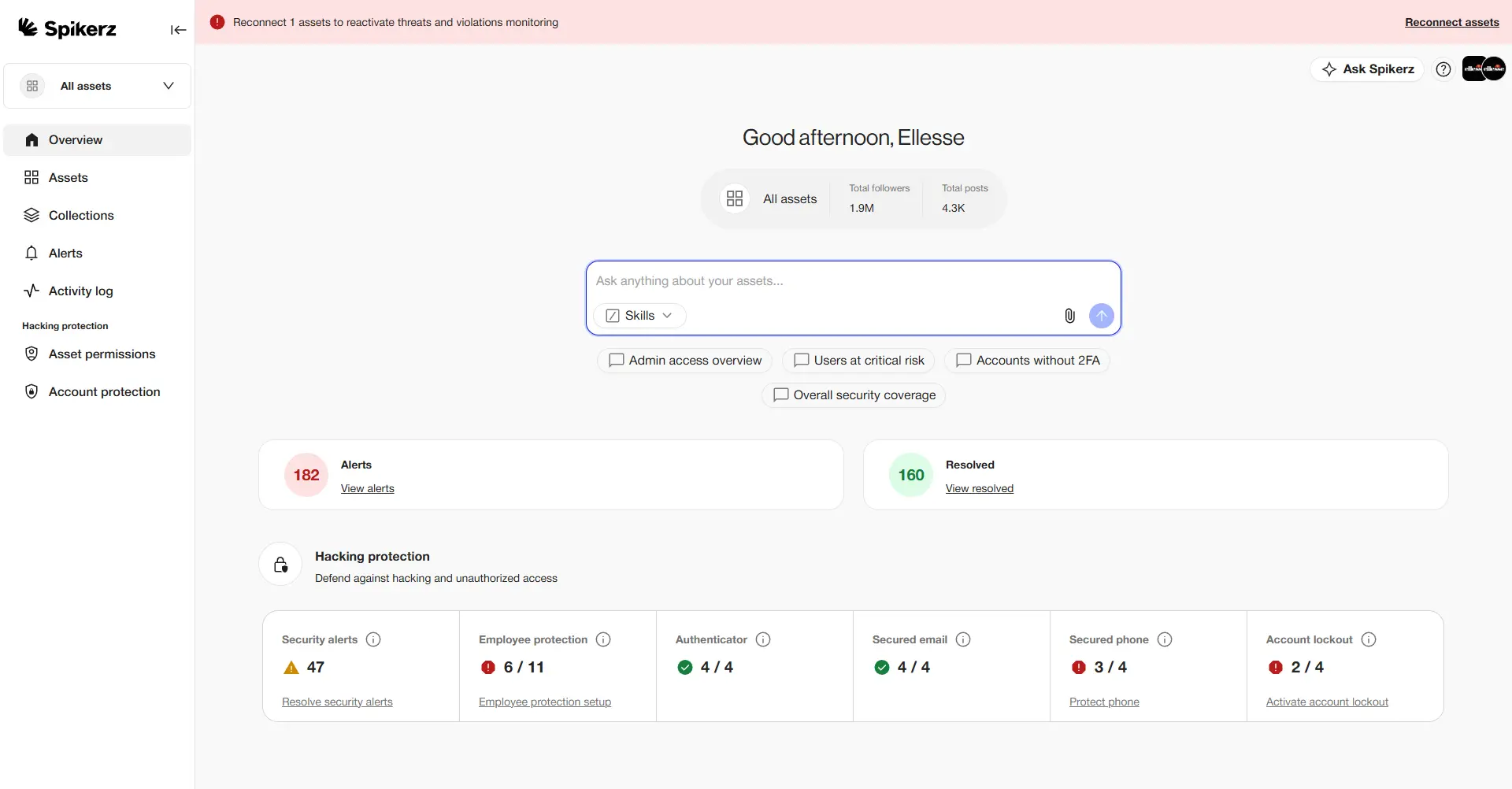
Spikerz is a social media security platform built for the accounts other tools ignore. We connect through official platform APIs, in three clicks or fewer, with no passwords or credentials ever exposed to us. Once connected, our AI scans your account activity, scores its risk, and monitors it 24/7 for hacking attempts.
Here's what we cover:
- Account takeover protection: Blocks unauthorized access attempts and enforces secure, team-based logins across every account you own.
- Phishing protection: Scans emails, DMs, and comments for phishing links before they reach your team or your audience.
- Permissions management: Gives you one dashboard to see and control every user with access to every social account.
- Impersonator takedown: Detects fake accounts posing as your brand and files takedowns automatically.
- Comment moderation: Removes spam, scams, and phishing comments in real time so your audience stays safe.
Feature Summary Overview:
How Much Would It Be Worth To You To Know Your Audience Is Safe Every Single Night?
Keep control of the accounts your audience lives on, and book a demo right now.
Conclusion
The methods we covered all trace back to the same root problem: not having a centralized way to see and control who touches your accounts.
The good news is that fixing it is very simple. All you have to do is enable team-based 2FA, monitor your accounts against phishing, protect your inboxes, get real-time login alerts, and have fast offboarding for people leaving your company. Brands that have those pieces in place stop takeovers before they even start, and recover fast when something manages to slip through.
