Social media governance: framework and tools


Social media governance sets the rules for who owns each account, who can post, how content is approved, how access is controlled and what happens in a crisis. Learn why it matters, the risks it should cover and how to build a governance framework in seven steps, from forming a cross-functional team and writing your policy to locking down access and planning for a crisis. Then see best practices and the tools that help enforce it.
It's a normal Tuesday until the official Instagram account starts posting things nobody approved. The team scrambles: who still has the password, who can reach the platform, who signs off on the statement? Nobody's sure.
That confusion is what social media governance prevents. It sets the rules for who owns each account, who can post, how content is approved, how access is controlled and what happens when something goes wrong. Not sure where you stand? Take our social media governance quiz to find your blind spots.
This guide explains what social media governance is, why it matters, the risks it covers, a seven-step framework to build it, best practices to keep it working and the tools that help.
What is social media governance?
Social media governance is the set of policies, roles, processes and tools an organization uses to manage its social media presence safely and consistently. It covers risk assessment, access control, content approval, compliance, crisis response and the tools that enforce them.
It isn't just the security team's job. Governance touches marketing, IT and security, legal, compliance, HR and communications, and works best when they build it together.
Why social media governance matters
It protects your brand and revenue
Brand accounts reach your customers directly, so they're a prime target. The FBI received more than 5,100 account takeover fraud complaints in 2025, with losses over $262 million.1 Clear rules on access and security close the gaps attackers use.
It keeps you compliant
Regulated industries like finance, healthcare and pharmaceuticals have extra rules on what they can say publicly, and every business has to follow privacy and advertising laws. Governance adds review steps and records that show you followed them.
It lets you prove who did what
If something goes wrong, you need to show who had access and who posted what. Without named accounts and an audit trail, you can't.
It speeds up decisions
When roles and approval paths are written down, posts, platform changes and crisis responses don't get stuck waiting for someone to decide who decides.
It gets you through a crisis faster
A governance plan defines what to do for each type of crisis, so teams act on their assigned roles straight away instead of debating them.
The risks social media governance should cover
- Security risk: account takeovers, phishing and shared passwords.
- Access risk: former employees, agencies and freelancers who still have access.
- Third-party app risk: connected tools with weaker security than the platforms themselves.
- Compliance and legal risk: posts that break industry rules, privacy laws or advertising standards.
- Employee risk: confidential information shared by mistake, or personal posts made from the brand account.
- Influencer and partner risk: a creator's scandal or off-brand post pulling your brand into a crisis.
- AI risk: inaccurate or offensive AI-generated content, and staff pasting sensitive data into AI tools.
- Impersonation risk: fake accounts posing as your brand or executives to scam your audience.
How to build a social media governance framework in 7 steps
1. Build a cross-functional governance team
Bring together people from marketing, social, IT and security, legal, compliance and HR. This team owns the policies, reviews them regularly and settles disputes. A senior sponsor helps push decisions through.
2. Write your social media policy and brand guidelines
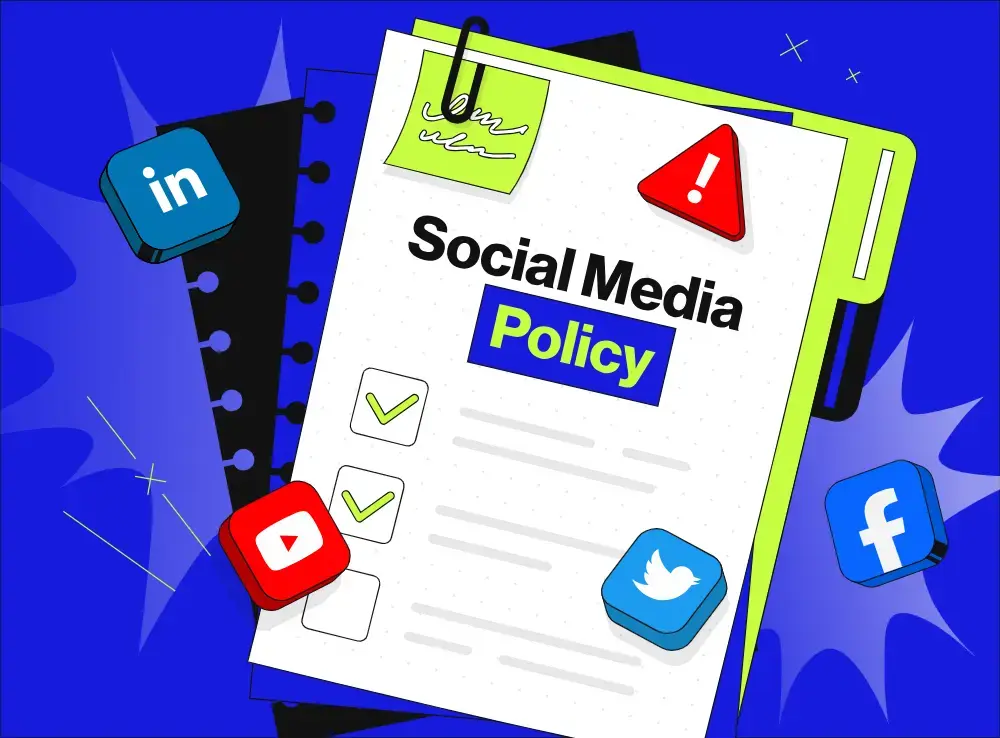
Brand guidelines cover voice, visuals, which platforms you use and how you moderate comments. Your social media policy covers the rules:
- Who owns each account and who can post on it
- Password, 2FA and access rules
- Employee conduct on official and personal accounts
- Confidentiality, copyright and disclosure rules
- Industry regulations that apply to your content
- How to report a problem, and the consequences for breaking the policy
Our social media policy template helps you build one based on your teams, accounts and risks, or you can use our social media policy builder.
3. Set up content approval and moderation
Define an approval path for posts, such as creator, then manager, then publisher. In regulated industries, add a legal or compliance review for posts with claims or sensitive information. Decide how comments are moderated and who responds to what.
4. Lock down access and security
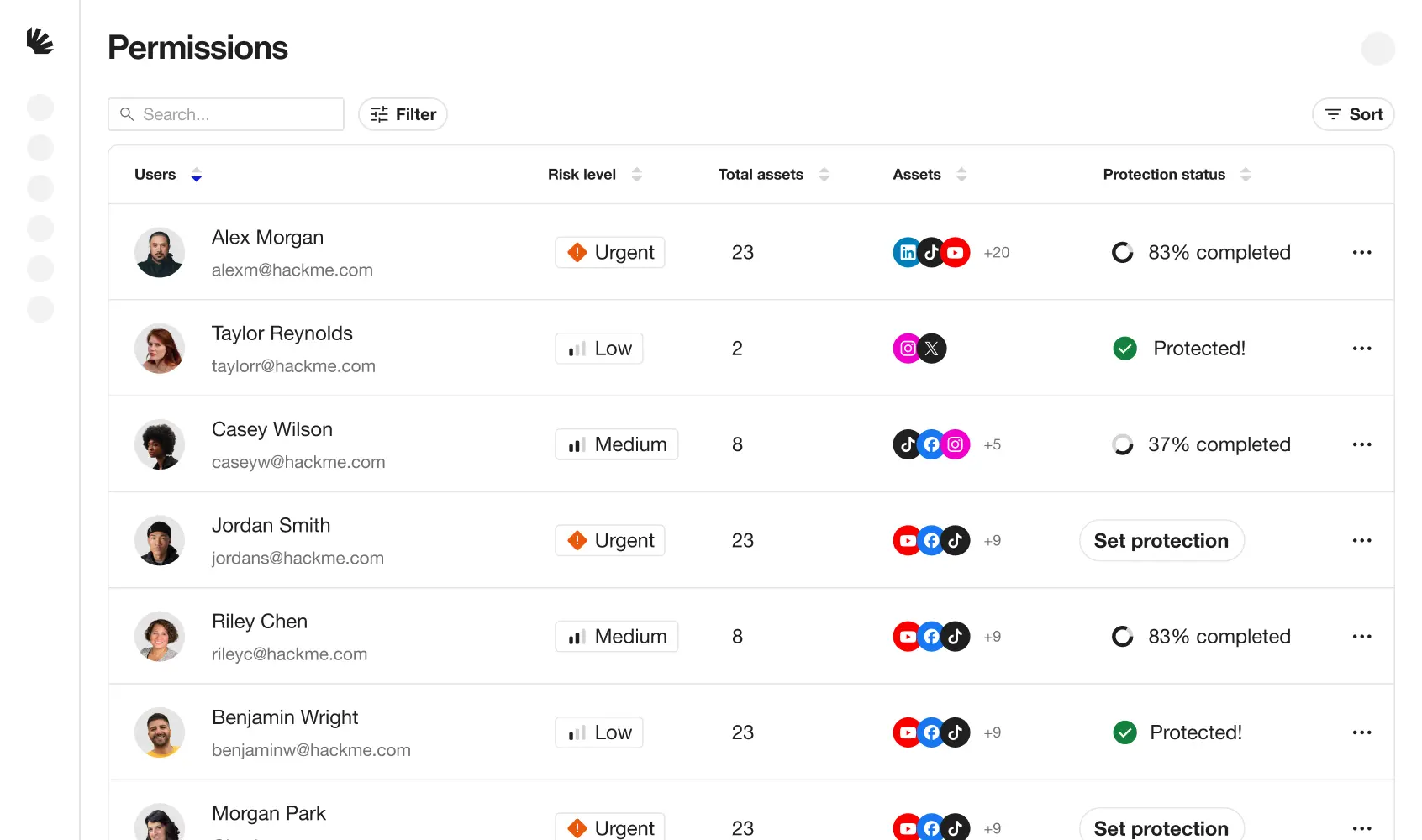
Give each person their own access at the lowest role they need, stop sharing passwords and use team-based 2FA. Audit accounts regularly: remove former staff and agencies, disconnect unused apps and close accounts you no longer use. Our guide to social media access management covers this in detail.
5. Vet influencers and partners
Check a creator's content history, values, audience quality, disclosures and existing contracts before you sign, and keep monitoring them during the partnership.
6. Create a crisis management plan
Write down how you'll handle an account takeover, a data leak, viral misinformation or a public backlash. Include how to spot a crisis, when to pause scheduled posts, who drafts and approves responses, who contacts the platform and how the team communicates internally. Here's how to manage a social media crisis.
7. Monitor, measure and update
Watch for security alerts, impersonators, scam comments and shifts in sentiment, and send each to the right person. Review the framework at least once a year, and after every incident, to keep it current.
Social media governance best practices
- Audit accounts regularly: check login history, admins, connected apps and dormant accounts at least once a quarter.
- Protect customer data: follow privacy laws like the GDPR for data shared in comments and DMs, and don't keep it longer than you need to.
- Train every employee: on the policy, brand guidelines and how to spot phishing.
- Set an AI use policy: say which tools staff can use, what data they can't share and how AI-generated content is reviewed.
- Automate what you can: use tools for access control, monitoring and moderation, so governance doesn't depend on someone remembering.
Social media governance tools
Most brands need more than one type of tool to cover governance, because each one solves a different part of the problem:
- Security and access governance: tools like Spikerz protect accounts from takeover, show who has access to every account and remove impersonators.
- Publishing and approval workflows: social media management platforms such as Sprinklr, Sprout Social and Hootsuite Enterprise handle content calendars, approvals and compliance checks before posts go live.
- Brand protection: tools such as BrandShield focus on counterfeits and trademark abuse across the web.
- Comment moderation: tools such as Respondology focus on hiding harmful comments. See our guide to the best social media moderation tools.
How to choose a social media governance tool
- Check who can access your accounts, and whether you can remove access instantly.
- Find the compliance gaps in how content is created and approved.
- Check whether every post is reviewed before it goes live.
- Assess how well you moderate comments on high-engagement posts and ads.
- Search for accounts impersonating your brand or executives.
A publishing tool won't fix account security, and a security tool won't run your content calendar, so pick tools for the gaps you actually have.
How Spikerz supports social media governance
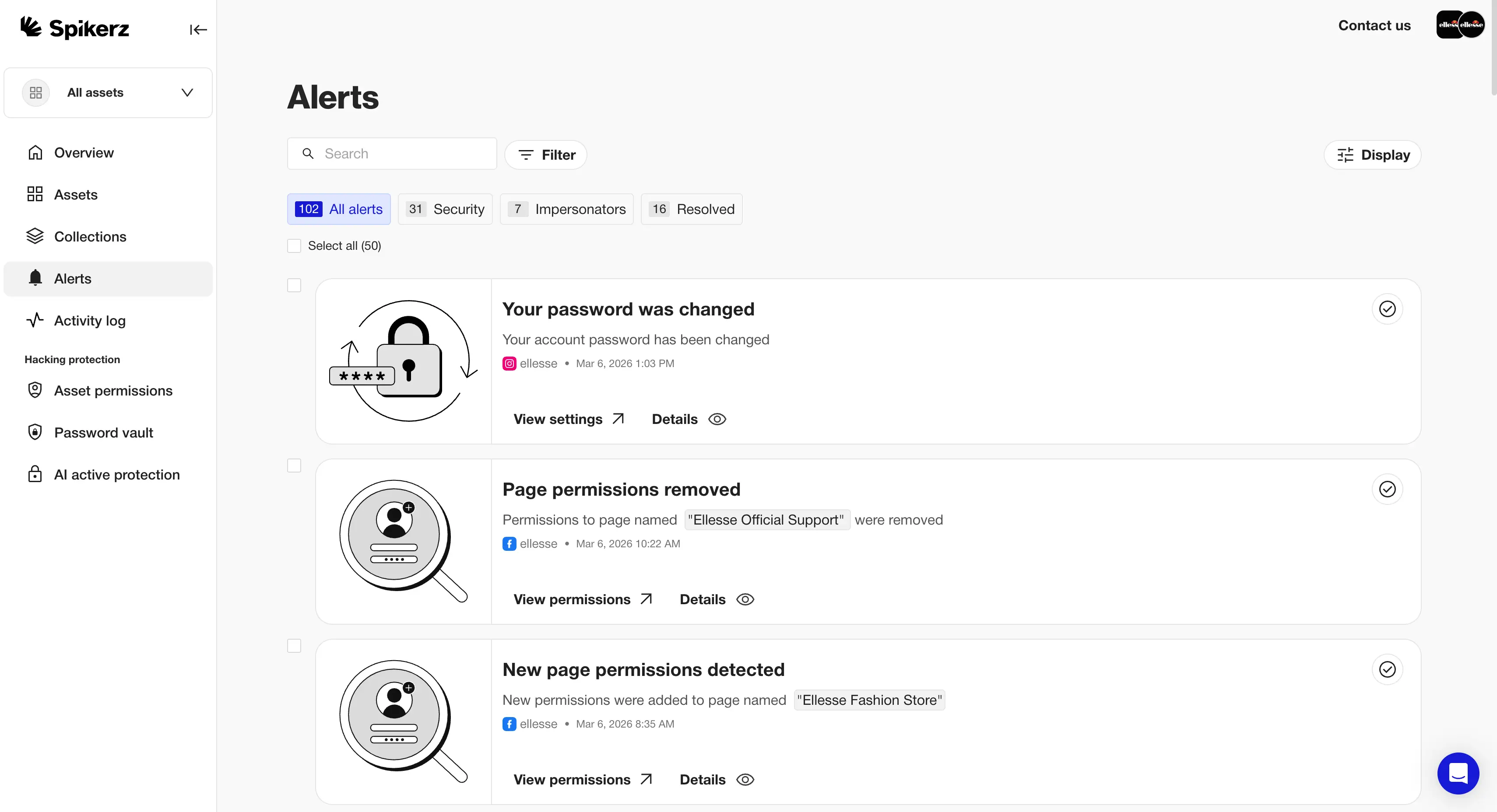
Spikerz is a social media security platform that connects through official platform APIs, so you never share your passwords with us. It automates the security and access parts of governance:
- Access management: see who has access to every account, with an audit trail, and remove access when someone leaves.
- Account takeover protection: team-based 2FA, alerts for suspicious logins, and automatic logout and password rotation when an intruder is detected.
- Comment moderation: AI that hides spam, scams, phishing and hate based on rules you set.
- Impersonator takedown: finds and removes fake accounts using your brand or executives.
- Phishing protection: catches phishing in emails, DMs and comments.
Want to see how Spikerz fits into your governance framework? Book a consultation.
Conclusion
Social media governance gives every account an owner, every post an approval path and every incident a plan. Without it, brands rely on shared passwords, guesswork and luck.
Build a cross-functional team, write the policy, lock down access, plan for a crisis and keep monitoring. Then use the right tools to enforce it, so governance keeps working as your team and accounts grow.
Book a consultation to see how Spikerz helps you govern and protect your brand's social accounts.
Sources
- FBI Internet Crime Complaint Center, "Account takeover fraud via impersonation of financial institution support", public service announcement I-112525-PSA, November 25, 2025. ic3.gov/PSA/2025/PSA251125