How To Effectively Manage A Social Media Crisis

.webp)
Summary:
Learn the nine essential strategies for protecting your brand's reputation when crisis strikes—from securing your accounts and monitoring conversations to responding with transparency and speed. You'll discover why 81% of customers abandon brands after breaches, and gain a practical playbook that covers everything from pausing campaigns to engaging your audience and communicating internally, ensuring your team responds faster and more effectively when it matters most.
How To Effectively Manage A Social Media Crisis
Social media crisis management is critical for every social media and communications professional. When your brand is in the middle of a crisis, every YouTube video, TikTok, or Reel you post can either protect your brand's safety or turn a one-time incident into a long-term loss of brand trust.
For example, research shows that 81% of customers will walk away from a brand after a data breach. But even when your crisis doesn't involve a breach, public perception can shift overnight if you fail to respond the right way.
That's why in this post, we'll cover what social media crisis management is, what qualifies as a crisis, and our best tips for managing one effectively.
What Is Social Media Crisis Management?
Social media crisis management is the process of identifying, responding to, and recovering from events that threaten your brand's online reputation. It involves monitoring conversations, addressing concerns, and communicating transparently with your audience during and after the incident.
The goal here isn't just damage control, it's rebuilding trust. Effective crisis management requires social media managers to be fast, clear, and to use the right tools to track what people are saying about the brand in real time.
What Is Considered A Social Media Crisis?

A social media crisis is any event that generates widespread negative attention, threatens your brand's reputation, or puts your audience at risk. For example, your account gets hacked and hackers use it to run crypto scams (like when McDonald's Instagram was hijacked to promote a fake "Grimace Coin" that cost investors thousands of dollars).
Or your company posts insensitive content that goes viral for the wrong reasons, sparking backlash in the comments. Other crises include data breaches, product recalls, customer complaints that escalate publicly, or employee misconduct that gets attention on social media. If it damages public trust and spreads fast, it's a crisis.
Best Tips To Manage A Social Media Crisis
Every PR professional has their own workflow for dealing with social media crises. Here's the one we love and trust.
1) Protect and Restrict Social Media Login Information
Many social media crises start when accounts get compromised. Once hackers gain access, they can run scams, post harmful content, and damage your brand before you even realize something is wrong.
Dior's Instagram breach is a clear example. Hackers took over their account and promoted a fake cryptocurrency called "Dior Official Coin." The fake coin's market cap hit $1,000,000 before crashing 90% after Dior regained control. Followers who trusted the post lost real money and Dior's reputation took a hit.

That's why you should use a social media security tool to protect your accounts. For example, Spikerz helps you protect your social media profiles against hacking, unauthorized changes to account settings, and improper user management.
When someone attempts to access your account from an unfamiliar location, Spikerz immediately kicks them out, changes your password, and alerts you to the issue (stopping breaches before they cause damage).
2) Engage in Social Listening
Social listening is the practice of monitoring social media platforms to track mentions of your brand, competitors, and industry keywords. It helps you understand what people are saying and how they feel about your brand.
During a crisis, social listening helps you identify the root cause of the problem and understand how your audience is reacting. This information shapes your response strategy and helps you craft messaging that addresses actual concerns, not just assumptions.
When in a crisis, we recommend you use a listening tool with live monitoring capabilities so you can catch problems as they emerge. For example, Spikerz helps social media managers monitor comments and messages across platforms, automatically flagging harmful content like spam, phishing attempts, and hate speech. This gives you a clear picture of what's happening in your comment sections without manually scrolling through thousands of posts.
3) Pause Any Scheduled Social Media Campaigns
When a crisis hits, the last thing you want is a cheerful promotional post going live while your audience is upset.
Pause all scheduled campaigns until you've identified the problem and confirmed your upcoming content doesn't conflict with the situation. A poorly-timed ad or product promotion can make your brand appear tone-deaf and escalate negative sentiment further.
After that, review every scheduled post before re-enabling your content calendar. Make sure nothing could be misinterpreted in the context of the crisis.
4) Learn from the Crisis and Write Guidelines for Future Social Media Usage
Once the dust settles, take time to analyze what happened. Document what triggered the crisis, how your team responded, what worked, and what didn't.
Use these lessons to write or update your social media guidelines. These guidelines should cover crisis response protocols, approval workflows for sensitive content, and security best practices. A clear playbook helps your team respond faster and more consistently if a similar situation happens again.
5) Respond Quickly, But Not Too Quickly
Look, speed matters in crisis management, but so does accuracy. Rushing out a response before you understand the full picture can make things worse.
Evaluate the situation carefully before issuing any public communication. Gather facts, consult with stakeholders, and think through how your response will be received. A hasty statement filled with assumptions or incomplete information can add fuel to the fire.
Move fast enough to get in front of the narrative, but not so fast that you create new problems with a poorly crafted message.
6) Prioritize Transparency
Your audience wants to know you're aware of the issue and actively working to fix it. Silence breeds speculation, and speculation can quickly turn into distrust.
Even if you don't have all the answers yet, acknowledge the situation publicly. Let people know you're investigating and will share updates as more information becomes available. This shows accountability and keeps your audience informed rather than leaving them to fill in the blanks themselves.
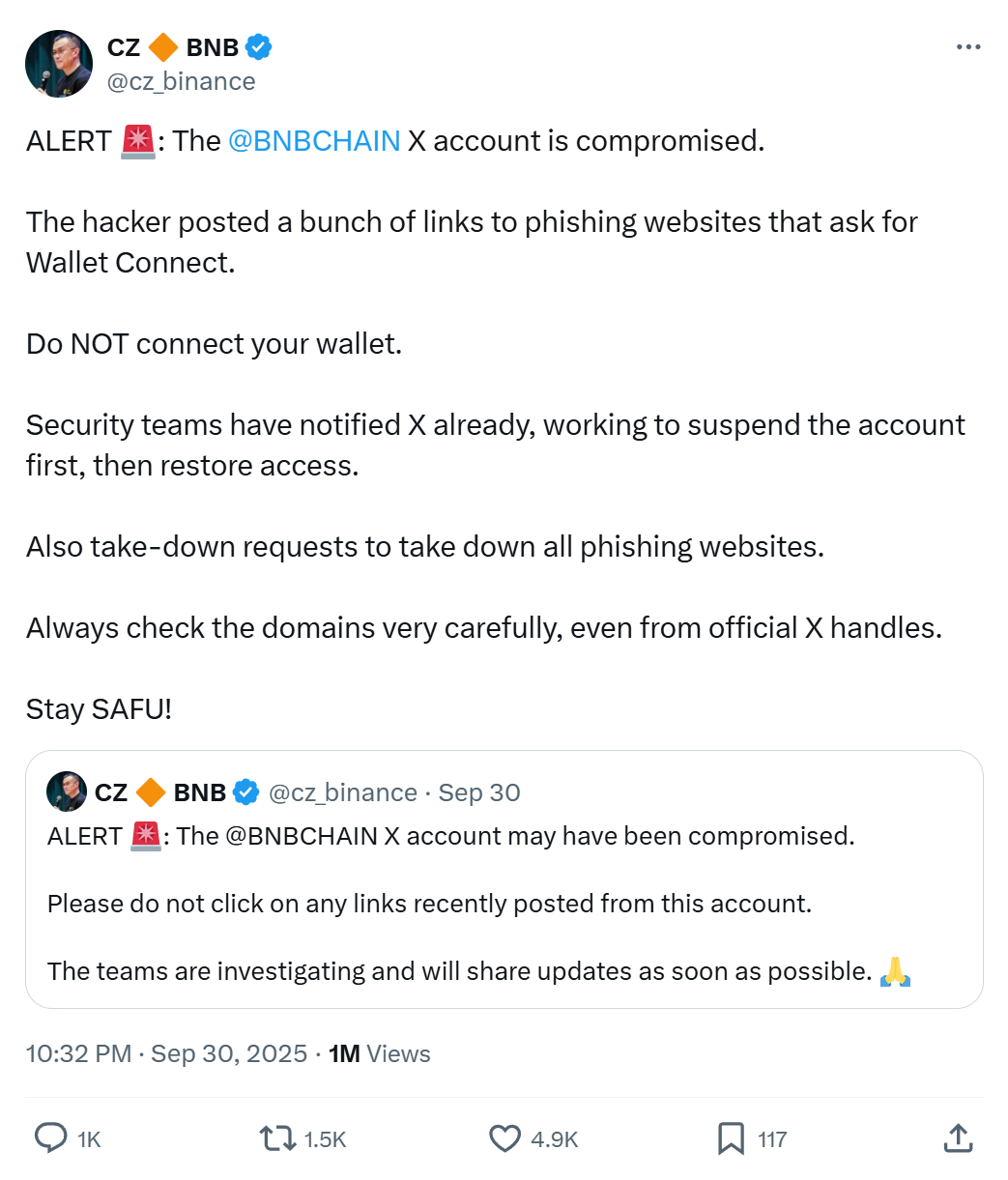
For example, take former Binance CEO Changpeng Zhao's (CZ) response when they got hacked on X, he warned users not to click any links from the hacked handle. He confirmed the posts contained phishing material and said Binance had already contacted X to suspend the account and filed takedown requests for the phishing domains.
That said, transparency doesn't mean oversharing every detail, it means communicating honestly about what you know and what you're doing about it.
7) Avoid Assigning Blame Elsewhere
It's tempting to point fingers when things go wrong. But deflecting responsibility rarely plays well with audiences.
Take ownership of the problem, even when external factors contributed to the issue. For example, if your account gets hacked, you didn't ask for that to happen, but clearly there were steps you could have taken to better protect yourself.
Apologies that start with "we're sorry, but..." lose trust fast. People don't respond well to excuses. If you own it, people will appreciate the honesty, and they'll respect you for being willing to admit your mistakes.
8) Engage with Your Audience
During a crisis, your comment sections will fill up quickly. You probably won't be able to respond to everyone, but you should make an effort to engage with as many people as possible.
Take a moment to acknowledge and empathize with the comments you respond to. A thoughtful reply shows you're listening and that you care about your audience's concerns. This human touch can help de-escalate tension and rebuild goodwill (which at this point you'll likely need).
9) Communicate Internally
Don't forget your own team while you're managing external communications. Your employees need to know what's happening and how you're planning to tackle it.
Clear internal communication prevents confusion, ensures everyone is aligned on messaging, and empowers your team to respond appropriately if they're approached directly (think customers, journalists, or on their personal social accounts).
This is why you should have a social media crisis management team and a plan in place before problems arise. If everyone knows their role, you'll respond faster and more effectively when it matters most.
Conclusion
Managing a social media crisis requires preparation, speed, and transparency. The brands that recover fastest are the ones that take ownership, communicate honestly, and learn from their mistakes. They don't hide from the problem, they address it head-on while keeping their audience informed every step of the way.
So use the tips we shared above to address crises and fix issues. Also, consider using security tools like Spikerz to protect against hacking, manage your comment sections, and monitor threats in real time.
The cost of protection is nothing compared to the price of a breach, or the long-term damage of a poorly handled crisis.
