McDonald's Instagram hacked by memecoin promoters


Hackers compromised McDonald's Instagram account to promote a fraudulent Grimace Coin, a cryptocurrency scam. This article explains how the attack unfolded, why memecoins attract bad actors, and which defenses help: early threat detection, 2FA and real-time monitoring.
The recent hacking of McDonald's Instagram account has brought to light cryptocurrency scams, particularly memecoins. On August 21, 2024, hackers accessed McDonald's IG. They used it to promote a fraudulent cryptocurrency called "Grimace Coin," named after the fast-food chain's iconic purple mascot.
This attack not only highlights vulnerabilities in corporate social media accounts. It also raises serious concerns about the security of digital assets such as memecoins. In this article, we will discuss the details of this incident and its implications for the cryptocurrency landscape. Plus, we will show you how Spikerz can protect against similar cyber threats.
McDonald's hack: what happened?
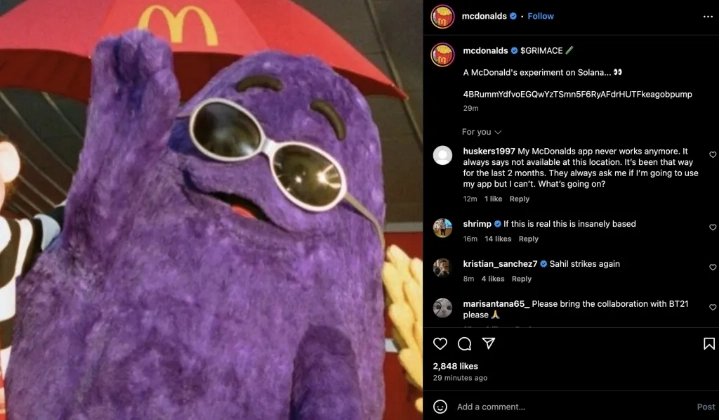
On the fateful day of August 21, hackers took control of McDonald's official Instagram account, which boasts over 5.1 million followers. They posted messages claiming that McDonald's was running an experiment involving a memecoin on the Solana blockchain. This post enticed followers to invest.
The memecoin, named "Grimace Coin," experienced a sudden surge in market value. It skyrocketed from mere thousands to a staggering $25 million in just 30 minutes.
However, this rise was followed by an equally rapid crash, as the hackers dumped their holdings, resulting in a classic "rug pull" scenario. Investors were left holding worthless tokens, while the perpetrators made away with approximately $700,000 in Solana, a popular cryptocurrency.
This scam, where bad actors promote a token, inflate its value, and cash out, is not new to the cryptocurrency market. Still, using a major corporate account like McDonald's is a bold escalation of such schemes. It highlights the importance of maintaining strong security protocols for social media accounts, especially those with significant followings.
A growing trend of memecoin scams
The incident involving Grimace Coin is part of a broader trend of cryptocurrency scams that exploit the appeal of memecoins.
Memecoins, by nature, are highly speculative and volatile. They are often based on pop culture references, driven mainly by social media hype rather than intrinsic value. While some memecoins like Dogecoin have built a community and achieved long-term value, many are created to capitalize on investor FOMO (Fear of Missing Out).
In the case of Grimace Coin, the hackers targeted McDonald's massive following to lend credibility to their scam. The appearance of legitimacy and the allure of a corporate-backed cryptocurrency attracted many unsuspecting investors. Unfortunately, these schemes are becoming more common, as social media platforms are often the primary venue for promoting memecoins. Recent examples include the hacking of Mandiant's X account and celebrities like Doja Cat to promote fraudulent tokens.
The impact of the Grimace Coin scam on McDonald's
For McDonald's, the attack has been a significant reputational challenge. While the company acted quickly to regain control of its account and apologized to its followers, the damage was already done.
The hack resulted in financial losses for those who invested in Grimace Coin and raised questions about McDonald's ability to secure its online presence.
For investors and the broader public, the incident highlights the risks associated with digital assets, especially those promoted on social media. In an age of rampant misinformation and scams, it is increasingly difficult for users to discern between legitimate opportunities and fraudulent schemes.

Solution: Spikerz helps preventing social media hacks
The McDonald's hack and other high-profile breaches highlight the urgent need for stronger security measures on social media platforms. This is where Spikerz comes into play.
Spikerz is a social media security service designed to protect individuals and businesses from cyber threats, particularly those targeting social media accounts. Here's how we can help mitigate the risks highlighted by the Grimace Coin incident:
1. Early Threat Detection
Spikerz uses advanced algorithms to detect unusual account activity, such as unexpected logins or changes in posting patterns. In the case of McDonald's, Spikerz could have flagged the sudden change in account behavior (such as promoting a cryptocurrency) before the hack gained significant traction. Early detection is critical in preventing hackers from fully executing their schemes.
2. Two-factor authentication and Password Management
Weak passwords and insufficient account security are often the gateways for cyberattacks. Spikerz ensures that accounts are protected with multi-layered authentication processes. This step reduces the likelihood of unauthorized access. Spikerz offers tools for corporate accounts to protects against breaches.
3. Real-Time Monitoring and Alerts
Spikerz provides real-time monitoring of social media accounts, alerting users to suspicious activity or unauthorized posts. For large brands, receiving immediate notifications of the hack could have reduced the time the fraudulent posts were live, potentially minimizing the financial losses and reputational damage.
4. Awareness
One of the most effective ways to prevent cyberattacks is by educating users. Our blogs and tutorials help businesses and individuals better understand the risks associated with social media. They show how to protect their online presence from phishing, scams, and account takeovers.
The broader implications for cryptocurrency regulation
The rise of scams highlights the need for more robust cryptocurrency regulation. As digital assets continue to grow in popularity, regulators are grappling with how to protect investors from fraudulent schemes while still fostering innovation in the space. Following the McDonald's incident calls for stricter oversight of memecoins have intensified, with some advocating for more stringent Know Your Customer (KYC) and Anti-Money Laundering (AML) protocols for exchanges and token creators.
In the meantime, investors must exercise caution when considering cryptocurrency investments, particularly those promoted via social media. Understanding the risks and conducting thorough due diligence can help individuals avoid scams.
The hacking of McDonald's IG account to promote Grimace Coin is a reminder of the vulnerabilities in cryptocurrency. As these scams become more sophisticated, the need for a social media security tool has never been more apparent.
Spikerz offers a comprehensive solution to protect businesses and individuals from the growing threat of social media-based cyberattacks.
To know more, contact us here, or book a consultation here. We will be happy to discuss more with you!


