Online Brand Protection For Sports Teams And Athletes


Summary:
Protecting your sports brand online requires more than monitoring one official account—you need comprehensive defense against impersonators, deepfakes, and sophisticated scams that can destroy years of reputation in hours. Learn the five essential types of brand protection tools (trademark monitoring, IP enforcement, domain tracking, content monitoring, and social media surveillance) and discover four powerful platforms—Spikerz, Cyble Vision, RiskProfiler, and Recorded Future—that help sports teams and athletes detect threats in real-time and take immediate action. The practical takeaway: implement multi-layered monitoring today to stay ahead of bad actors and maintain authentic control over your digital identity before a crisis forces your hand.
Online Brand Protection For Sports Teams And Athletes
Nowadays, you are no longer just managing a single official social media page; your brand is scattered across dozens of platforms where fans, critics, and criminals interact constantly. This decentralization makes it difficult to maintain control, especially as bad actors use AI to impersonate athletes and teams with frightening realism.
A fake profile can post damaging statements or run scams that look identical to your official content, eroding the trust you've worked years to build. If you aren't careful, these impersonators can hijack your voice before you even realize they exist.
So in this blog post, we'll define what brand protection is, the various threats targeting the sports industry, and finally, we'll go over the best brand protection tools available to help you maintain a safe and authentic online presence.
What Is Online Brand Protection?
Online brand protection is when you use tools to protect against threats that can harm your business or personal career online. It involves actively monitoring and fighting against brand impersonators, content thieves, counterfeiters, and hackers who target your social media presence.
Why Should You Take Steps To Protect Your Brand Online?
You should do everything you can to protect your brand online because your reputation is your most valuable asset. A single security breach or a successful impersonation scam can destroy customer trust and lead to massive financial losses. And unfortunately, without proper protection, you'll leave your brand exposed to criminals who profit from your hard work.
Consider the following data on the threats facing brands today:
- Social media impersonation: According to the FTC's 2025 social media fraud advisory, there's been a growing number of scams through impersonated profiles, including brand-themed pages and fake business accounts.
- Phishing attacks: According to Knowbe4's 2025 Phishing Benchmark report, there's been a 17.3% increase in phishing emails and a 47% growth in attacks evading Microsoft's native defenses and secure gateways (SEGs).
- Social engineering: According to Verizon's DBIR 2025, 60% of breaches involve the human element, which makes continuous cyber security training a must for all brands.
- Spoofing: This is a huge problem. According to the FBI's IC3, in 2024 they received 193,000+ phishing and spoofing reports.
- Deepfakes: The volume of deepfake content shared online is exploding. According to Deepstrike, content is multiplying exponentially, jumping from 500,000 in 2023 to a projected 8,000,000 in 2025.
- Counterfeiting: According to Marqvision, 31.8% of shoppers bought a fake first seen on social media. It is getting harder for American shoppers to avoid buying a fake, as 71.6% of respondents were looking for original items when they bought a fake.
With this in mind, what can you do to protect yourself?
How To Protect Your Brand Online
There are different types of brand protection tools, and each one focuses on different platforms and threats. Here's a brief description of how each one works:
Trade Mark Monitoring
Trademark monitoring tools continuously scan the internet and social media for unauthorized use of your logos, slogans, or brand names. It identifies people who download your assets and upload them to other platforms so you can take action.
Intellectual Property Enforcement
Intellectual property enforcement is the process of taking legal or administrative action against those who infringe on your copyright. This includes sending cease-and-desist letters and working with platforms to remove infringing content.
Domain Name Monitoring
Domain name monitoring tracks registrations of URLs that are similar to your official website. This helps prevent domain squatting and "typosquatting," where hackers use look-alike sites to steal login credentials or sell fake merchandise.
Online Content Monitoring
Online content monitoring scans news sites, forums, and blogs for unauthorized use of your digital content. It helps you stay aware of how your brand is being discussed and identifies emerging narratives that could damage your brand image.
Social Media Monitoring
Social media monitoring focuses specifically on tracking conversations and activities across platforms like Instagram, Facebook, X, and TikTok. It helps you identify fake profiles and malicious bots and block account takeovers before they can cause any damage.
Best Online Brand Protection Tools For Sports Teams And Athletes
These tools all help protect sports teams and athletes online across different areas. So go ahead and examine them closely to choose the tool that fits your specific needs best.
1) Spikerz
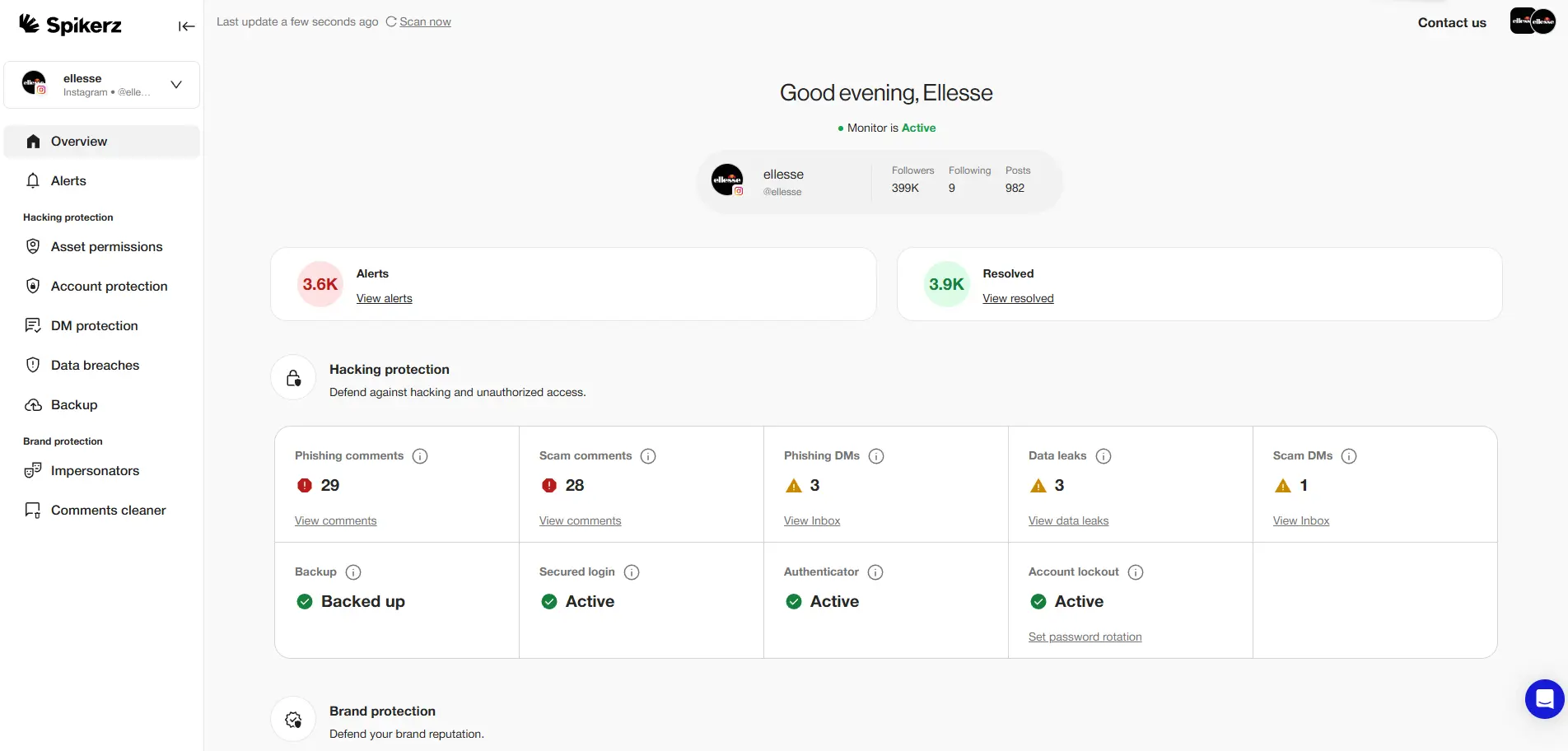
Spikerz is an all-in-one social media security platform designed to protect your online presence. It connects to your accounts through official APIs, meaning it never needs your passwords to have 24/7 monitoring.
Here's what Spikerz provides complete protection against:
- Account takeovers: It detects suspicious logins and can automatically change passwords to lock out intruders.
- Phishing in DMs and comments: The AI scans messages and comments to block harmful links and social engineering campaigns in real-time.
- Impersonating profiles: It continuously scans for fake accounts mimicking/copying your brand and assists in their removal.
- Moderate comments: The system identifies and hides offensive language, trolls, and spam automatically.
- User access management: You can manage team roles from a central dashboard and revoke access instantly when someone leaves your organization.
2) Cyble Vision
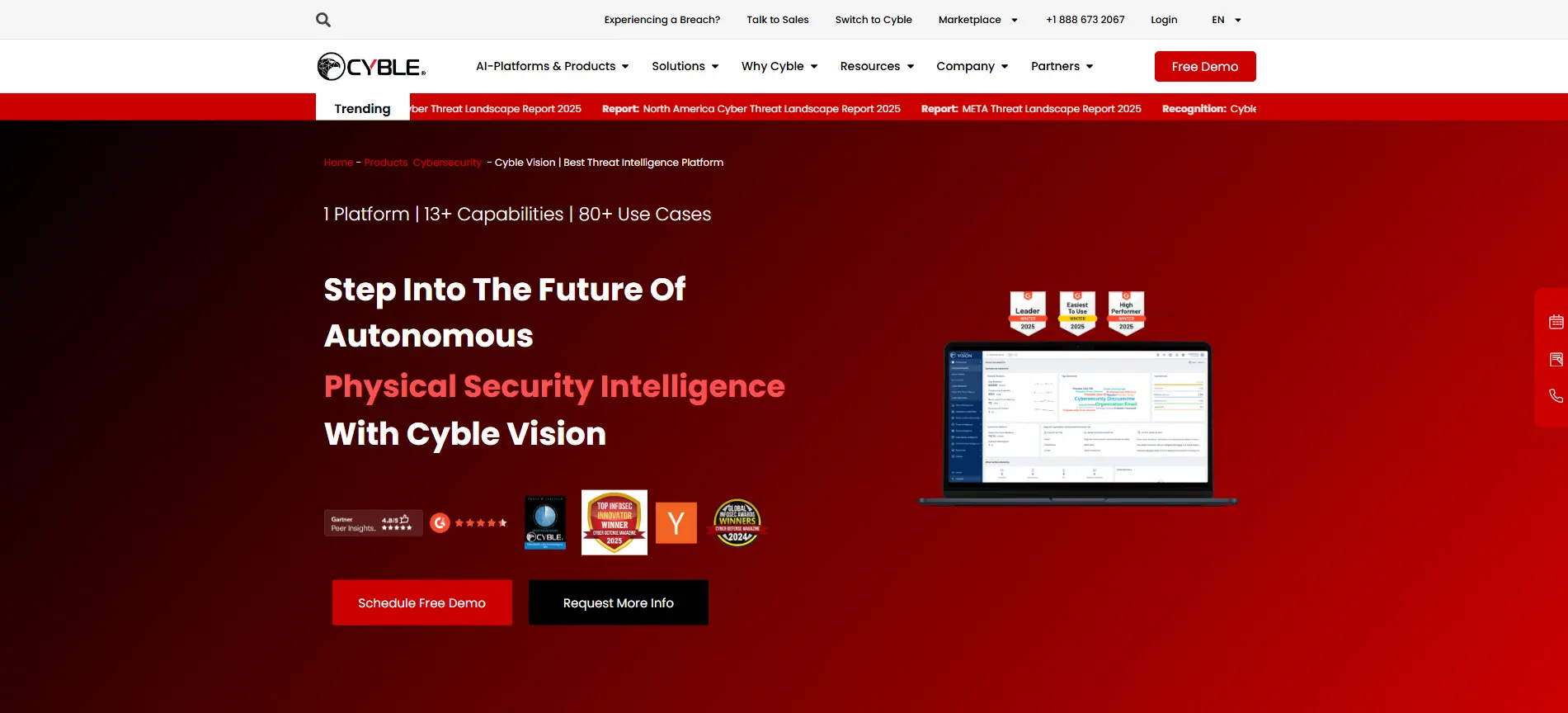
Cyble Vision is an AI-powered platform that helps organizations manage cyber risks by providing a detailed view of their external attack surface. It focuses on identifying vulnerabilities before they can be exploited by hackers.
Its capabilities include:
- Attack Surface Management: It discovers and monitors all your external-facing digital assets.
- Brand Intelligence: This identifies brand abuse, such as fake apps or spoofed websites, across the web.
- Cyber Threat Intelligence: It provides insights into attacker methodologies and emerging global threats.
- Dark Web Monitoring: The platform scans underground markets to see if your data is being discussed or sold.
3) RiskProfiler
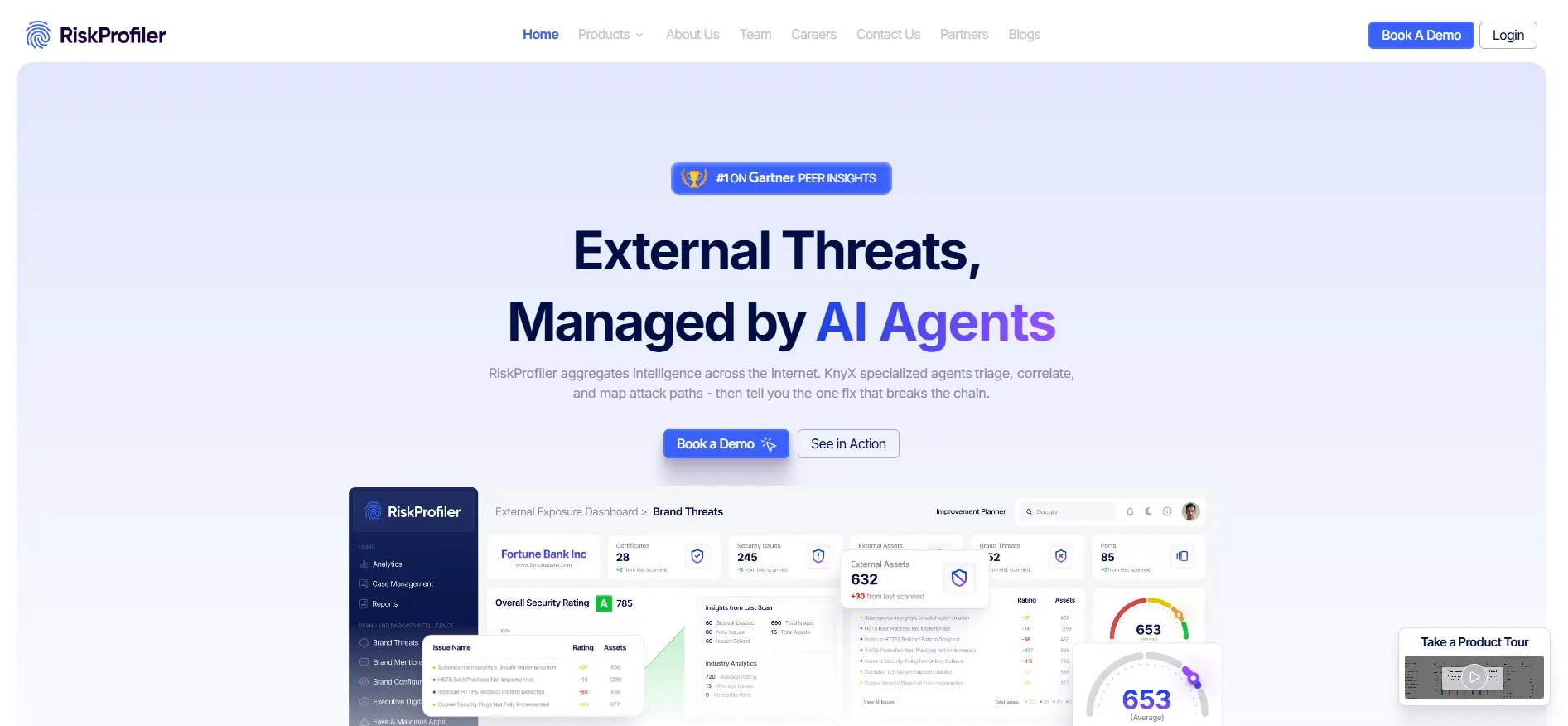
RiskProfiler is a specialized tool designed to help businesses manage external risks and protect their technical infrastructure. It focuses heavily on the security of your domains, IPs, and DNS records to prevent spoofing and data redirection.
Its capabilities include:
- Dark Web Intelligence: It monitors for mentions of your brand or leaked credentials in restricted digital areas.
- Physical Threat Intelligence: This tracks real-world risks that could impact your organization's digital or physical security.
- Domain and IP Protection: It evaluates your technical assets' security posture to identify potential weaknesses.
4) Recorded Future Brand Intelligence

Recorded Future Brand Intelligence uses massive data collection to protect brands from complex digital attacks. It is designed to find threats that traditional security tools might miss by looking at the broader context of the web.
Its capabilities include:
- Leaked credentials: It alerts you immediately if employee or executive login details appear in data breaches.
- Typosquat domains: The tool identifies look-alike websites designed to trick your customers and followers.
- Brand discussion monitoring: It tracks when your brand is mentioned on dark web markets or cybercrime forums.
- Executive impersonation (Whaling): The platform identifies fake profiles specifically targeting your high-level leadership.
Conclusion
A brand is like a reputation. You earn it by doing the hard things well. But in the decentralized world of social media, that reputation can be stolen by an impersonator in a single afternoon. That's why if you aren't monitoring your digital presence, you aren't really in control of your career.
The good news is, the tools we discussed provide the intelligence you need to fight back. Don't wait for a crisis to realize that your digital identity needs professional defense. Protect what you've built with the same intensity you used to build it.
