How to Avoid the Mistake the White House Made

.webp)
Summary:
A weird White House video sparked hack rumors mid-Iran conflict. Turns out nothing was compromised. But real hacks, like Ford's X account breach that dropped its stock 1.5%, aren't so lucky. Five layers of defense (zero trust, access control, training, monitoring, rapid response) keep you covered.
There was a lot of speculation circling the internet after The White House posted a strange video on its social media accounts. In fact, many people thought the accounts had been hacked.
But, what actually happened?
In this post, we'll share exactly what happened, why you should care, and how to keep your business from facing the same scrutiny. We'll also walk you through five practical ways to protect your social media accounts from real threats.
TLDR:
On March 26, 2026, The White House posted a strange video on Instagram and X that panicked many people. People assumed the accounts had been hacked, especially with the Iran conflict in the background. Turns out, nothing was hacked. The post was legitimate (just weirdly formatted).
But the whole thing proved a bigger point: trust in social media accounts is fragile, and speculation alone can do real damage.
Actual hacks (like the Ford Motor Company X account breach) have wiped out stock value and years of brand trust in hours. And the fix isn't one big security tool, it's layers. Here’s what you should do:
- Use a zero trust framework
- Lock down user access management
- Train your employees to spot threats
- Monitor your accounts 24/7 (use a tool like Spikerz for that)
- Build a rapid response team so you're ready before a crisis hits
The more layers you stack, the harder it gets for attackers to break through.
What Happened To The White House?
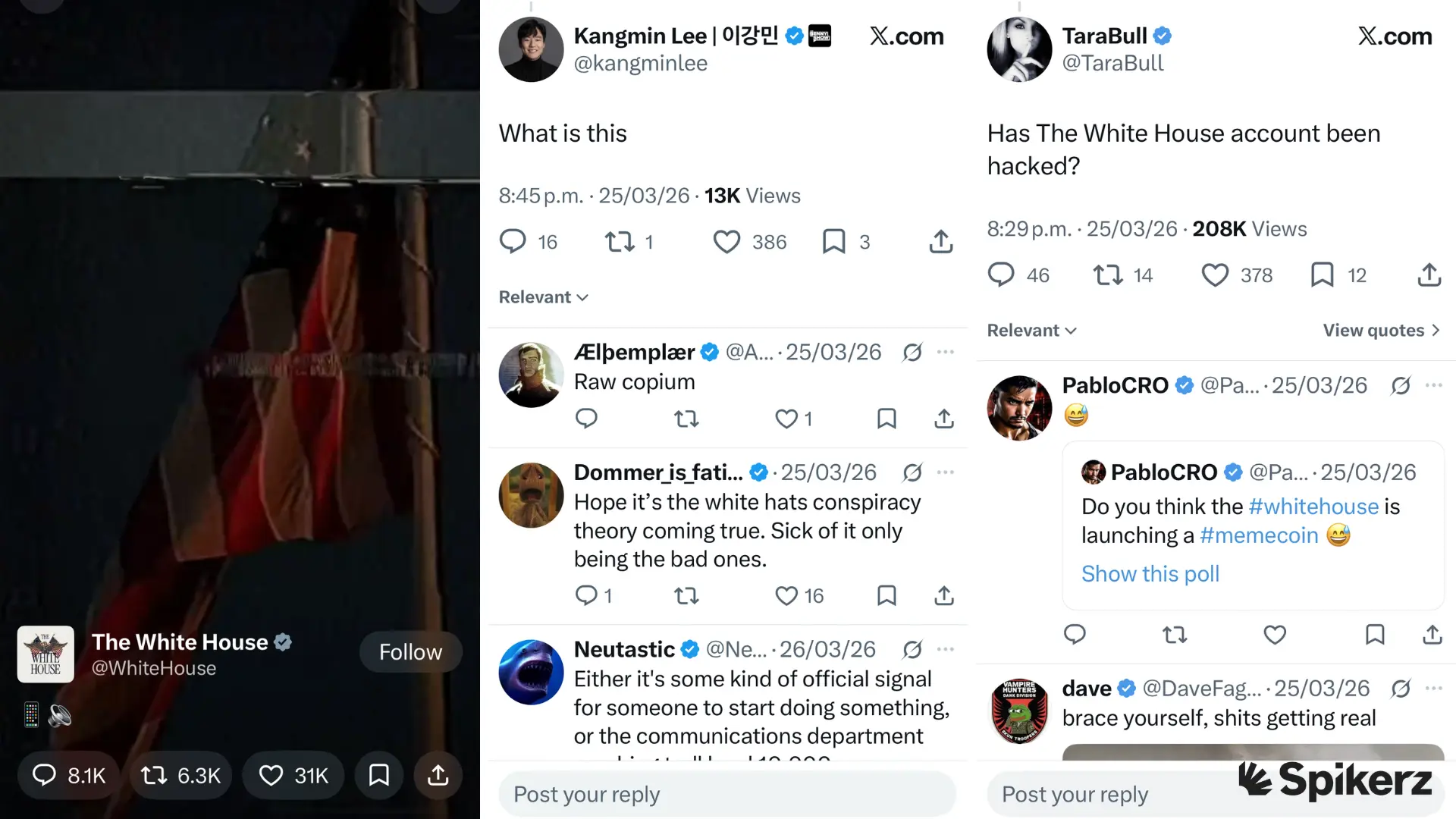
On March 26, 2026, The White House posted a video on its Instagram and X handles that left followers scratching their heads. The clip started with a dark screen and a notification sound before showing an image of the US flag. This unusual format triggered immediate concern from viewers who wondered if something had gone wrong.
For example, some of the fears people had were of hacking amid the ongoing war with Iran. The post showed up shortly after Israel and US strikes took out their Supreme Leader Ayatollah Khamenei. Soon after, many people jumped to conclusions, assuming bad actors had taken control of the official accounts to spread propaganda or misinformation.
However, there was no indication that the White House handles were actually hacked. The incident ended up being pure speculation, with the post being a legitimate one from the official team. Still, the panic showed how fragile trust in social media accounts can be during sensitive moments.
Why Should You Pay Attention To This?
While The White House 'hack' turned out to be fake, real incidents like this happen far too often. For example, when the war between Israel and Hamas started, Ford Motor Company's X Account was hacked and used to post anti-Israel messages and pro-Palestine slogans, including emojis of the Palestinian flag. What’s worse is that the hack lasted long enough to reach millions of followers and trigger a huge public backlash.
As a result, Ford's stock price dropped 1.50% following the incident. That's why businesses have to pay close attention to their cybersecurity to avoid these kinds of issues. A single hacked post can wipe out years of brand building in a matter of hours. The good news is that you can prevent most of these attacks with the right approach.
How To Avoid Making The Same Mistake On Your Business
The best way to protect your social media accounts is to add as many layers of security as possible. A single defense rarely stops attackers, but multiple layers make their job much harder. Here are the best ways to lock down your accounts:
1) Use A Zero Trust Framework
A zero trust framework is a security model that treats every user, device, and connection as untrusted by default. It assumes that threats can come from inside and outside your organization. Meaning that no one gets automatic access just because they're part of your team.
This model is highly effective because it works by verifying every request before granting access to your accounts. Each user must prove their identity through multiple checks, including device verification and location validation. And the best part is, permissions are limited to only what someone needs for the specific task at hand.
The benefits zero trust provides includes:
- Reduced risk of insider threats from current or former employees
- Smaller attack surface for hackers to exploit
- Better visibility into who accesses your accounts and when
- Faster detection of suspicious behavior across your team
- Easier compliance with enterprise-level security standards
2) Enable User Access Management
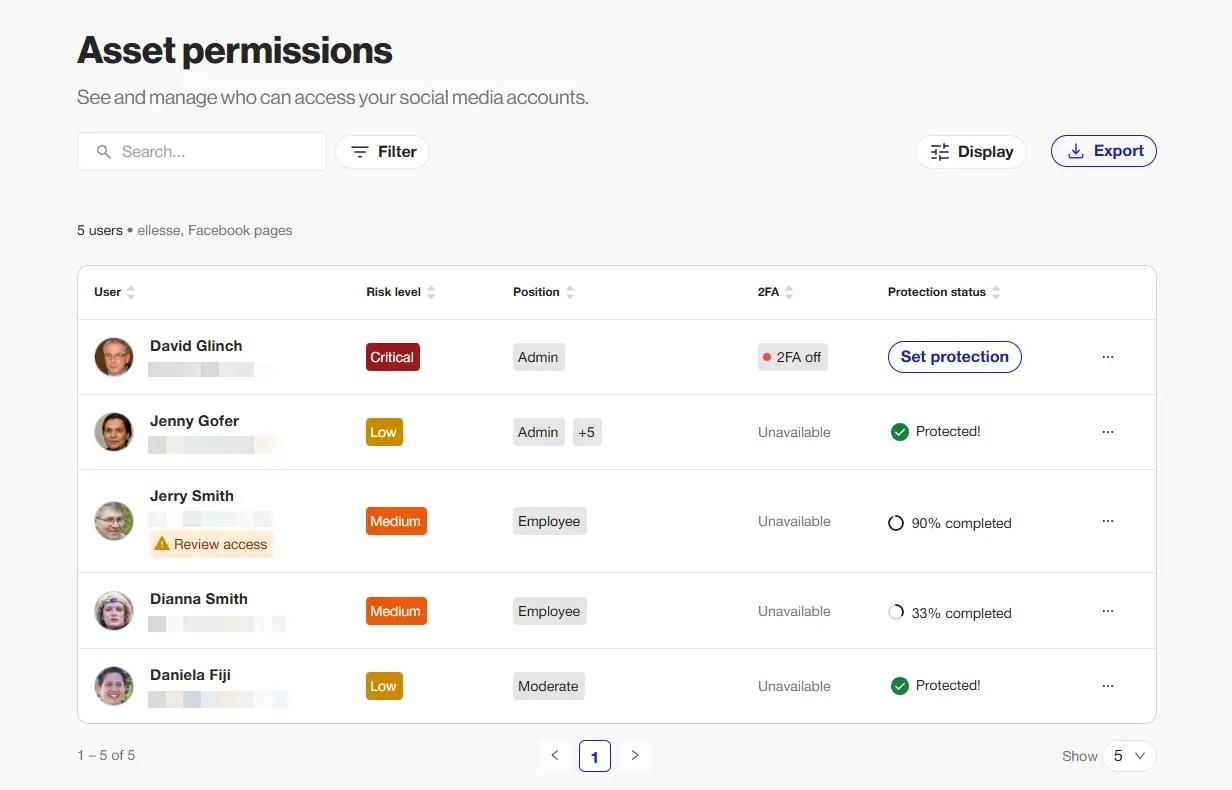
User access management controls who can reach your social media accounts and what they can do once inside. It centralizes permissions across all your platforms in one place, stopping the chaos of shared passwords and forgotten access points.
The system works by assigning specific roles to each team member based on their job. Admins might have full control, while content creators only get publishing rights. When someone leaves the company, you revoke their access instantly without having to reset every password.
The benefits this system provides includes:
- No more shared credentials floating around in Slack or WhatsApp
- Instant offboarding when employees or vendors leave the team
- Clear audit trail of who did what on your accounts
- Protection against rogue access from former staff or agencies
- Centralized control across Instagram, TikTok, Facebook, and more
3) Provide Your Employees Cybersecurity Awareness Training
Cybersecurity awareness training teaches your team how to spot and avoid online threats. Most attacks succeed because of human error, not technical flaws in your systems. So train your employees to turn them from your weakest link into your strongest defense.
You can train your team through workshops, online courses, and regular phishing simulations that test their reactions. Focus on areas like recognizing phishing emails, creating strong passwords, spotting fake login pages, and reporting suspicious activity. Repeat the training every quarter to keep skills sharp and cover new threats as they appear.
Here are the benefits cybersecurity awareness training provides:
- Fewer successful phishing attempts targeting your team
- Lower risk of accidental data leaks from careless actions
- Stronger overall security culture across the company
- Better response times when threats appear in inboxes
- Reduced costs from preventable security incidents
4) Enable Account Monitoring
Social media account monitoring is a system that watches your accounts around the clock for signs of trouble. It catches suspicious logins, unusual posting patterns, and other red flags before they cause real damage. For example, among the best platforms available you can find Spikerz.
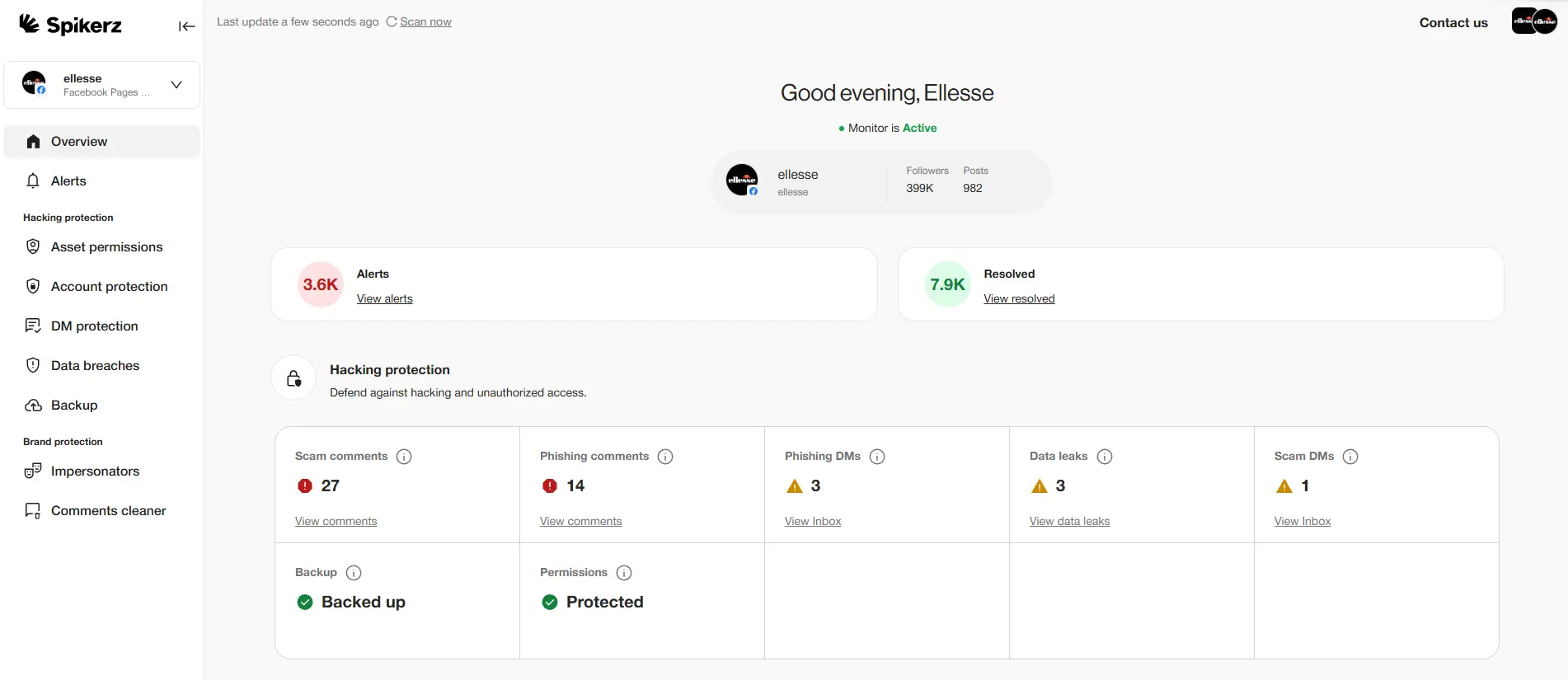
Spikerz monitors your accounts 24/7 using AI to detect threats in real time. Our system scans for hacking attempts, bot attacks, and unauthorized access from new locations or devices. When something looks off, we alert you immediately so you can take action before things spiral out of control.
Here are the main benefits account monitoring provides:
- Early detection of hacking attempts before damage spreads
- Protection against shadowbanning caused by suspicious activity
- Real-time alerts about unauthorized logins and changes
- Continuous coverage even when your team is offline or asleep
- Peace of mind knowing your accounts are always watched
5) Create A Rapid Response Team (RRT)
A rapid response team is a group of people ready to handle security incidents the moment they happen. The team usually includes security experts, social media managers, PR specialists, and legal advisors. Each member has a clear role to play during a crisis to avoid confusion.
The team works by following a pre-built incident response plan when something goes wrong. The way it works is simple, first they quickly assess the situation, then contain the threat, and lastly communicate with stakeholders and the public. After the incident, they review what happened and update protocols to stop it from happening again.
Here are the benefits having a RRT provides:
- Faster response times when attacks hit your accounts
- Coordinated action across security, marketing, and legal teams
- Reduced damage from breaches, hacks, and PR crises
- Clear communication with followers during stressful moments
- Continuous improvement of your security practices over time
Conclusion
The White House situation clearly shows creators and businesses of all sizes that social media accounts live under constant scrutiny. Even when nothing bad actually happens, the panic alone can damage trust and fuel dangerous speculation across the internet.
The good news is, you don't need to wait for a real attack to take action. Build layers of security through zero trust frameworks, access management, employee training, account monitoring, and a rapid response team. Each layer makes your accounts harder to breach and your team faster to react when something does slip through.
That said, Spikerz gives you all the tools you need to protect every layer of your social media presence. Book a demo today and find out how we can secure your accounts before the next crisis hits your timeline.
