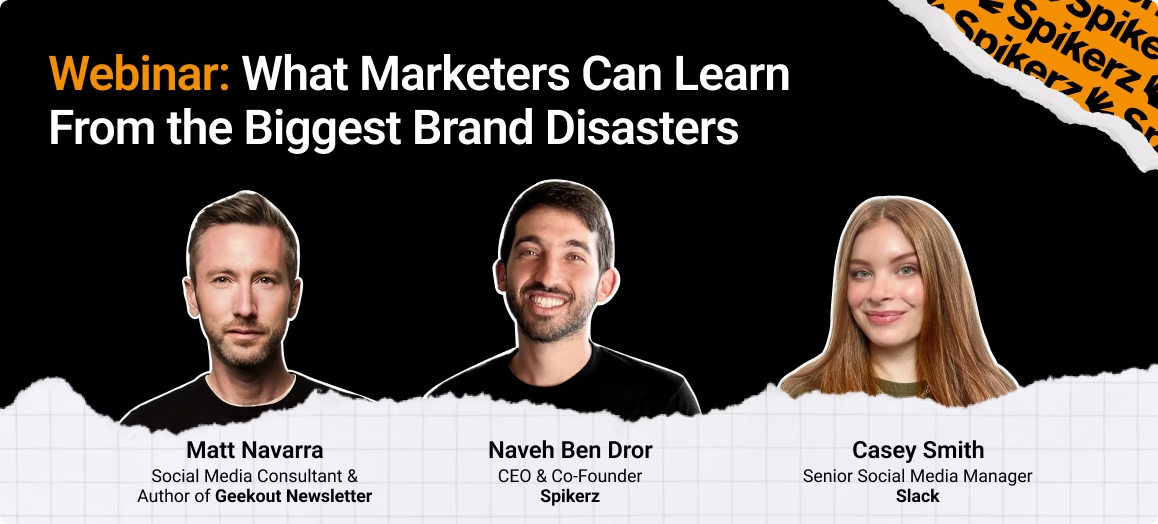
Social Media Hacks & AI Attacks:
What Marketers Can Learn From the Biggest Brand Disasters
Watch the webinar replay and learn how brands are exposed through account takeovers, impersonation, comment scams, access chaos, and AI-powered attacks.





Check your brand’s exposure with a Spikerz social media security audit
How does the audit work?
Secure, read-only review through official platform APIs
No passwords required
Risk scan across social accounts
Expert review call with findings and next steps






Explore other events from Spikerz

FAQs
Who is this webinar for?
This webinar is designed for social media managers, marketing teams, brand leaders, agencies, community managers, PR professionals, and anyone responsible for managing or protecting a brand’s social media presence.
What will I learn during the webinar?
You’ll learn how brands are being targeted through hacked accounts, impersonation scams, phishing attacks, fake giveaways, and AI-powered social engineering, plus practical steps to reduce risk and respond faster when incidents happen.
Will the webinar cover real-world examples?
Yes. The session breaks down real incidents involving major brands and public figures, including examples of hacked social accounts, fake support impersonation scams, and fraudulent giveaways.
Is this webinar only relevant for large enterprise brands?
No. One of the key themes discussed is that attacks affect both large global brands and smaller companies alike. In many cases, smaller teams are even more vulnerable due to limited resources and processes.
How long is the webinar?
The webinar runs for approximately one hour, including discussion, case studies, and live Q&A.
What makes social media attacks different from traditional cyberattacks?
Unlike traditional cyberattacks, social media attacks are highly public. They can spread instantly, damage customer trust, create PR crises, and impact brand reputation in real time.
Why are social media attacks becoming more common?
AI has dramatically lowered the barrier to entry for attackers, making phishing, impersonation, and fake campaigns faster, cheaper, and easier to scale than ever before.
What are impersonation scams?
Impersonation scams happen when attackers create fake accounts posing as a brand, support agent, or employee to trick customers into sharing sensitive information or making payments.
Can brands still be at risk even if their accounts aren’t hacked?
Yes. Attackers can impersonate brands in comments, DMs, giveaways, or fake support accounts without ever gaining access to the official account itself.
What are the biggest vulnerabilities for social media teams?
Common risks include outdated permissions, shared passwords, former employees retaining access, unmanaged agency access, weak governance, and lack of clear ownership.
How important is having an escalation plan?
It’s critical. One of the biggest challenges during a security incident is confusion around ownership, communication, approvals, and response processes. Teams that prepare in advance recover faster and reduce damage.
What should brands do first to improve their social media security?
The webinar recommends starting with three core actions:
- Assign clear ownership
- Audit account access and permissions
- Monitor for suspicious activity and impersonation attempts
Are platform security tools enough on their own?
Not always. While social platforms offer features like keyword filtering and verification, the webinar discusses why brands cannot rely solely on platform protections.
How does AI make phishing attacks more dangerous?
AI enables attackers to create highly convincing emails, fake login pages, fake job offers, and impersonation campaigns with realistic branding, flawless grammar, and personalized messaging at scale.
What happens if a brand’s social account gets hacked?
The impact can include reputational damage, customer distrust, PR fallout, financial scams targeting followers, loss of access to accounts, and lengthy recovery processes with platforms.
Will the webinar include practical takeaways?
Yes. Attendees will receive actionable guidance, frameworks, and a practical security playbook to help strengthen their brand’s social media security processes.
Do I need technical cybersecurity knowledge to attend?
No. The webinar is designed specifically for marketing and social media professionals, with a focus on practical risks, workflows, and real-world brand scenarios rather than deep technical jargon.
Why should social media managers care about security?
Because social media is now one of the most visible and trusted public-facing parts of a brand. A single compromised account can quickly escalate into a reputational crisis.