Here Are 6 Top Proofpoint Alternatives for Marketers and Security Teams in 2026

Summary:
The best Proofpoint alternative depends on your threat surface, but for most marketing and security teams, these three deliver the clearest gap-filling value:
Is Proofpoint Still Enough for Your Brand's Digital Risk?
Proofpoint built its reputation protecting the enterprise inbox, and that still matters. But brand risk has shifted.
Impersonators operate on Instagram and TikTok. Compromised accounts post from inside your own channels. Comment sections flood with phishing links that never touch email. If your security stack stops at the inbox, you are monitoring the perimeter while the attack happens inside the walls.
This Spikerz guide looks at six platforms that fill the gaps Proofpoint leaves open, from email gateways to the social channels where your audience lives.
But first…
Why Listen to Us?
Spikerz protects social media accounts for brands like Speedo, Powtoon, and ellesse. Our platform has blocked over 57,000 hacks, removed over 500,000 impersonators, and filtered over 1.3 million toxic comments. That hands-on experience with marketing and security teams gives us direct insight into what buyers actually need when evaluating alternatives for social media protection.
What Is Proofpoint?
Proofpoint is an enterprise security platform built around email, cloud applications, and human-centric risk. Its core offering protects organizations from phishing, business email compromise, and malware delivered through the inbox. Additional layers cover cloud app security, insider threat detection, compliance archiving, and threat intelligence.
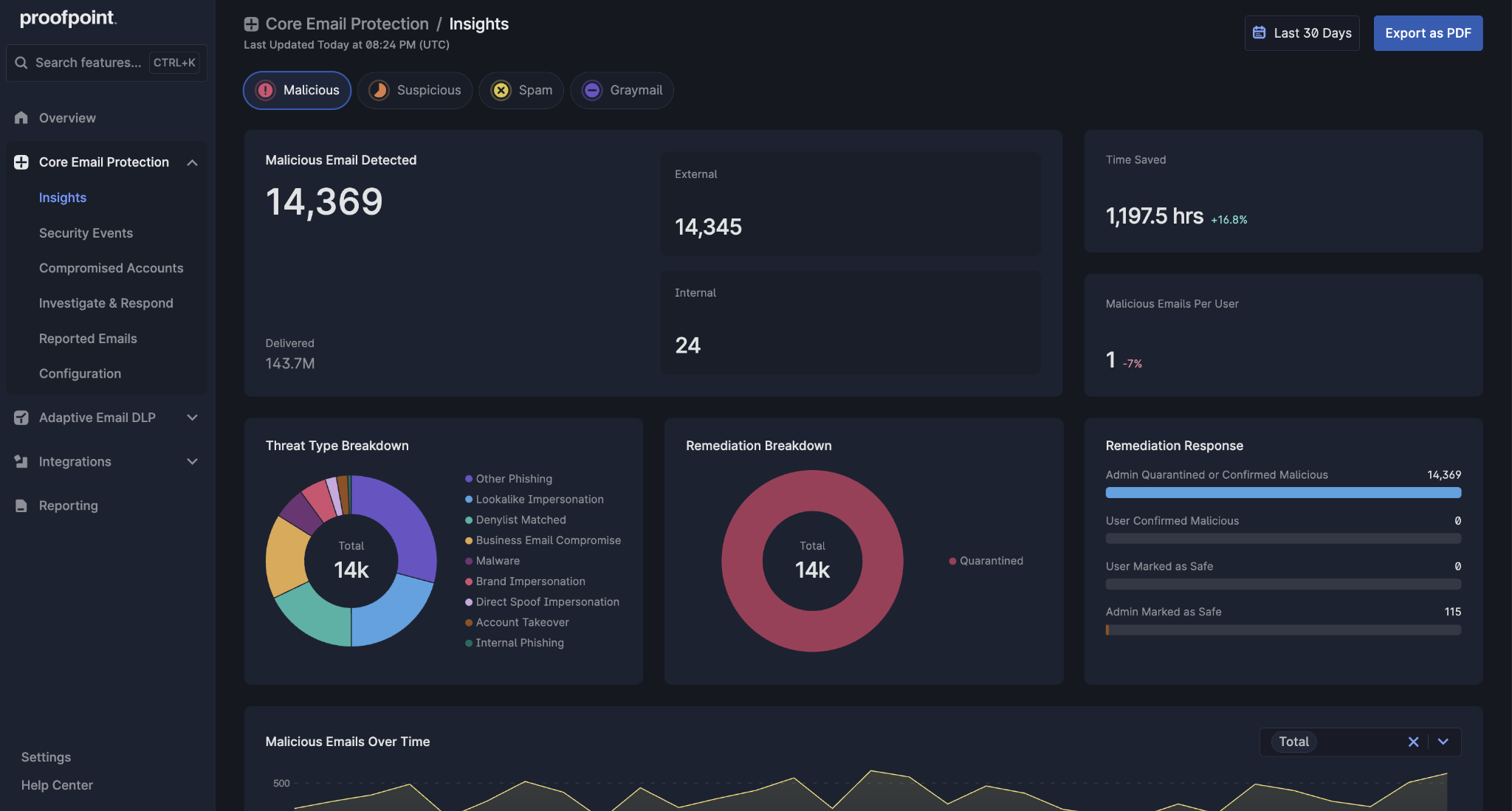
The platform is built for large enterprises with complex IT environments. IT and security teams deploy and manage it with dedicated resources.
Why Consider an Alternative to Proofpoint?
Proofpoint built its reputation protecting the enterprise inbox, and that remains its core strength, with a 4.5/5 rating on G2 across 1,326 reviews.
While the company now offers social media protection through add-ons like SocialPatrol and Messaging Protection, those capabilities are less mature, less integrated, and often treated as secondary to its email security offerings.
Here is where gaps tend to show up:
- Social protection feels bolted on: Proofpoint acquired Nexgate to build its social capabilities, but those features still sit apart from the main platform rather than flowing through a unified workflow.
- Implementation demands dedicated security resources: Smaller teams or marketing-led organizations often lack the IT bandwidth Proofpoint assumes.
- Brand protection and access governance stay fragmented: You may still need separate tools for impersonator takedowns, comment moderation, and social account access management.
- Cost and complexity scale fast:. Enterprises with simpler needs or narrower use cases sometimes pay for more than they use.
6 Proofpoint Alternatives for Email, Cloud, and Social Media Protection
Below is a quick overview of the platforms we’ll cover in this review:
1. Spikerz
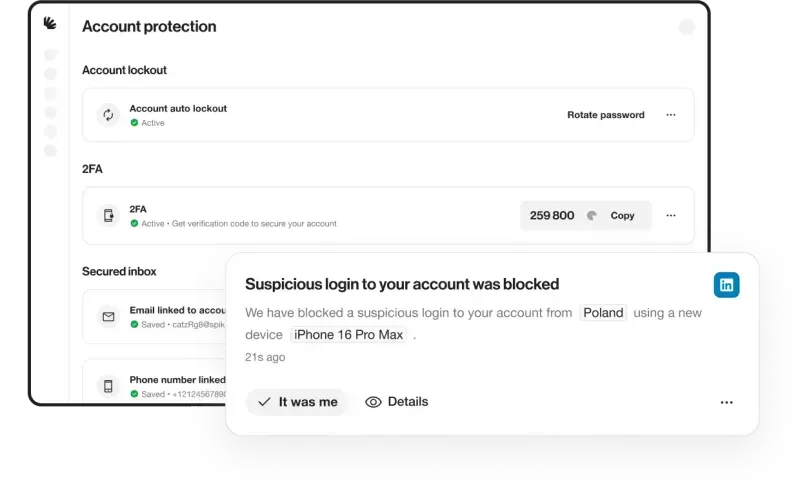
Spikerz is built for teams that need to act inside social platforms, not just monitor from the outside. Where Proofpoint's social capabilities remain perimeter-focused and acquired rather than native, Spikerz connects directly to Instagram, TikTok, Facebook, YouTube, LinkedIn, X, and WhatsApp to remove threats in real time.
It is designed for marketing and security teams that share ownership of social risk but lack a dedicated tool for it.
Key Features
- Account Takeover Protection: AI monitors every login attempt and blocks unauthorized access before a hack begins.
- AI Comment Moderation: Context- and sentiment-aware filtering removes spam, scams, and hate speech without relying on keyword lists.
- Impersonator Detection & Takedown: Automated identification and removal of fake accounts with a ~95% takedown success rate, typically within hours.
- Permissions Management: Full visibility and automated revocation of social account access when employees leave or agencies change.
- Unified Threat Dashboard: Single view of security risks across all social platforms and accounts.
- Phishing Protection: AI scans comments and DMs in real time to flag malicious links and social engineering attempts before they reach your team or audience.
- Social Media Backup: Automated cloud backup of posts, images, videos, and account data to enable fast recovery after a compromise or accidental deletion.
Pros
- 15-minute setup for marketing teams, no security expertise required
- Removes threats directly inside platforms, not just alerts
- One product covers account security, impersonation, access governance, and comment moderation
- Automated access revocation bridges HR offboarding to social account security
- 24/7 protection scales without adding headcount for moderation or takedowns
Pricing
- A demo with a member of the team is required to determine exact pricing figures.
2. ZeroFox
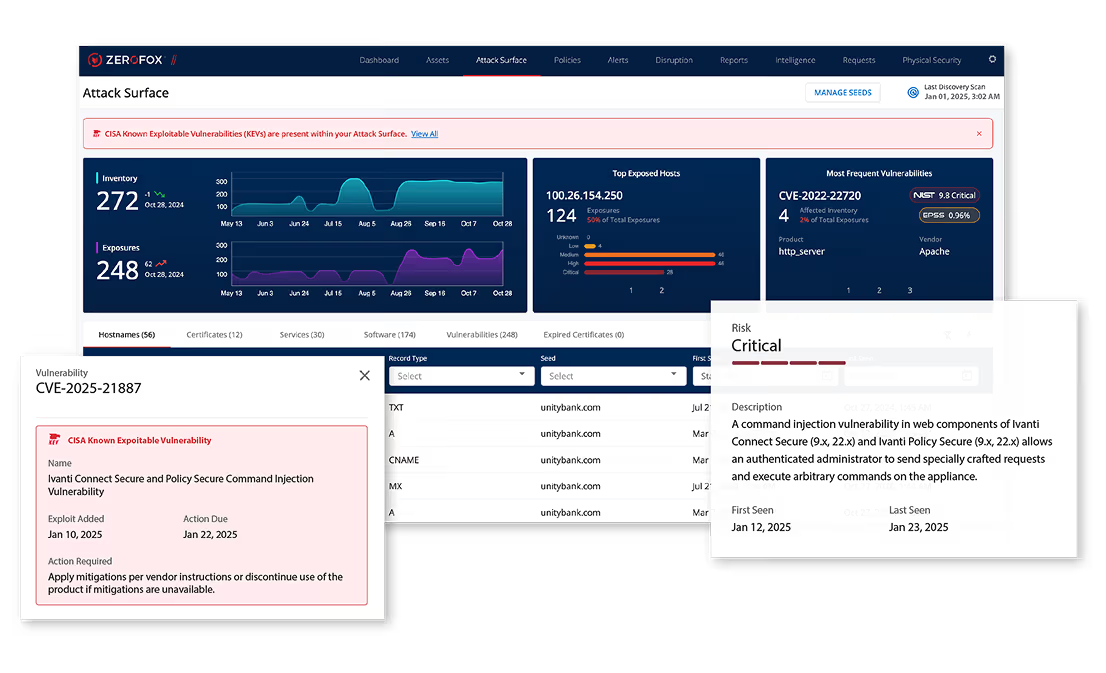
ZeroFox is an external digital risk protection platform that monitors for threats across social media, domains, and the dark web. While its core strength is external threat intelligence, not email security like Proofpoint's primary offering, the platform does provide direct in-platform remediation features.
Key Features
- External Threat Monitoring: Scans social media, domains, and dark web sources for brand risks and impersonation.
- Account Takeover Alerts: Detects compromised accounts and can lock them upon early signs of takeover.
- Executive Protection: Monitors for impersonation and threats targeting leadership profiles.
- Dark Web Intelligence: Identifies leaked credentials and data through automated tools and human-led analysis.
- Social Inline Remediation & Takedowns: Enables blocking, hiding, or removing inappropriate comments and content directly across corporate channels.
Pros
- Broad visibility across digital channels beyond social media
- Threat intelligence feeds that support enterprise SOC teams
- Executive protection that few competitors offer at scale
- Direct integrations with major SIEM and SOAR platforms
Cons
- Core strength is external monitoring, not in-platform remediation
- Deployment demands enterprise security expertise and months of setup
Pricing
- ZeroFox does not publish standard pricing. Enterprise contracts are customized based on monitored assets, channels, and service tiers, with implementation fees typically required.
3. Mimecast
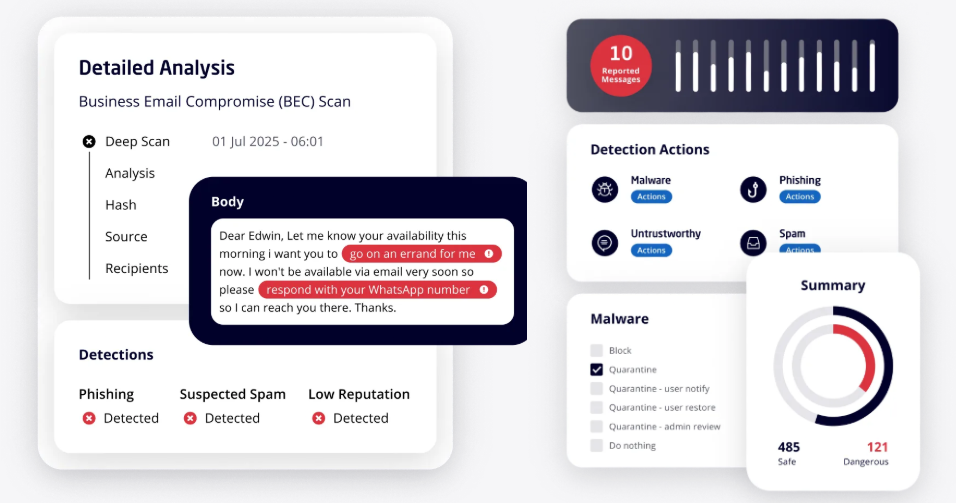
Mimecast is the most direct Proofpoint alternative for organizations that need to replace or supplement an email security gateway. It matches Proofpoint's core strength: protecting the enterprise inbox from phishing, malware, and business email compromise with a cloud-native architecture that many teams find easier to deploy and manage.
Key Features
- Email Security Gateway: Cloud-based filtering for phishing, malware, spam, and impersonation attacks.
- Awareness Training: Integrated employee training and simulated phishing exercises.
- Data Loss Prevention: Policies to prevent sensitive data from leaving via email channels.
- Archive & Compliance: Long-term email retention with e-discovery and legal hold capabilities.
- Web Security: URL protection and browsing safety for remote and office workers.
Pros
- Faster deployment than Proofpoint with less dedicated IT overhead
- Strong phishing detection with granular policy controls
- Bundled awareness training reduces the need for a separate security education vendor
- Archive and compliance features rival Proofpoint's offering at competitive pricing
Cons
- No social media security or brand protection capabilities
- Reporting dashboards can feel less polished compared to newer cloud-native competitors
Pricing
- Mimecast does not publish standard pricing. Custom quotes are provided based on user count, feature modules, and service tiers.
4. Bolster
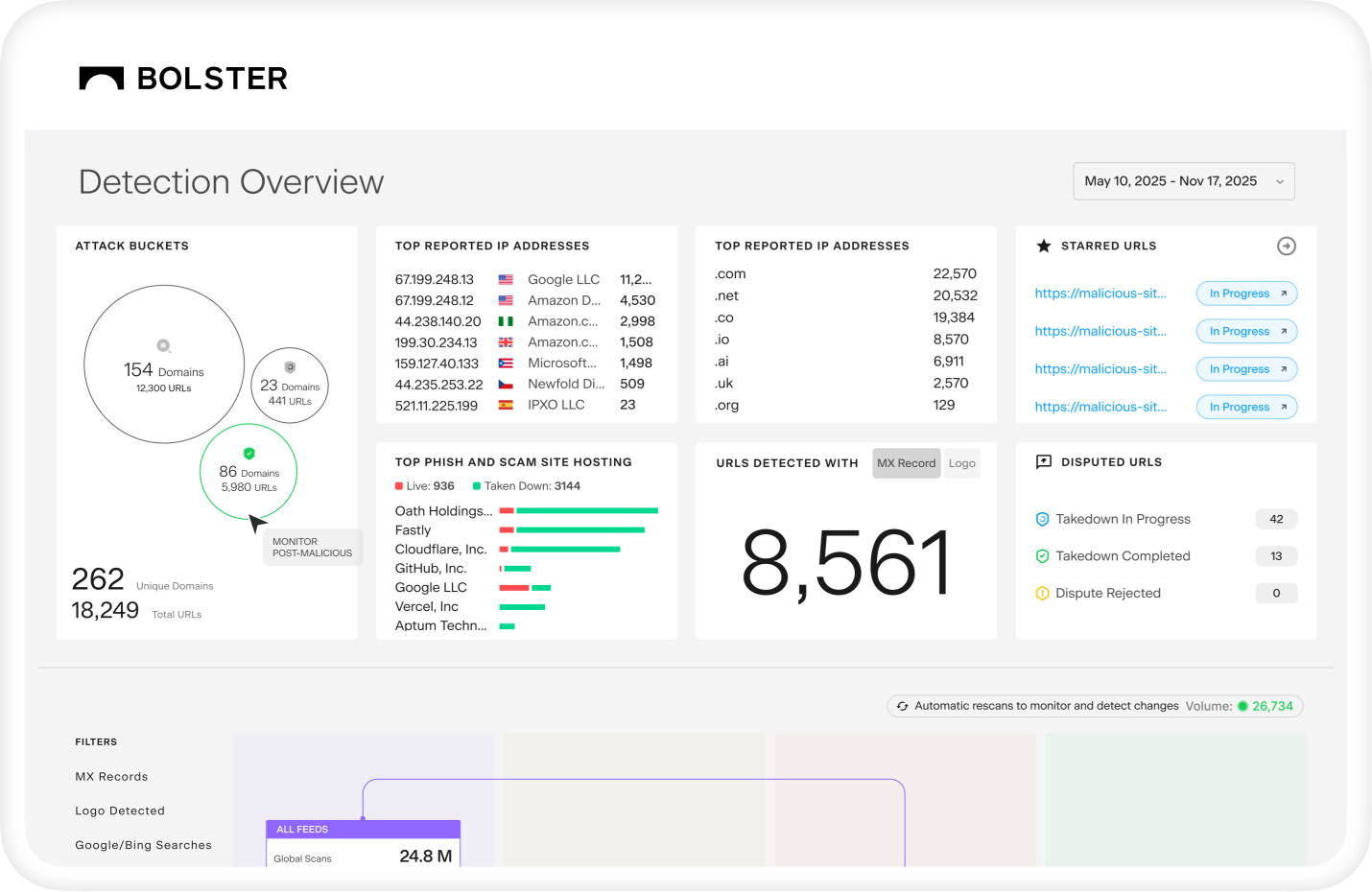
Bolster specializes in phishing detection and domain takedowns, with some extension into social media impersonation. It is a useful alternative for organizations that prioritize protecting their brand at the domain and website level but have found Proofpoint's impersonation response slow or manual.
Key Features
- Phishing & Domain Takedown: Automated detection and removal of lookalike domains and phishing sites.
- Social Media Impersonation Detection: Identifies fake profiles using brand names and likenesses.
- Brand Monitoring: Tracks mentions and misuse across web and social channels.
- Threat Intelligence Feeds: Context on emerging phishing campaigns targeting the organization.
- Automated Takedown Workflows: Streamlines the reporting process to hosting providers and platforms.
Pros
- Strong domain-level protection with fast takedown execution
- Lower complexity than full enterprise security suites like Proofpoint
- Good fit for organizations where phishing websites are the primary brand risk
- Automated workflows reduce manual effort in reporting impersonators
Cons
- Cannot scan comments, revoke social logins, or take action inside Instagram, TikTok, or Facebook
- No access governance or comment moderation capabilities
Pricing
- Bolster pricing is customized based on monitored domains, brand assets, and takedown volume.
5. Netskope
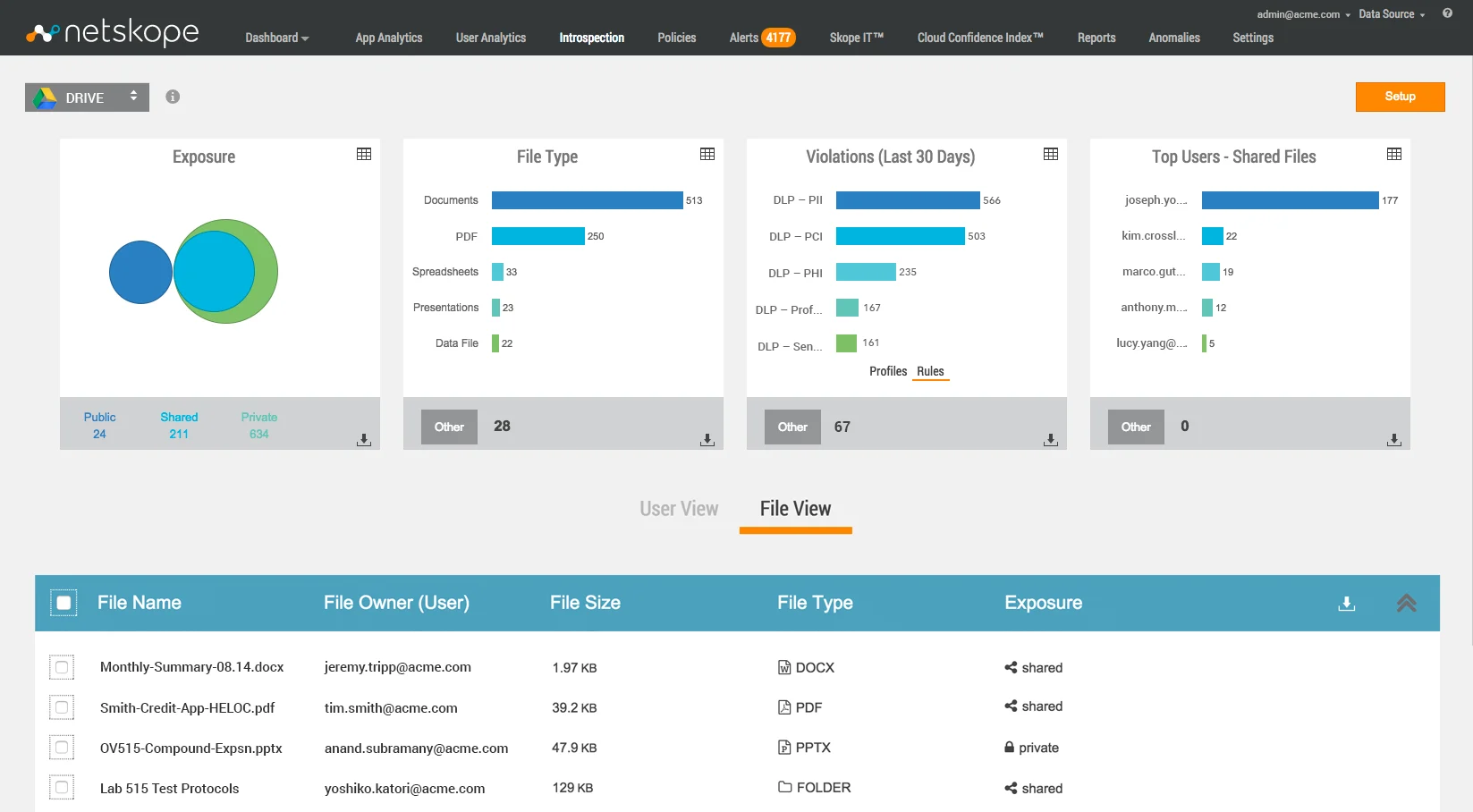
Netskope is a cloud access security broker (CASB) and secure service edge (SSE) platform that protects data and users across SaaS applications, cloud infrastructure, and web traffic. It directly competes with Proofpoint's cloud app security and data loss prevention layers, offering a more modern, cloud-native architecture.
Key Features
- Cloud Access Security Broker (CASB): Visibility and control over SaaS app usage and data movement.
- Data Loss Prevention: Policy enforcement to stop sensitive data from leaking through cloud channels.
- Zero Trust Network Access: Secure remote access without traditional VPN architecture.
- Threat Protection: Real-time inspection of cloud and web traffic for malware and phishing.
- User Behavior Analytics: Detection of anomalous activity indicating insider risk or compromised accounts.
Pros
- Purpose-built for cloud-native environment
- Strong data protection across SaaS apps
- Zero trust architecture aligns with modern security frameworks
- Scales well for distributed workforces without heavy infrastructure
Cons
- No social media security, impersonator detection, or comment moderation
- Implementation complexity rivals Proofpoint for full SSE deployment
- Requires dedicated cloud security expertise to configure policies effectively
Pricing
- Netskope does not publish standard retail rates; pricing is modular and enterprise-focused.
6. Sprout Social
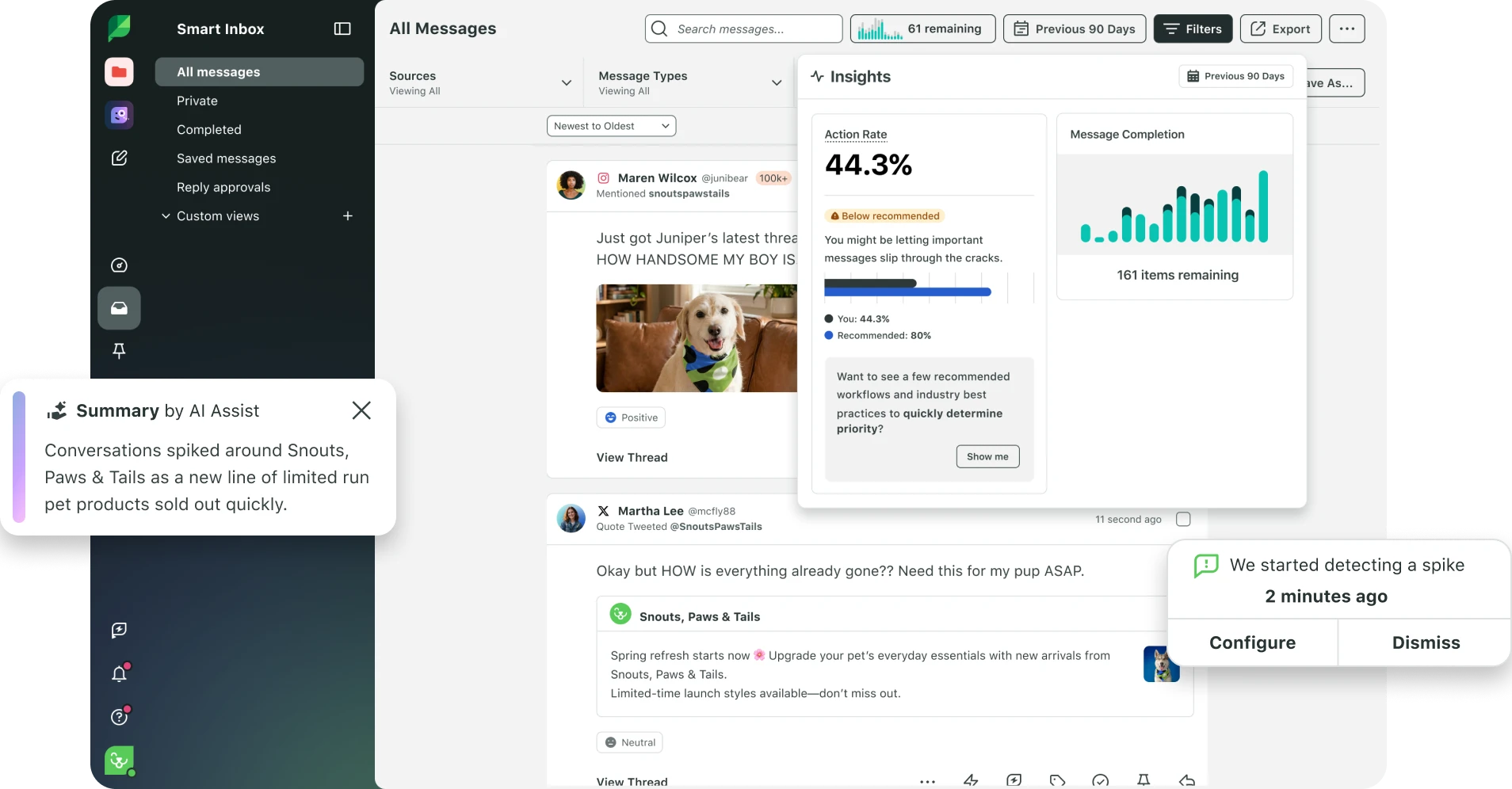
Sprout Social is a social media management platform with enterprise-grade security controls, making it a common tool for teams that need to govern social access without adding a dedicated security product. It is not a security platform in the Proofpoint sense, but it addresses the governance gap that Proofpoint leaves open: who has access to social accounts, and how is that access controlled.
Key Features
- Granular Permissions & Access Controls: Role-based access with group-level profile restrictions and approval workflows.
- Single Sign-On (SSO) & MFA: Enterprise authentication with SAML 2.0 and multi-factor options.
- Global Publishing Pause: One-click halt of all scheduled content during a crisis.
- Unified Social Inbox: Centralized management of comments and messages across platforms.
- Automated Data Masking: PII protection within direct messages and customer cases.
Pros
- Strong access governance for social accounts with audit trails and approval workflows
- SOC 2 Type II and ISO 27001 compliance for regulated industries
- Built-in CRM ties social engagement to customer records
- Crisis management features like global pause reduce reputational risk
Cons
- No threat detection, account takeover protection, or impersonator takedown capabilities
- Comment moderation sometimes misses context, sentiment, and evolving spam tactics
- Not designed for security teams. No SIEM integration or incident response workflows
Pricing
- Sprout Social starts at $199 per user per month for the Standard plan, with Professional and Advanced tiers adding more profiles, users, and listening capabilities.
How We Evaluated These Alternatives
We started with the search intent behind "Proofpoint alternatives." Most buyers fall into two camps: CISOs replacing an email gateway or cloud security stack, and marketing or security leads looking for brand protection where Proofpoint's coverage thins. We selected platforms that credibly serve one or both of those needs, then scored them against what we actually see in buying conversations.
Our criteria:
- Coverage depth: Does the platform solve the problem it claims to, or is it monitoring without action?
- Setup friction: Can the primary buyer deploy it without routing through IT for months?
- Social-native capability: For brand protection specifically, does it operate inside the platform or only watch from outside?
- Integration reality: Does it close a gap or create another tool to manage?
We did not include platforms that duplicate Proofpoint's email core without meaningful differentiation, nor did we rank by G2 score alone. The goal is a practical shortlist, not a directory.
How to Choose a Proofpoint Alternative
Name the Gap You Are Trying to close.
If your risk lives in the inbox, Mimecast or Netskope are credible replacements. If your risk lives on social, impersonators, compromised accounts, or toxic comments, none of the traditional email or cloud security platforms will solve it, Proofpoint included.
Map Your Internal Owner to the Tool.
CISO-led teams need audit trails and SIEM integration. Marketing-led teams need speed, visibility, and the ability to act without waiting on IT. Spikerz is built for that overlap. Marketing and security teams sharing ownership of social risk, with neither wanting to route through the other.
Test Setup Friction Before You Buy
A platform that takes months to deploy often stays half-configured. A 15-minute connection that starts removing threats immediately is more likely to stay active.
Final Thoughts
Proofpoint remains a strong email security platform, but social media is where brand risk now lives. If your team is ready to close that gap, Spikerz connects in minutes and starts removing threats inside the platforms where your audience actually engages.
Book a free demo and see how it fits your stack.
