How to Build a Social Media Governance Framework That Works

Summary:
Discover how to create a governance strategy that protects your brand from legal, security, and reputational risks without slowing down your content approval process. Learn the nine critical reasons governance matters—from preventing account takeovers to managing AI risks—and get a practical four-step framework to implement, including establishing a cross-functional center of excellence, defining brand safety standards, vetting influencers, and deploying threat-detection tools. Walk away with a clear roadmap to balance control and agility so your team can move fast while staying compliant and secure.
The biggest challenge brands face when building a social media governance framework is striking the right balance between control and agility. A framework that's too rigid creates a "bottleneck effect" where content is outdated by the time it's approved. On the other hand, a framework that's too loose exposes your brand to serious legal, reputational, and security risks.
That’s why in this post, we'll break down what social media governance is, why it matters, and how to build a governance strategy that works for your business.
What Is Social Media Governance?
Social media governance is the set of policies, processes, and tools your organization uses to manage and protect its social media presence. It defines who can access your accounts, what content can be published, how risks are handled, and what security measures are in place. It covers everything from content approval workflows to crisis response plans and cybersecurity protocols.
Without a governance framework, your social media operations run on guesswork. And guesswork is how brands end up in headlines for the wrong reasons.
Why Is Social Media Governance Important?
Social media governance provides a framework for protecting your brand and granting stakeholders (like your IT team) peace of mind.
Here are 9 reasons why social media governance matters:
1. Risk to Your Brand
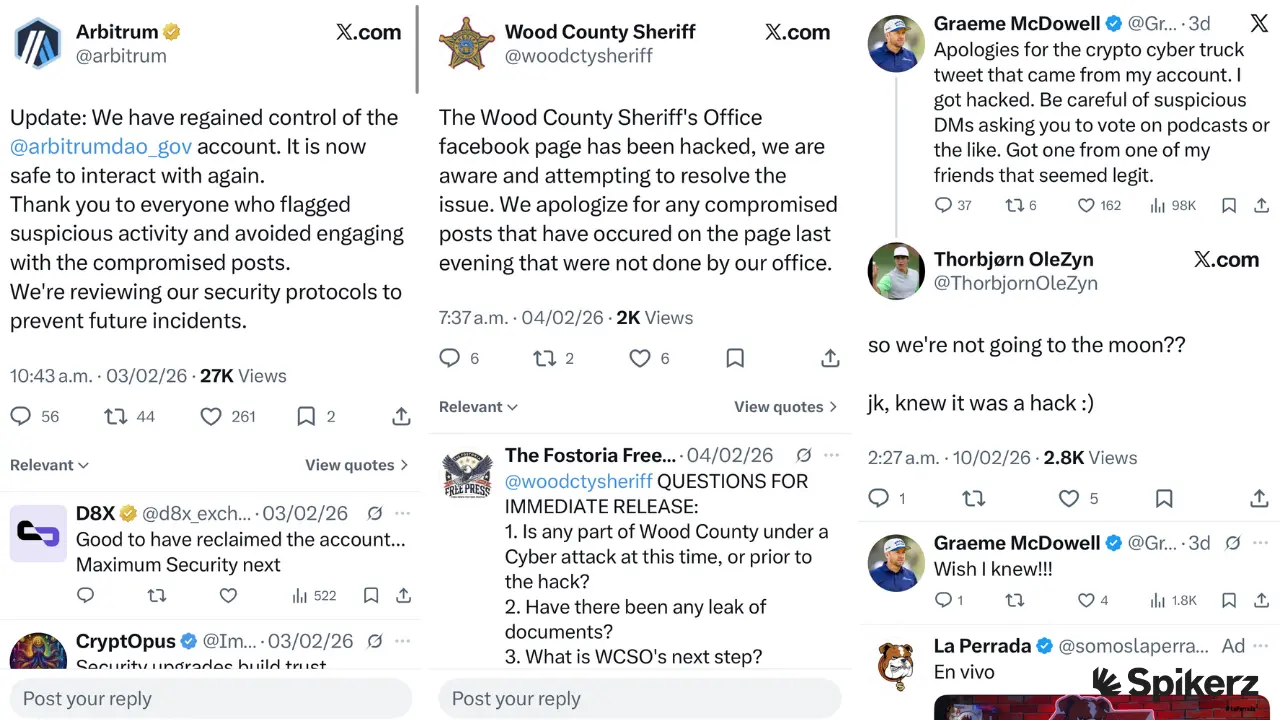
We see this happen every single month. When hackers gain access to your social media accounts, they typically use them for one (or multiple) of the following reasons:
- Scam users by leveraging your brand to lower their defenses
- Change your username and brand image to impersonate other accounts
- Delete your content to start a "new account" filled with scam content
- Launch phishing campaigns through DMs or public posts
- Share posts condemning political actions or supporting terrorist groups
- Hold your account for ransom
Ask yourself: how much damage would be done if criminals got control of your social media accounts and published something disparaging? What if they changed your account to look like your competitor's, or converted it to make it appear as if it supports terrorist groups?
These are all real examples we've seen.
How much would your credibility be damaged? And what about your brand?
2. Compliance and Regulatory Risk
Depending on your industry, you may have additional rules guiding what your company is allowed to say publicly. For example, companies in the financial, medical, and pharmaceutical industries all have extra considerations.
Industry aside, all companies have to worry about violating government regulations regarding social media. Not paying attention to governance can land you in hot water with regulatory agencies, from the FTC to the governing bodies in Europe that hand down GDPR fines. For example, on March 25, 2026, Renault Commercial Roumanie S.R.L. was fined €125,000 for noncompliance. The cited reason was, "Insufficient technical and organisational measures to ensure information security."
If you have trouble getting a budget to support governance work, tell your leaders this could cost them millions (or more).
3. Legal Risk
As companies rely more on social media for customer service and communication, lawsuits based on social media activity will increase. If you can't say definitively who had access to your accounts at a given time or who posted a specific comment, you may find yourself unable to defend your position to your supervisors, your legal team, or a court of law.
That's why it's so important to have strong user access management (UAM) in place.
4. Human Risk
It's no secret that humans are the weakest link in any cybersecurity framework. But just because we make mistakes, it doesn't mean we shouldn't be accountable.
That said, with the proper tools and procedures, these mistakes will be a lot less likely to happen. You won't have to worry about someone accidentally posting from the company account instead of their personal account, or that they will do something else that causes you a self-imposed PR "incident." It also saves you from having to fire someone.
5. Internal Risks (Employees)
A lot of companies don't have a social media policy guiding employees on what they are and are not allowed to do on social media. As a result, employees may accidentally share content that includes confidential information (like financial or HR data) or air personal grievances against the company or coworkers in a very public setting.
Not having official policies and rules makes it hard to hold people accountable. It also makes it hard for employees to know what is and is not okay.
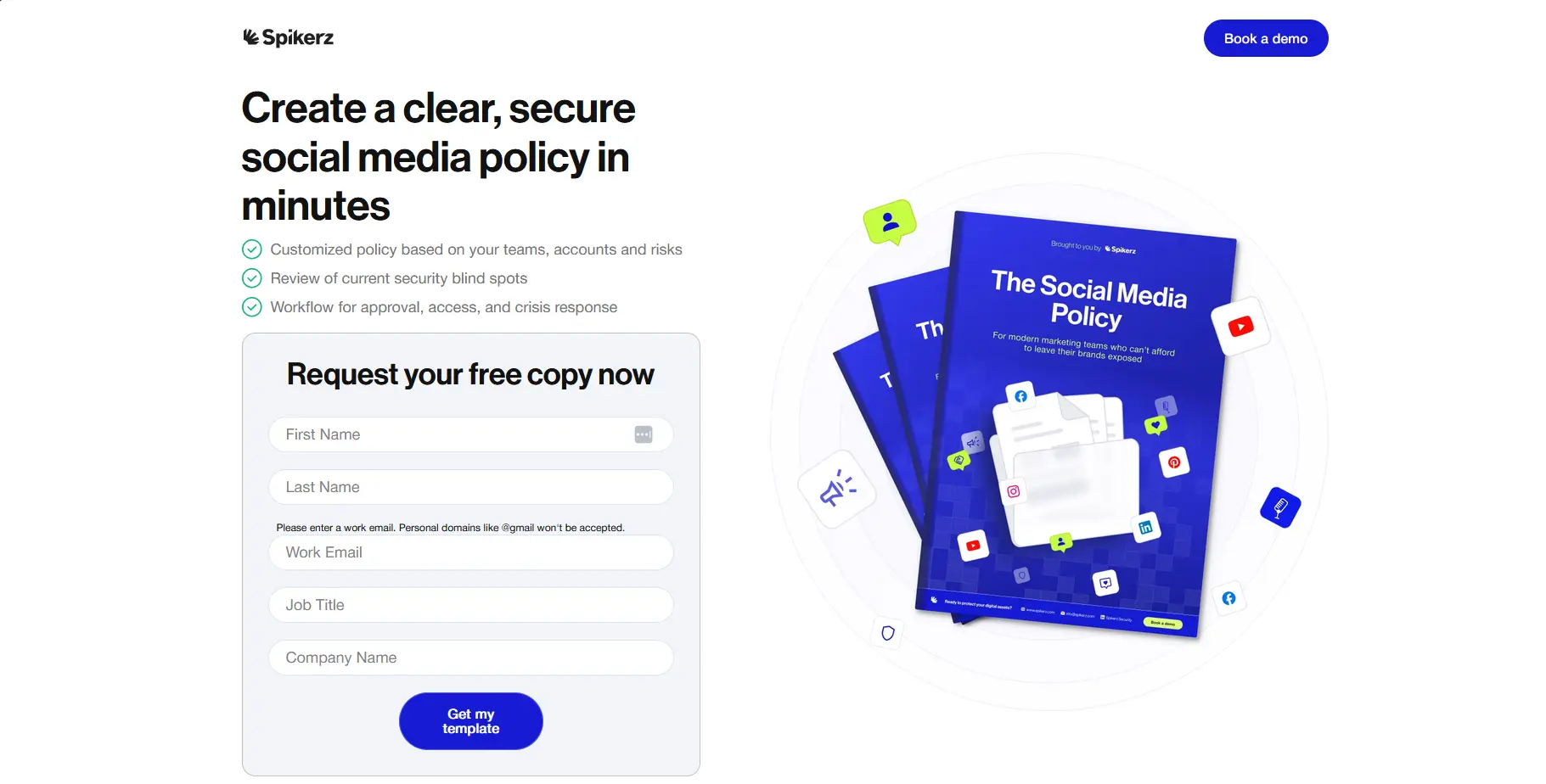
If you want to create a social media policy in minutes, check out our easily customizable template. It gives you a customized policy based on your teams, accounts, and risks. It also reviews your current security blind spots and provides a workflow for approval, access, and crisis response.
6. Security Risk
It's no secret that cybercriminals like easy targets. They go after companies with weak security and no tools in place to protect them. So don't make yourself an easy target.
Make sure you follow best cybersecurity practices: use strong passwords, turn on two-factor authentication (2FA) for all accounts where available, know who has access to your accounts at all times (including partners and agency teams), and turn on social media monitoring.
Also, make sure there is a process and standard operating procedures for starting new accounts, maintaining existing accounts, and shutting down retired accounts.
7. Third-Party App Risk
Sometimes third-party apps can be less secure than main systems due to outdated software, vulnerabilities in their code, or weaker security systems than the platforms they connect to. That's why you need to regularly review any third-party tools connected to your social media accounts and vet their security just as thoroughly as your own.
8. Influencer Risk
As brands spend more of their marketing budget on influencer marketing, risk multiplies. If a creator speaks out against your brand, gets caught in a scandal, or shares an unpopular political take, your company can get tangled up in a crisis.
For those reasons, it's crucial to identify influencers who align with your values and campaign standards.
9. AI Risk
AI is no longer a "nice to have." It's a key part of businesses right now. Teams rely on AI for increased efficiency and scaling their work. But with more AI use comes a long list of risks, including ethical concerns, negative brand perception, ineffective vendor vetting, employee misuse, and inaccurate or offensive outputs.
To mitigate these risks, people need to be kept in the loop (with parameters in place). You should implement an AI use policy internally that includes the roles and responsibilities of all employees using AI, planned implementation to reduce data privacy and copyright risks, clear use cases, intellectual property rights, and disclosure details.
How to Build an Effective Social Media Governance Strategy
The following framework is flexible enough to avoid creating a bottleneck where content is outdated by the time it's approved, while still protecting your brand from legal, reputational, and security risks.
Here's how to create a governance playbook:
1) Establish a Governance Center of Excellence
A governance center of excellence (CoE) is a cross-functional team that owns the strategy, standards, and oversight for your social media governance program. It serves as the strategic and operational backbone, ensuring consistency, compliance, and efficiency across departments, regions, and platforms.
Your CoE should include representatives from marketing, legal, IT/security, HR, compliance, and communications. Each team brings a different perspective on risk and plays a role in keeping your social media operations secure and on-brand.
2) Define Brand Safety Standards for Content and Community Management
Your content and community management guidelines should be rooted in your core brand values. For example, if your brand values online security, then your brand safety standards should encourage security-related content and actively moderate risky online interactions and language in posts, comments, and other public-facing channels.
This should also include language and imagery restrictions (e.g., not revealing sensitive information in screenshots, graphic visuals, or videos), as well as rules around political or sensitive topics and community moderation.
3) Refine Your Influencer and Partner Vetting Process
Create a checklist of non-negotiables and preferred attributes for influencers and partners. Look at alignment with brand values, content quality and tone, how well they engage with their audience, and the topics they talk about.
4) Protect Your Audience and Employees
The best way to protect your audience and employees from online threats is to scan comments and messages for phishing and other unwanted language.
There are many tools that can help you do this. Spikerz, for example, helps companies remove harmful and unwanted comments using AI-powered filters.
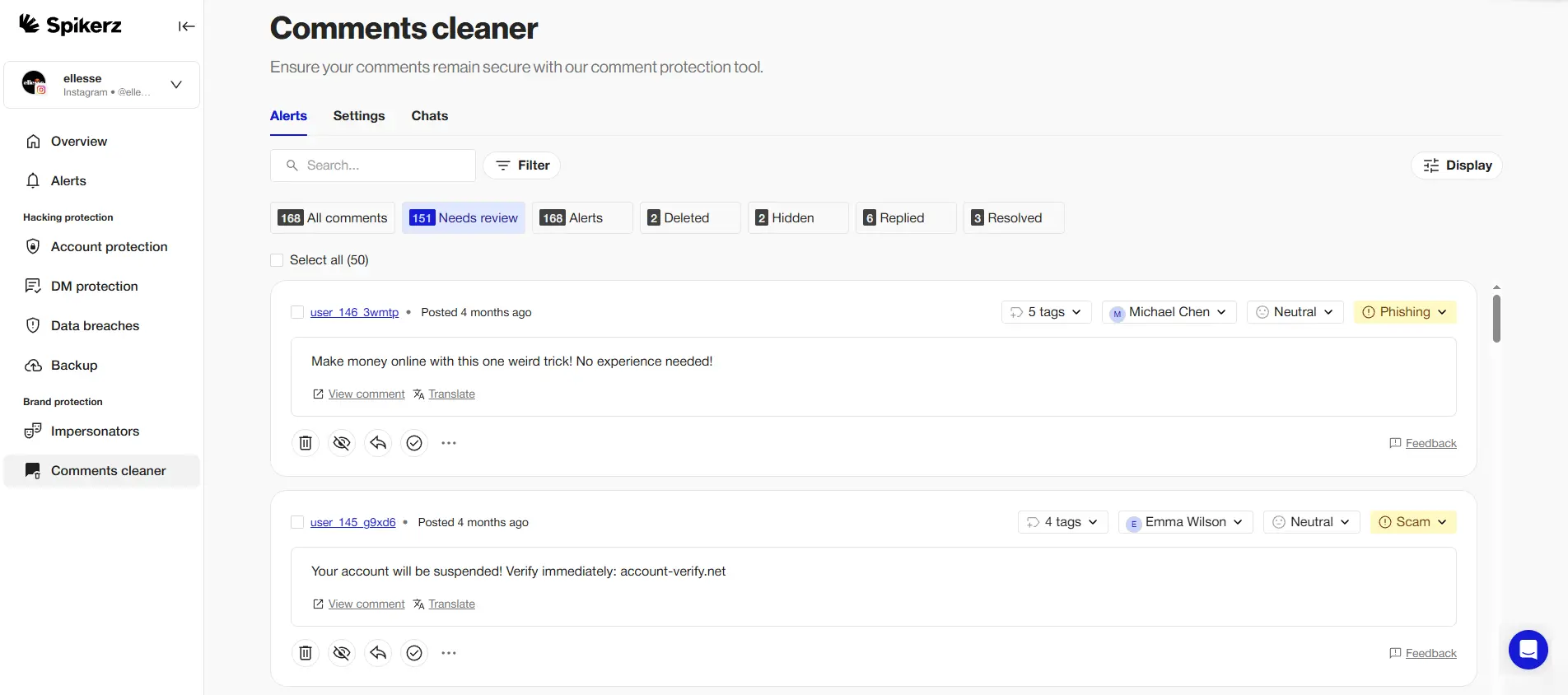
Spikerz also provides:
- Account takeover protection: 24/7 monitoring that detects unauthorized access attempts and alerts you before hackers can take control of your accounts.
- Impersonator takedown: Identifies fake accounts impersonating your brand and helps you take them down fast.
- Phishing protection: Scans your DMs and comments for malicious links and phishing attempts that target your audience.
- Permissions management: Gives you full visibility into who has access to your social media accounts and what actions they can take.
Listen, you spend hours creating content and building your audience. Shouldn't you spend a few minutes protecting it?
See how Spikerz protects your social media profiles from all kinds of threats.
Conclusion
Building a social media governance framework is not about adding red tape to your team's workflow. It's about giving your organization the structure it needs to move fast, stay compliant, and remain protected.
The good news is that the framework we laid out here gives you a clear path forward. So go ahead and…
- Build a cross-functional center of excellence.
- Define your brand safety standards.
- Vet your influencers and partners.
- And arm your team with the right tools to scan for threats, manage permissions, and respond to incidents before they become crises.
Your social media presence is one of your most valuable business assets. So take governance seriously to keep your audience's trust and their accounts safe.
