Block vs mute vs restrict on Facebook explained


Block, mute and restrict all limit unwanted contact on Facebook, but they work differently. Learn what each one does, when to use it, and the extra tools Pages have for handling spam, scams and trolls.
Blocking, muting and restricting on Facebook do very different jobs. Blocking cuts someone off completely, so they can't see your profile posts, tag you or message you. Muting (Facebook calls it snooze or unfollow) only hides their posts from your feed, and restricting keeps someone as a friend while limiting them to your public posts. None of these options notify the other person.
For brands, there's an extra wrinkle: the Restricted list only exists on personal profiles. Facebook Pages use their own tools instead, like banning people from the Page, hiding comments and filtering keywords.
Block vs mute vs restrict on Facebook at a glance
- Block: The strongest option. The person can't see what you post on your profile, tag you, invite you to events or groups, message you or add you as a friend. Use it for harassment, threats, scams and impersonators.
- Mute (snooze or unfollow): The lightest option. Their posts disappear from your feed for 30 days (snooze) or until you change it (unfollow), but they can still see and comment on your content. Use it for accounts that are annoying but harmless.
- Restrict: The quiet middle ground for personal profiles. You stay friends, but they only see posts you share publicly and posts you tag them in. Use it when you want distance without the drama of unfriending or blocking.
- On a business Page: Ban someone from the Page to stop them commenting, reacting or messaging the Page, hide individual comments so they're only visible to the commenter and their friends, and add keyword filters so comments containing specific words are hidden automatically.
What are the biggest challenges social media managers face on Facebook?
One of the biggest challenges social media managers face is managing unwanted behavior. Every day, they have to handle spam, harassment, hacking attempts, phishing scams, trolls and negative comments that can easily disrupt their plans.
To keep things professional, social media managers spend hours moderating comment sections, removing malicious content and blocking fake accounts. When issues stack up, the damage goes beyond lost productivity and starts to hurt the brand's reputation.
That impact can happen faster than many people realize. If a phishing link stays visible for too long, followers fall for it and lose trust almost immediately. And if a Page gets hacked and isn't fixed quickly, the audience is exposed to scams and privacy breaches, which causes long-term harm to the brand's credibility.
With bad actors targeting social media channels more and more, it's getting harder for social media managers to keep up. In one widely cited analysis of phishing emails, messages using LinkedIn as bait were the most clicked-on social media scams, drawing 42% of clicks, compared to 20% for Facebook and 9% for X.
That's a clear sign attackers are getting more creative and targeted. With an estimated 1.4 billion social media accounts hacked every month, the threat keeps growing. On top of that, around 40% of phishing campaigns now spread through platforms like Slack and Teams, which shows how attackers are changing the way they reach their targets.
How do these issues hurt brands?
A strong social media presence depends on meaningful engagement, trust and consistency. When spam, phishing links or hacked posts appear on a brand's Facebook Page, followers lose trust. That can lead people to unfollow, ignore posts or even report the Page.
For example, if someone gets scammed through a link on your Page or by a fake profile, they may blame your brand, even if it wasn't at fault.
This kind of unwanted activity also makes people less likely to engage. When comment sections are full of spam or trolls, regular followers stop joining the conversation because they don't feel comfortable or heard. They stop liking, sharing and commenting. That makes it harder for content to gain traction, since Facebook's algorithm favors posts that get quick engagement. Over time, fewer people see the brand's posts, and it becomes less visible even to its own followers. We cover this effect in more detail in how unwanted comments reduce your engagement.
Together, these issues weaken the connection between the brand and its audience. The community shrinks, the Page brings in fewer leads, it contributes less to the bottom line, and the brand's image suffers.
How can businesses protect their brands on Facebook?
Facebook gives you several ways to deal with unwanted people and comments, so you can control who engages with your content and how. Here's how each one works.
1) How to block users on Facebook
Blocking is the most direct way to cut off interaction with someone on Facebook. When you block a person from your profile, they can't see what you post on your timeline, tag you, invite you to events or groups, start a conversation with you or add you as a friend. When you block (or ban) someone from a Page, they can no longer post on the Page, comment on or react to its posts, or message it, although they can still share its public content elsewhere on Facebook.
This is an option you should save for serious cases, like when a competitor is trolling your Page, a former client is leaving fake reviews, a customer is threatening your staff, or a former employee is posting confidential company information.
To block someone from your Facebook business Page, do the following:
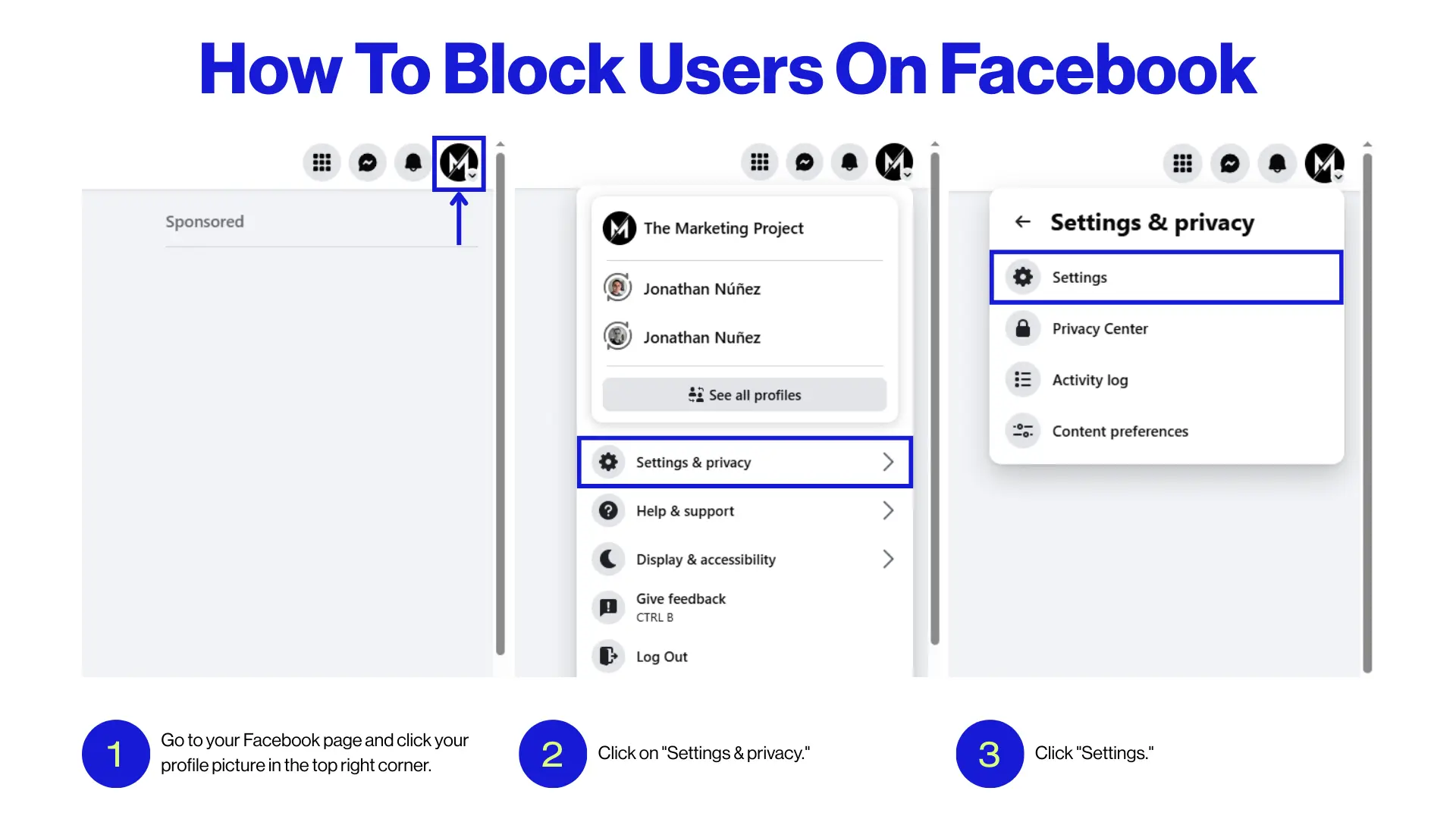
- Go to your Facebook Page and click your profile picture in the top right corner.
- Click "Settings & privacy."
- Click "Settings."
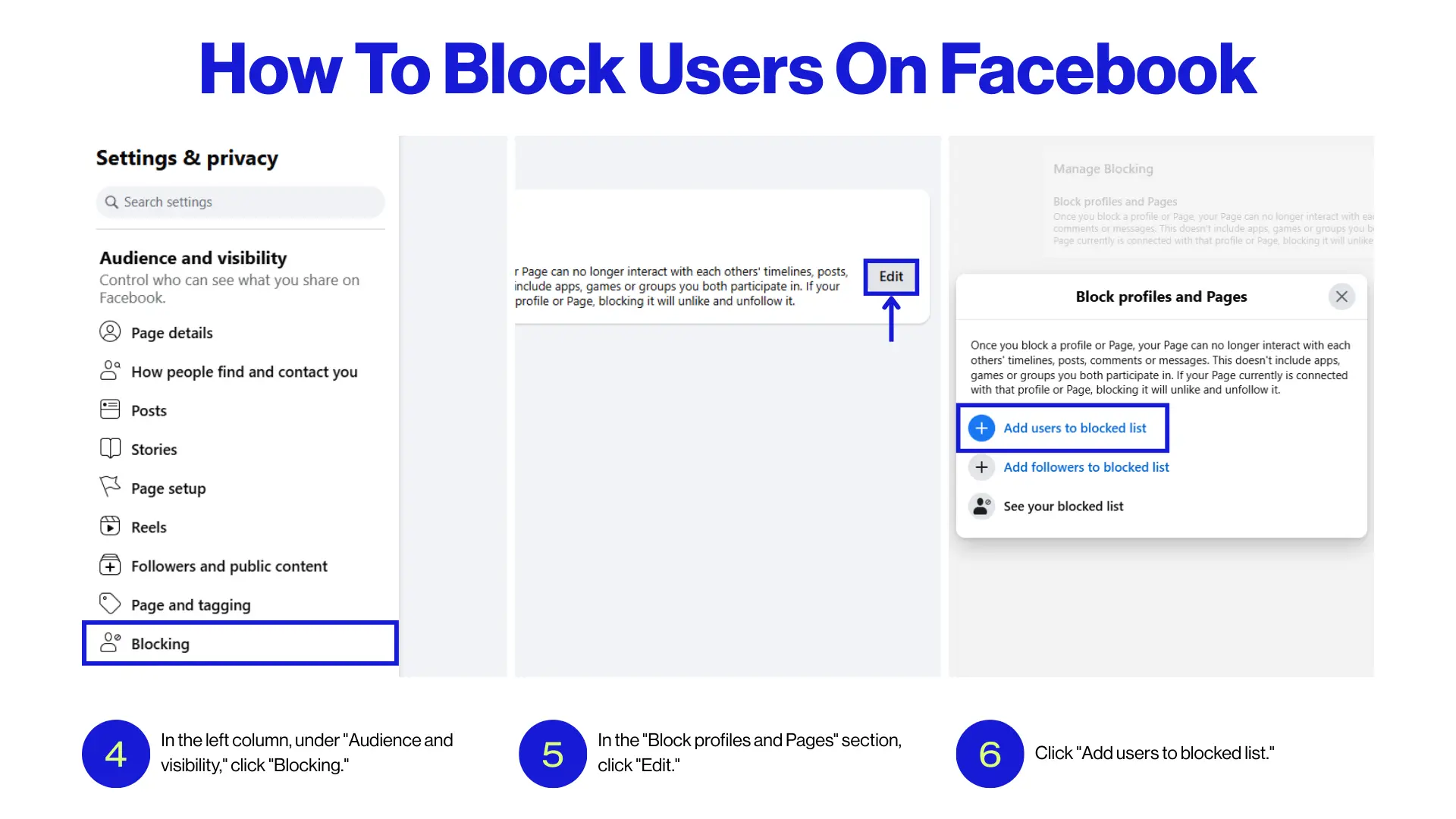
- In the left column, under "Audience and visibility," click "Blocking."
- In the "Block profiles and Pages" section, click "Edit."
- Click "Add users to blocked list."
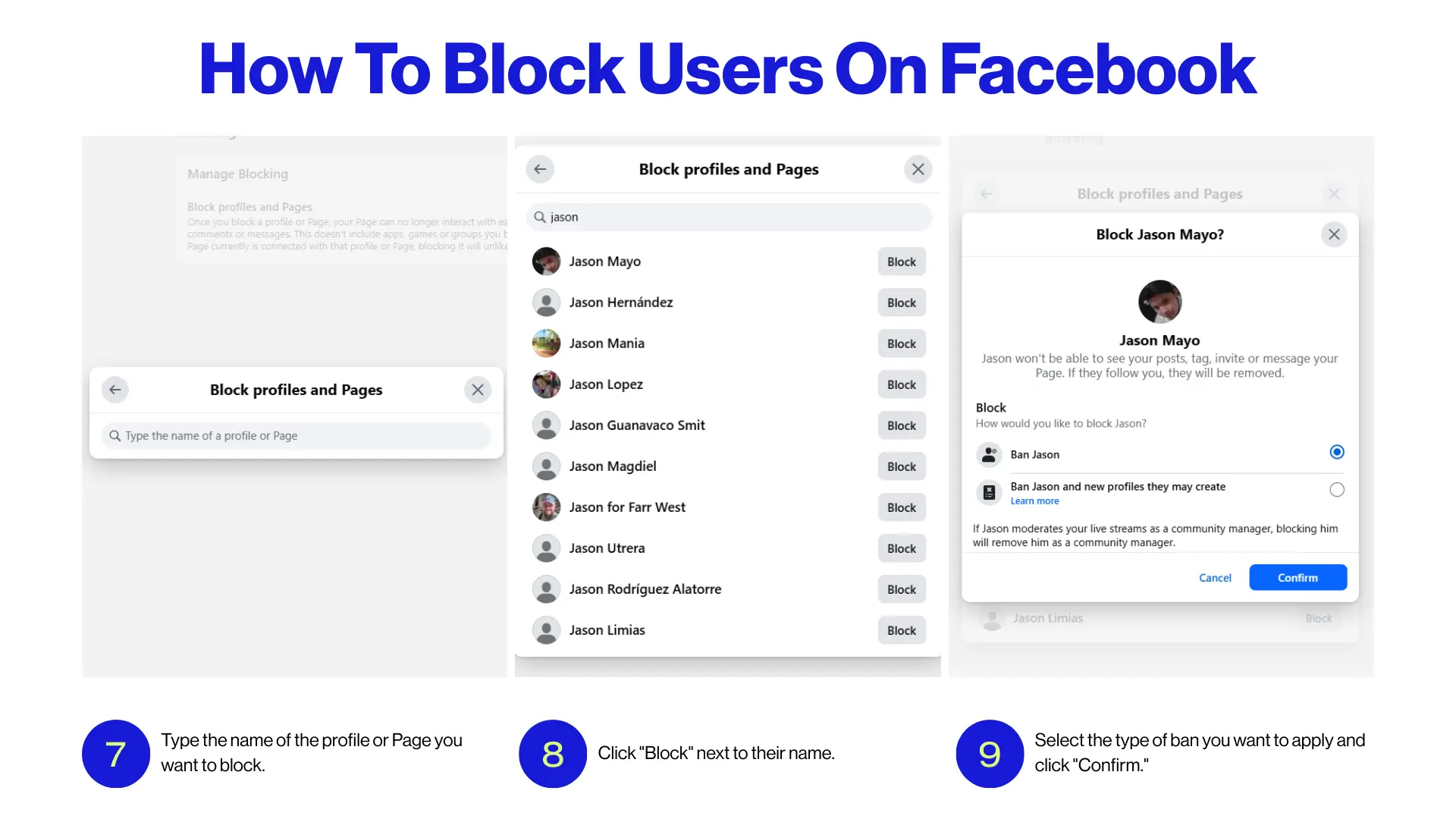
- Type the name of the profile or Page you want to block.
- Click "Block" next to their name.
- Select the type of ban you want to apply and click "Confirm."
Facebook updates its menus from time to time, so if a label looks slightly different, look for the "Blocking" section in your Page settings.
2) How to mute users on Facebook (snooze)
Muting is a more subtle way to manage interactions on Facebook. It doesn't block or remove the person. You simply stop seeing their posts in your feed, and they aren't told about it. This is useful when someone posts annoying or repetitive content that isn't harmful but still distracts you from your daily work.
For example, you might mute a customer who keeps complaining about an issue you've already addressed, or someone who regularly posts negative (but not abusive) comments. They'll still be able to see and interact with your content, but you won't see their posts unless you visit their profile directly.
To mute someone from your feed, do this:

- Find one of their posts in your Feed.
- Click the three dots (•••) in the top right of the post.
- Click "Snooze [Name] for 30 days."
To undo it right away, click "Undo" in the confirmation message. If you want to hide their posts for longer than 30 days, choose "Unfollow" from the same menu instead.
3) How to restrict users on Facebook
Restricting someone on Facebook is the quietest way to create distance without unfriending, blocking or muting them. When you add a friend to your Restricted list, you stay friends, but they'll only see posts you share publicly and posts you tag them in. They aren't notified, so it gives you more control without starting a conflict.
It's a useful option when you're dealing with someone who's generally fine but who you'd rather keep out of your more personal posts, like a client, a coworker or a vendor you've connected with on your own profile.
Note: The Restricted list only works on personal profiles. Pages don't have it, so brands should use the Page-level tools covered in the next section.
To restrict someone from your personal profile, follow these steps:
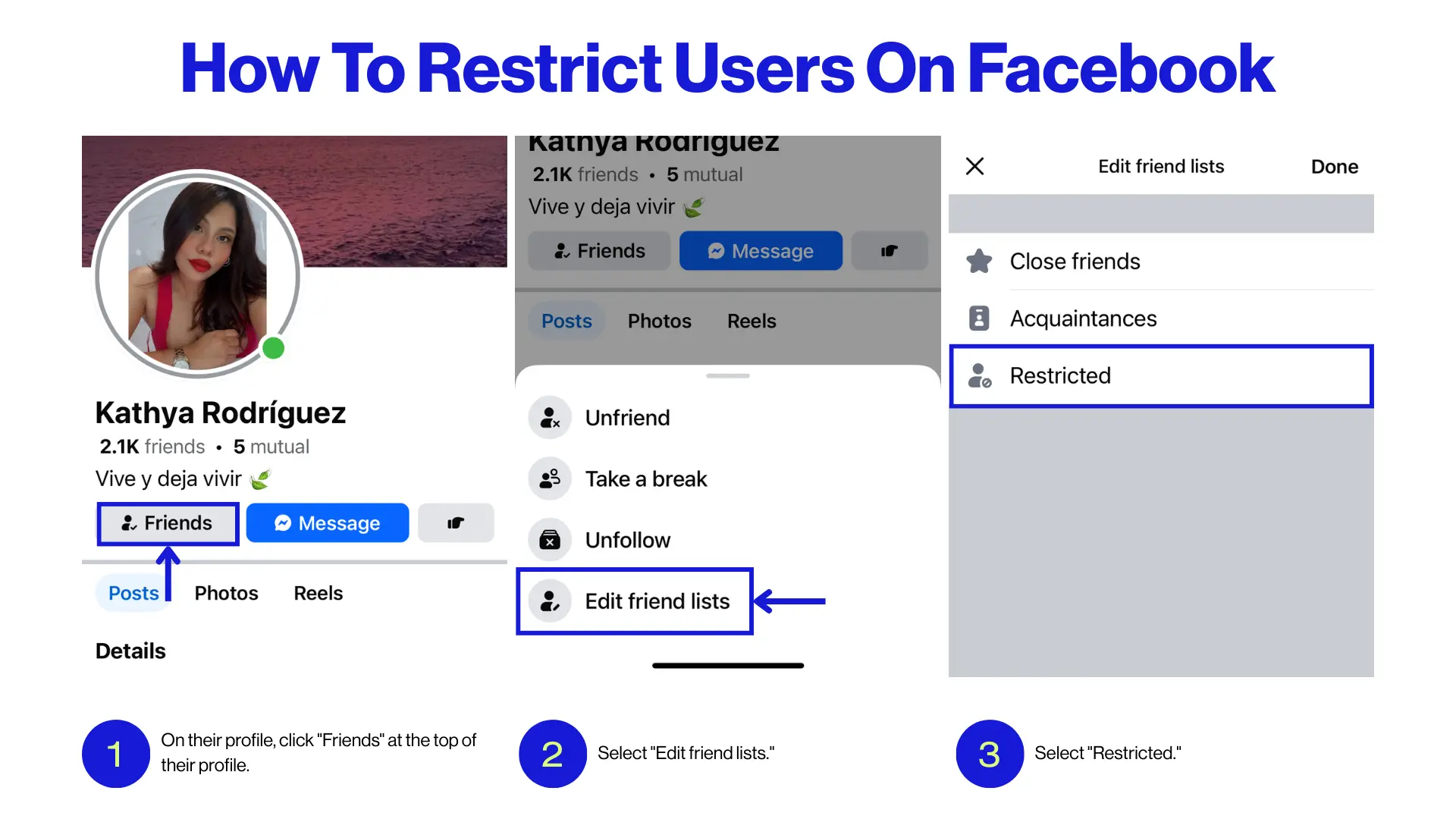
- Go to their profile and click "Friends."
- Select "Edit friend lists."
- Select "Restricted."
4) Page-level tools: ban, hide comments and keyword filters
If you manage a business Page, these are the tools you'll use most often.
- Ban from Page: Stops a person or Page from commenting, reacting, posting on your Page or messaging it. You can ban someone directly from one of their comments or from the "Blocking" section of your Page settings.
- Hide comments: A hidden comment stays visible to the person who wrote it and their friends, but nobody else sees it.
- Keyword filters and the profanity filter: In your Page's moderation settings, you can add words, phrases or emojis that should be hidden automatically, and set a profanity filter level.
For a step-by-step look at removing comments manually, see our guide on how to remove a comment on a Facebook Page. The limitation is that all of these tools still depend on someone noticing a problem or predicting the exact words bad actors will use.
How Spikerz helps enforce comment management
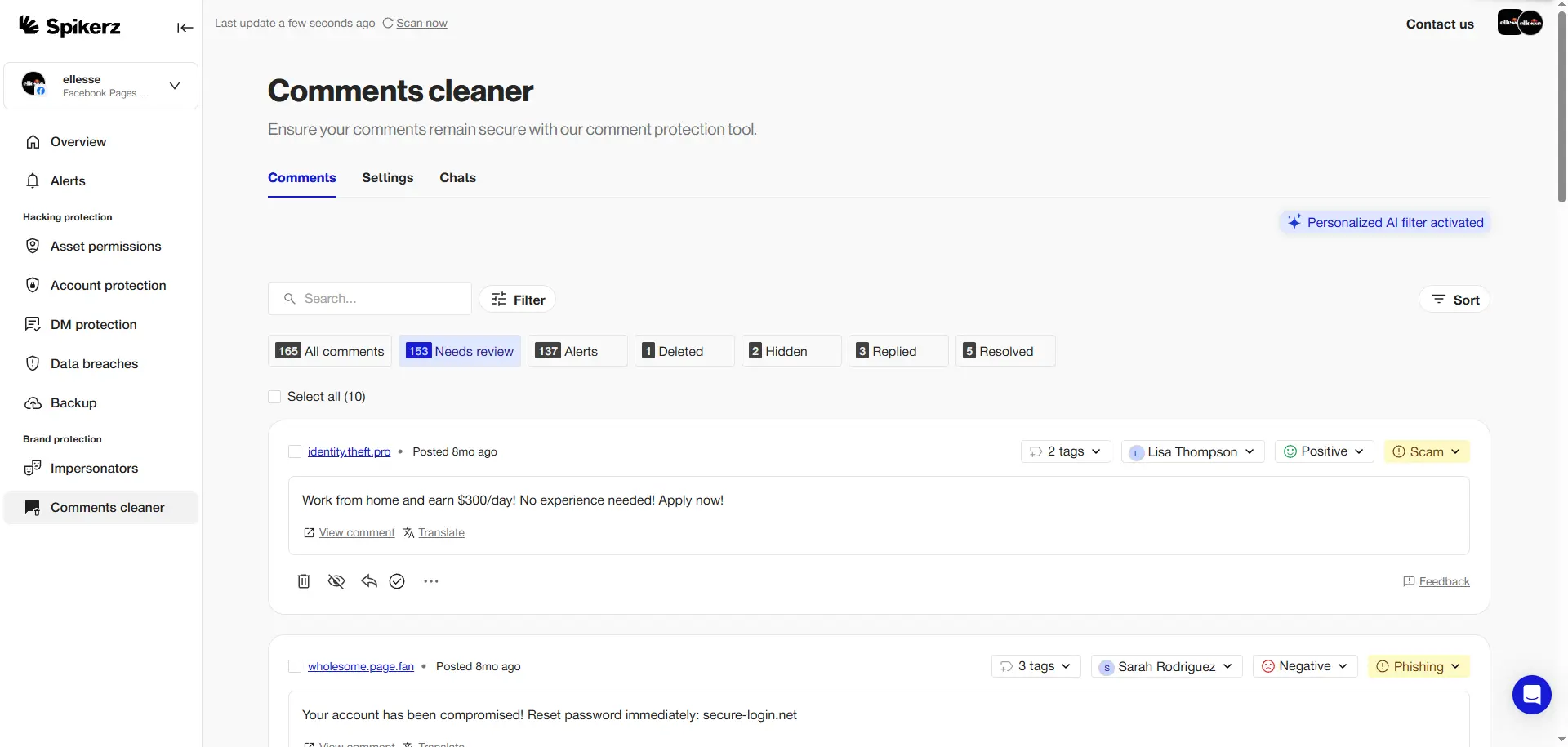
Spikerz's permission management tools make comment control much easier for teams, especially when you're dealing with a high volume of spam, trolls or phishing attempts.
Instead of manually scanning every comment, Spikerz uses AI to find and hide spam, scams, phishing links and hate speech, along with social engineering tactics. You can set custom rules in plain language, and moderation works in more than 25 languages. Everything it catches shows up in one place, so your team can review it and decide whether a person should also be blocked or banned.
And because Spikerz also manages access and permissions, you can see exactly who on your team has access to your Page and make sure only the right people can take moderation actions. It connects through official platform APIs, so nobody has to share passwords.
If you're comparing options, our roundup of Facebook comment moderation tools is a good place to start.
Conclusion
Managing unwanted comments on Facebook is one of the toughest parts of a social media manager's job. A steady flow of spam, phishing attempts and negative comments can drain your team's energy and damage your brand's reputation if it isn't handled.
Facebook's built-in tools give you basic control over who interacts with your content. Each has a specific purpose:
- Blocking (or banning from your Page) for serious threats
- Muting for minor annoyances
- Restricting, hiding comments and keyword filters for lighter moderation
If you understand when and how to use each one, you'll be able to keep a professional, engaging community without alienating followers.
Still, cyber threats change quickly and bad actors keep getting more sophisticated, so basic tools aren't always enough. That's where advanced solutions like Spikerz come in, turning comment management from a time-consuming chore into an automated process.
Combine Facebook's native features with AI-powered security tools to build a defense that protects your brand while keeping the kind of engagement that drives business growth. To see how it would work for your Pages, book a consultation with our team.