Could Your Brand Survive a Hack Like ABS-CBN's?

.webp)
Summary:
Learn from ABS-CBN's recent YouTube channel breach and discover why 94% of data breaches stem from user error—not sophisticated hacking. This guide reveals six practical security layers you can implement immediately, from strengthening passwords and enabling team-based 2FA to deploying account monitoring and training employees to spot phishing attempts, ensuring your brand survives the growing wave of social media attacks.
Could Your Brand Survive a Hack Like ABS-CBN's?
YouTube hacks are unfortunately no longer rare headlines. Major brands, media companies, and content creators are falling victim to hackers who exploit their audiences for crypto scams, phishing campaigns, and in some cases just to cause brand damage.
So if you rely on YouTube to reach your audience or generate revenue, you have to pay attention. A single breach can cost you years of trust, thousands of followers, and significant revenue.
In this post, we'll examine what happened to ABS-CBN's YouTube channel, why these attacks keep happening, and six ways you can protect your business from becoming the next target.
What Happened to ABS-CBN's YouTube Channel?
On November 29, 2025, ABS-CBN had its YouTube channel compromised. Reports indicate the channel was hijacked and briefly used to stream unauthorized content before being shut down.
Viewers attempting to access the channel saw a notice stating it had been removed for violating community guidelines. The takedown happened during the live broadcast of It's Showtime, one of the network's most popular programs.
As of now, ABS-CBN has recovered its account. But this wasn't the network's first brush with hackers.
Back in November 2020, the ABS-CBN News and ANC channels were also hacked, causing hours of downtime. As you can see, even major media organizations with dedicated IT teams remain vulnerable to these attacks.
This incident joins a growing list of high-profile social media breaches we've reported on. Major brands like Ford Motor Company, Nasdaq, the NBA, and Samsung have all suffered similar breaches. And even public figures like BBC's Nick Robinson, streamer Kai Cenat, and even McDonald's Instagram have all seen their accounts compromised to promote crypto scams.
Why Should You Pay Attention?
These hacks aren't isolated incidents, they're part of a growing trend targeting social media accounts across all platforms. This is just the latest example of a problem that affects businesses of all sizes.
A recent report on cybercrime revealed that 79% of organizations saw an increase in phishing attempts, while around 64% of smartphone data breaches are financially motivated. Even more concerning, 94% of data breaches happen due to user error, not sophisticated hacking techniques.
The good news is that this means many hacks could be prevented with proper security measures. The question is: are you doing enough to protect your channel?
How To Protect Your YouTube Channel From Hacks
YouTube's built-in security features are solid, but they aren't hack-proof. Attackers have found ways to bypass standard protections through phishing, session hijacking, and social engineering. So your goal should be to have as many layers of security as possible to reduce your attack surface.
Here's what you can do right now to protect your YouTube channel:
1) Update Your Existing Password
Your password is your first line of defense against unauthorized access. Weak passwords are like leaving your front door unlocked, so you're practically inviting trouble.
So go ahead and create passwords that are at least 16 characters long, mixing numbers, special characters, and both uppercase and lowercase letters. Random combinations work best for security so avoid anything that resembles actual words or phrases found in dictionaries.
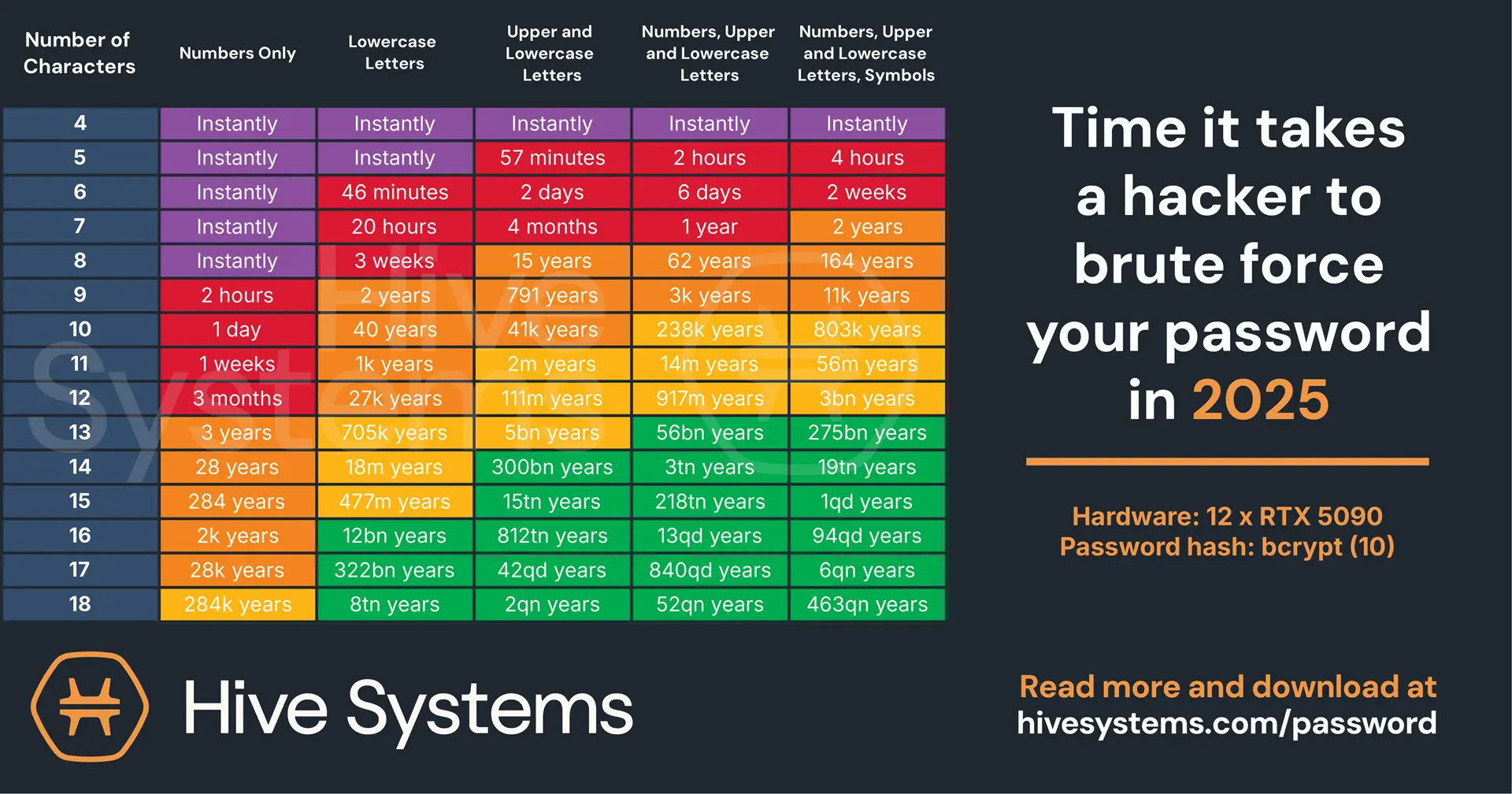
According to Hive Systems, with this level of complexity, it would take hackers approximately 94 quadrillion years to crack your password through brute force methods.
Also, never reuse passwords across different platforms. A Google study found that 65% of people use identical passwords for multiple accounts. When hackers breach one of your accounts, using identical passwords elsewhere allows them to quickly take over multiple platforms.
2) Enable 2FA for Teams
Two-factor authentication adds a crucial extra security layer by requiring both your password and a time-sensitive verification code that changes every 60 seconds or so. So even if someone obtains your password, they still can't access your account without this second factor.
Standard 2FA works well for individual creators. But for businesses and teams, traditional 2FA creates workflow headaches. Standard 2FA typically ties authentication to a single device, forcing team members to constantly request codes from the account owner.
But there is a solution: team-based 2FA. These systems allow multiple authorized users to access a single account with automatically changing verification codes.
![Spikerz account protection [2FA]](https://cdn.prod.website-files.com/65099fa2b21009b202741406/69a3f68b97eddc436c07bb8f_694b110388bd64627e8454fc_Spikerz%2520account%2520protection%2520%255B2FA%255D.webp)
For example, Spikerz offers team-based 2FA that eliminates these bottlenecks. When team members leave your company, you can instantly revoke their access through your dashboard without changing passwords or disrupting other team members. This streamlines security management while maintaining strong protection, so enable 2FA for teams to improve your security posture.
3) Enable Account Monitoring
Account monitoring is specialized software that continuously scans your accounts for suspicious activity. These tools watch for unauthorized login attempts, unexpected profile changes, or unusual posting patterns and alert you immediately when something seems off.
There are many monitoring solutions available, but we recommend using a social media security tool specifically designed for these threats. Generic security software often misses the unique vulnerabilities social platforms face.
For example, Spikerz provides 24/7 monitoring of your social media profiles, quickly identifying and neutralizing online threats. However, this isn't the only thing the platform does, besides account monitoring, Spikerz also offers:
- Real-time protection against phishing and suspicious messages
- Automatic content backup to protect your digital assets
- Detection and blocking of bot activity and fake followers
- Impersonation monitoring and removal assistance
- User access management so you always know who has access to your accounts
- Step-by-step recovery guidance if a breach happens
4) Enable Browser Protection
Browser protection software protects against threats that specifically target your web browser. These tools monitor for malicious extensions that can record keystrokes, inject malware, or steal session data.
This type of protection is different from traditional antivirus software. While antivirus programs scan files on your computer, browser protection focuses on the extensions and scripts running inside your browser. Many credential-stealing attacks happen right in your browser without ever touching a file that antivirus software would detect.
For example, traditional antivirus software typically struggles to analyze browser files like extensions. Browser protection fills this gap by monitoring for malicious code within your browser environment.
5) Use Traditional Antivirus Software
Antivirus software detects and removes malware that could compromise your YouTube credentials and other sensitive data. These programs provide essential protection against viruses, trojans, and ransomware that hackers use to gain access to your systems.
But the biggest critical threat antivirus software helps prevent is session hijacking. Session hijacking happens when attackers steal or forge session tokens (the files that keep you logged into online services) to impersonate legitimate users. Once successful, they gain complete access to your account while you're still logged in.
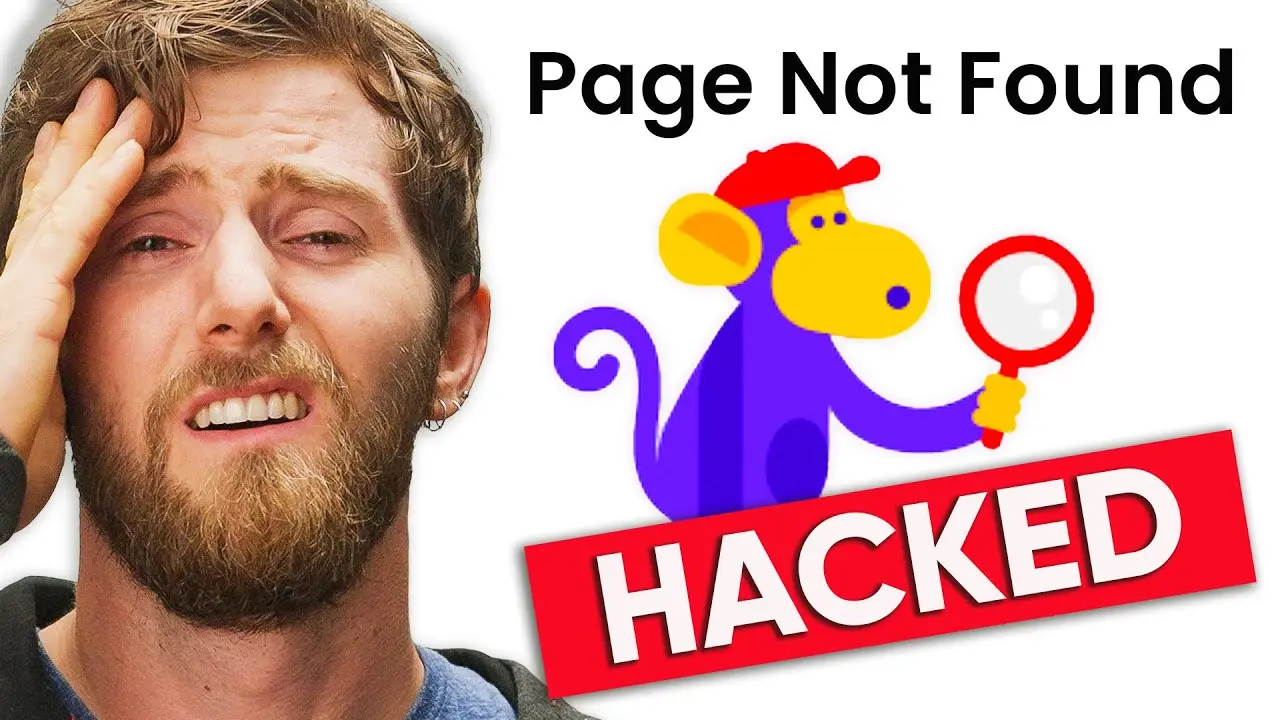
This was exactly what happened to Linus Tech Tips. The attackers used malware hidden in what appeared to be a legitimate business proposal to steal their YouTube session data.
The solution to these types of hacks is a combination of browser protection, account monitoring, and quality antivirus software that can detect and block these threats before they compromise your credentials.
6) Train Your Employees To Recognize Phishing
Your team is often the weakest link in your security chain. Hackers know this, which is why phishing remains their favorite attack method. Social engineering accounts for 70-90% of all cyberattacks, with phishing being the most common technique.
That's why you must train your employees to recognize phishing attempts. Teach them to:
- Check sender email addresses for spoofed domains
- Avoid clicking links in unsolicited messages
- Verify unusual requests through separate communication channels
- Report suspicious emails or messages immediately
That said, regular retraining is essential because hackers constantly refine their tactics. What worked as a phishing detection method last year may not catch this year's attacks. Schedule security awareness training at least quarterly to keep your team updated on emerging threats.
Just remember how BBC's Nick Robinson fell victim to hackers simply by clicking a link in what appeared to be a legitimate email about a policy violation. Nick felt tired at the time so he didn't pay as close attention to the email as he normally would, as a result he got his X account hacked. A moment of vigilance combined with security tools could have prevented the entire incident.
Conclusion
The ABS-CBN hack is a reminder that no organization is immune to social media security threats. Whether you're a major media network or a growing business, your YouTube channel is an asset that represents years of work, audience trust, and revenue potential. So you must do everything you can to protect it.
Protecting your channel requires a multi-layered approach. Strong passwords, team-based 2FA, continuous account monitoring, browser protection, antivirus software, and employee training each add another barrier between hackers and your account. Just remember that no single measure is enough on its own, so you must implement everything.
Don't wait for a breach to take action. Every day you operate without proper security measures puts your brand at risk. Protect your social media presence with Spikerz and transform security from a constant worry into your competitive advantage.
