Outsourcing moderation in 2026: why hybrid wins


More brands now outsource content moderation, and hybrid models that pair AI with human reviewers are winning. Learn how hybrid moderation works, what it costs to get wrong, and how to decide what to keep in-house in 2026.
Outsourcing content moderation means handing the review of comments, messages and other user-generated content to an external team or service instead of doing it all in-house. In 2026, most brands that outsource choose a hybrid model: AI filters the obvious spam, scams and abuse at scale, and trained human moderators handle the borderline cases that need context and judgment. That mix gives you speed and coverage without losing the nuance that protects your brand.
The hardest part of moderation is staying consistent while understanding context and culture. Different audiences react differently to the same content, and what's acceptable in one community might break the rules in another. Outsourcing brings clear benefits like scalability and cost savings, but you're also passing subjective, high-stakes decisions to an external team. Those decisions affect your brand reputation, user trust and legal compliance.
In this post, we'll explain what outsourcing content moderation means, look at the three main approaches businesses use, and show why hybrid models are winning in 2026.
What is outsourcing content moderation?
Outsourcing content moderation is when businesses or content creators delegate moderation responsibilities to external partners. Good partners have experience handling sensitive content across channels and audiences. They understand platform rules, legal requirements and the nuances of different communities.
This approach is key for scaling any business with an online presence. You can see it in the content moderation services market, which was valued at USD 12.48 billion in 2025 and is expected to reach USD 42.36 billion by 2035. The same research puts the market at USD 13.94 billion in 2026.
That's a lot of growth, and it tells us something important: businesses know they need help managing the flood of user-generated content. If you're still weighing your options, our guide to in-house vs. outsourced moderation walks through the tradeoffs.
What are the types of outsourced content moderation?
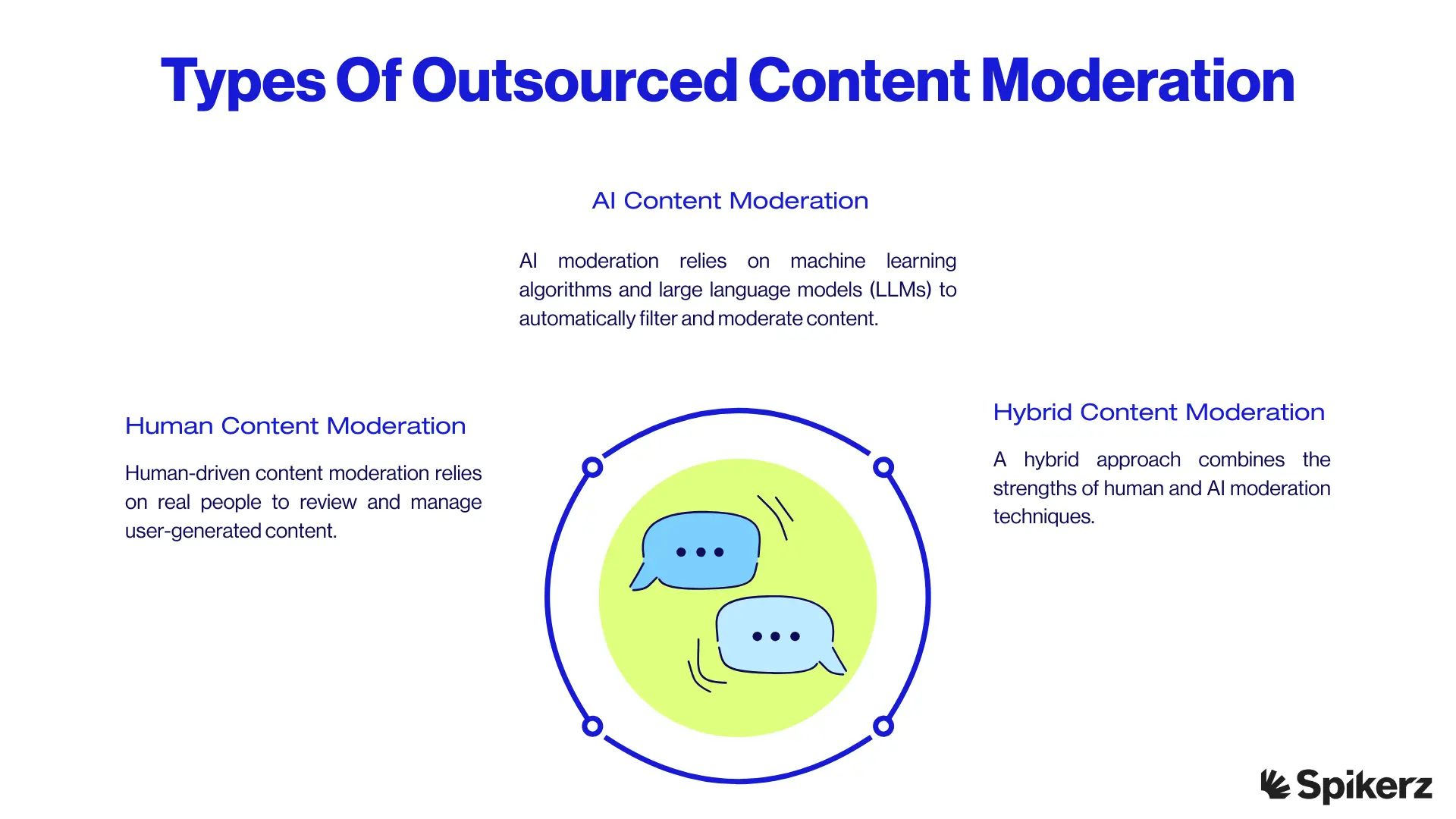
The content moderation outsourcing model covers three main approaches: human moderation, artificial intelligence moderation and a hybrid of the two. Each has strengths and limitations depending on your business needs. Here's a brief overview of each.
Human content moderation
Human content moderation relies on real people to review and manage user-generated content. It works best for content that AI might miscategorize or that needs cultural context to understand properly.
Human moderators bring something machines can't replicate: lived experience. They understand sarcasm, local references and the difference between harmless banter and genuine harassment. That matters a lot with complex or sensitive material, where a wrong call could damage your brand or harm users.
The tradeoff is that human moderation is slower and harder to scale. You can only hire so many moderators, and each one can only review so much content per hour.
AI content moderation
AI moderation uses machine learning, large language models (LLMs) and different types of AI agents to filter and moderate content automatically. These systems are trained on large datasets labeled with many content types, often gathered from manual moderation work.
From those examples, AI learns to recognize patterns that point to acceptable or unacceptable content. It gets more accurate over time as it processes more data and receives feedback on its decisions. Newer LLM-based tools can also follow moderation rules written in plain language, which makes them easier to tailor to a specific brand or community.
The main benefit of AI moderation is that it handles large volumes and simple moderation tasks very well. It offers speed and scale that human teams can't match, reviewing thousands of comments in the time it takes a person to read a handful. You can see how this works in practice in our AI moderation deep dive.
Hybrid content moderation
A hybrid approach combines the strengths of human and AI moderation. You get scale from AI and the judgment and cultural context that come from human experience.
Here's how it works: AI tools filter content first and handle clear-cut cases automatically. Complex or borderline cases are escalated to human moderators for review. Feedback from those moderators then refines the AI, so accuracy keeps improving.
This feedback loop makes hybrid systems smarter over time. The AI learns from human decisions, and people spend their energy where it matters most.
Why is the need for content moderation growing in 2026?
The number of social media users keeps rising. There were 5.79 billion social media user identities worldwide at the start of April 2026, with 294 million new user identities added over the previous 12 months.
More users means more content, and more content means more chances for spam, harassment, phishing and brand damage to slip through. That's why many companies now rely on outsourced moderation to keep up with user-generated content.
Moderation helps filter harmful material, maintain trust and keep your social media running smoothly. Your community expects a safe space. People expect you to protect them from the scams, hate speech and harmful content that can show up in your comment sections.
That's why companies of all sizes need to take moderation seriously and invest in their communities.
Why are hybrid moderation models winning in 2026?
The biggest platforms have spent the past two years showing why neither pure automation nor purely manual review is enough on its own.
- Automation alone makes too many mistakes: In January 2025, Meta said it was removing millions of pieces of content every day and that one to two out of every 10 of these actions may have been mistakes. Its response was to keep automated systems focused on illegal and high-severity violations, require higher confidence before content is taken down, and require multiple reviewers to reach a decision on removals.
- Automation still does most of the work: A 2025 analysis of the EU's Digital Services Act transparency data found that the vast majority of content moderation decisions are enforced automatically. The same research described YouTube as taking a hybrid approach, relying mostly on automated detection supplemented with manual review, and found that manual reviews were linked to longer delays.
- Regulators are paying closer attention: Rules like the EU's Digital Services Act and the UK's Online Safety Act mean moderation decisions are increasingly documented and scrutinized, which raises the cost of getting them wrong.
For brands, the lesson is simple. Let AI handle the volume and the obvious cases, and keep people in the loop for the calls that need context. That's exactly what a hybrid model, whether in-house or outsourced, is built to do.
What are the benefits of outsourcing content moderation?
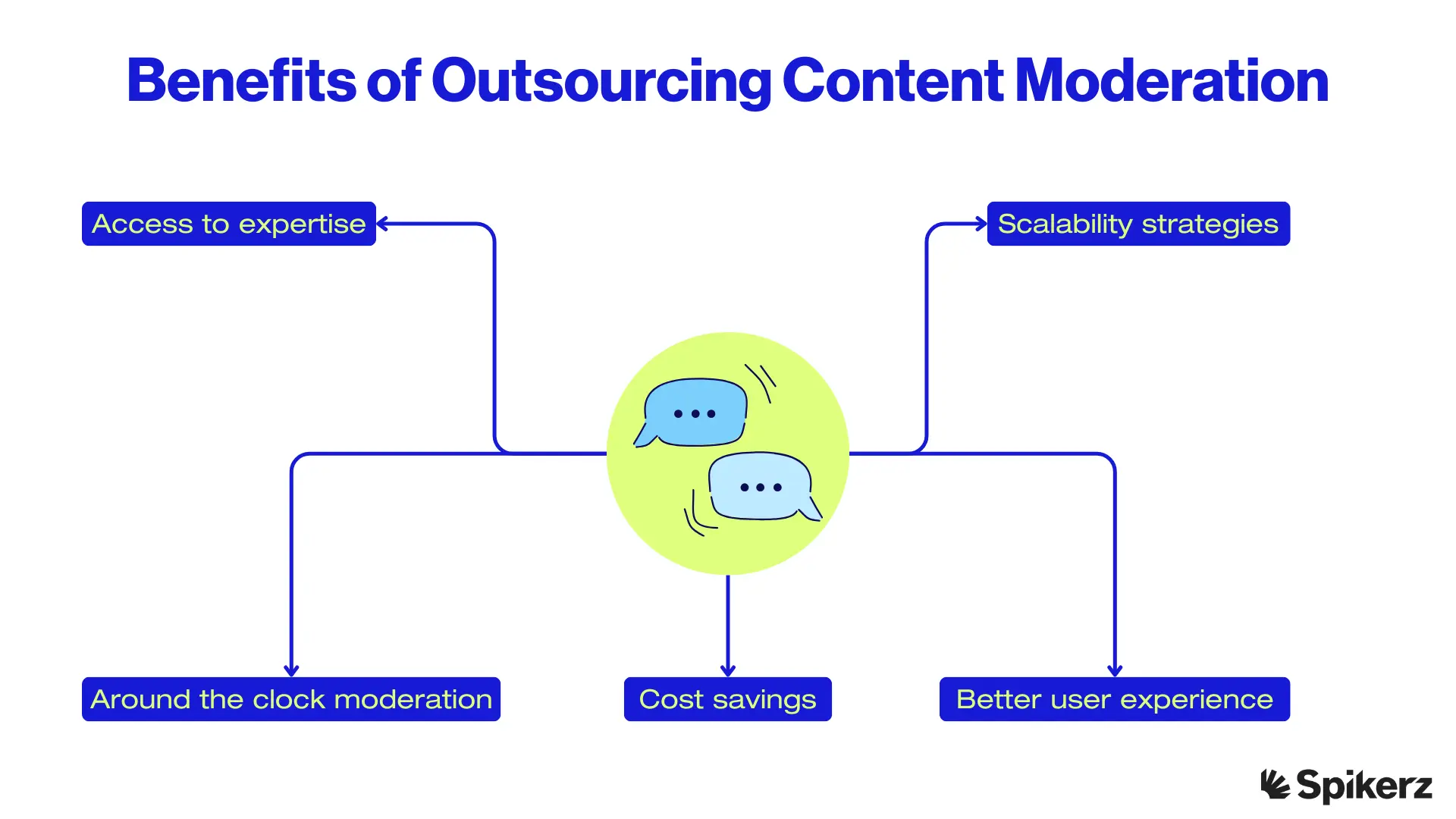
Businesses and content creators see several advantages when they outsource content moderation to a third party. Here are the most impactful ones:
- Cost savings: Building an in-house team means office space, equipment, training programs and ongoing management. Outsourcing lets you skip most of that, freeing up budget and attention for your other business goals.
- Access to expertise: Experienced external moderation teams bring specialized skills that many internal teams don't have, especially in legal compliance and brand protection. They apply your content policies consistently, protecting your reputation from threats that could otherwise catch you off guard.
- Around-the-clock moderation: Many third-party moderation teams have people around the world, so they can cover different time zones (something most companies can't do with internal staff). That makes 24/7 coverage realistic.
- Scalability: Outsourcing gives you the flexibility to adjust resources as content volumes change. During product launches, viral moments or seasonal peaks, you can scale up quickly.
- Better user experience: Effective moderation is what makes an online space feel safe and welcoming. When people see that a brand moderates its comments, they trust it more, engage more and are more likely to recommend it.
What's the best tool to enable a hybrid model?
Plenty of tools help you manage social media, but not all of them let you build custom filters that make moderation easier.
Some tools centralize your comments in one place, assign them to specific team members and give you insights into their work. There are also tools like Spikerz that let you set custom rules in plain language so you can automatically hide spam, phishing links, scams, hate speech and other content you don't want, in more than 25 languages. Your team can then focus on the conversations that genuinely need a human. Learn more about Spikerz comment moderation or read our guide to social media comment moderation.
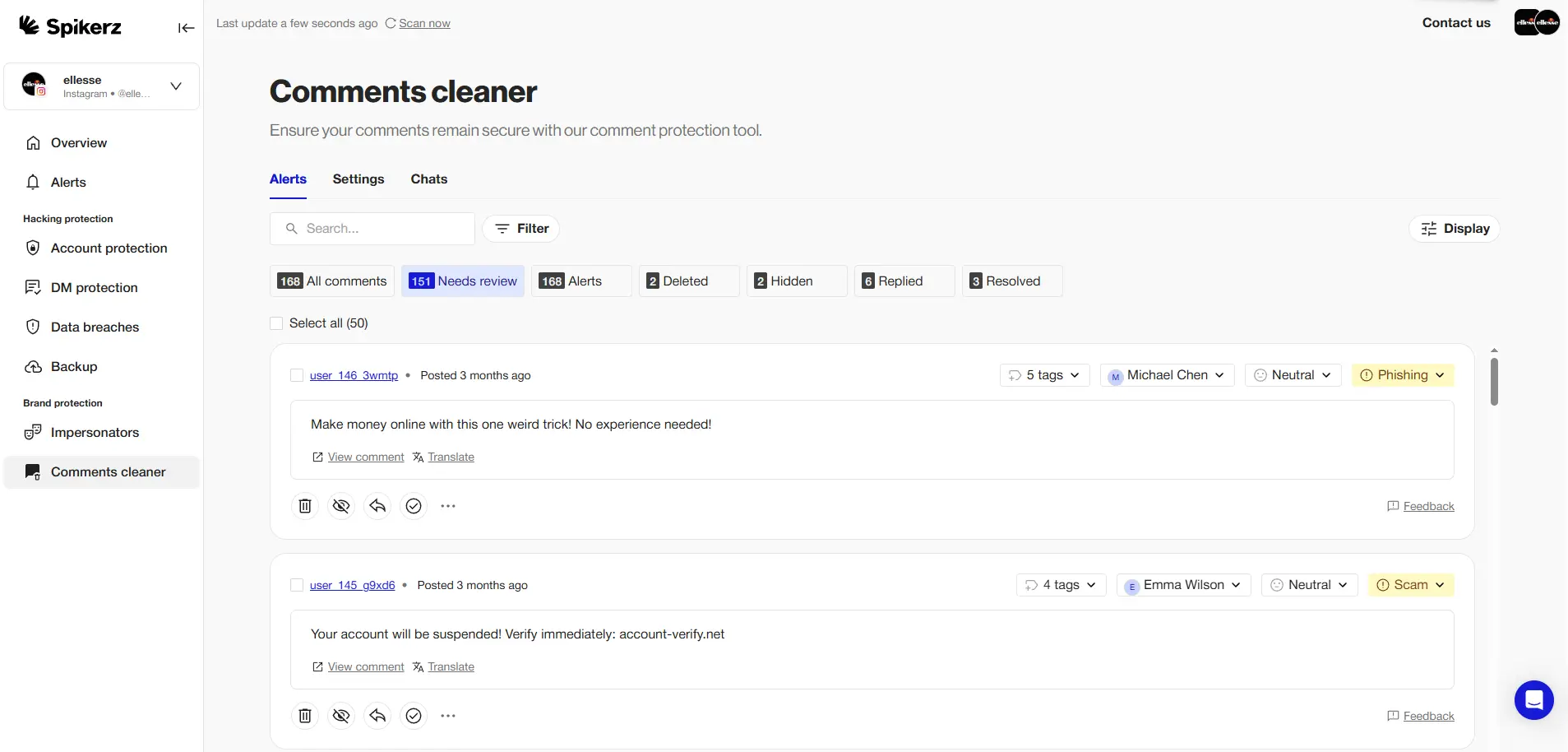
Spikerz also helps you:
- Detect suspicious logins on your accounts, log intruders out and rotate your password
- Analyze comments and direct messages for phishing and spam
- Detect impersonator accounts and request takedowns
- Enable 2FA for teams so members can share codes without chasing the person who has the authenticator app
- Manage and centralize access so you can see exactly who has access to your accounts and remove it when needed
Spikerz connects to Instagram, Facebook, TikTok, YouTube, LinkedIn and X through official platform APIs, so you never have to share passwords. If this sounds like something your business would benefit from, book a consultation with Spikerz. It's always better to be proactive about moderation than to wait until you're swamped with spam.
Conclusion
Content moderation is a requirement for any business that's serious about protecting its online presence. A hybrid approach is the smart middle ground between pure AI automation and human-only teams: you get the speed and scale of machines along with the judgment and cultural awareness that people provide.
Every spam comment left up, every phishing attempt that reaches your followers and every harmful post that slips through erodes the trust you've earned. A hybrid model helps you protect your community while saving your team time and effort.
.webp)
.webp)